

What are you looking for?

Publications

Here you can find publications on the subject of climate change adaptation in different languages. Please use the filter option to select your preferred language.
  • Topics

  • Types

  • Languages

This report reviews the interlinkages between climate change and labor with a special focus on the SSA region. The first objective is to synthesize how climate change would impact labor productivity, employment and migration both directly and indirectly. The second objective is to highlight how policy responses would contribute to maintain employment in the face of climate change.
An infrastructure-oriented climate risk assessment was piloted for the planned Cai Lon – Cai Be sluice gate system project in the Mekong Delta– an infrastructure investment by the Government of Vietnam with an estimated budget of USD 145 million, starting from 2018 until 2021 with a significant function to prevent salt water intrusion, especially with regards to higher probabilities of severe droughts.
To facilitate and streamline the replica of the Cai Lon-Cai Be sluice gate climate risk assessment in Vietnam, this document provides a detail description of the kind of services needed. Based on the structure of a typical recipe, the provided services are divided in three components; procedure, quantity and costs.
The brief for policy makers has been developed based on information and findings of the study “Common Ground between the Paris Agreement and the Sendai Framework: Climate Change adaptation and disaster risk reduction” which was prepared by OECD for the Deutsche Gesellschaft für Internationale Zusammenarbeit (GIZ) on behalf of the German Federal Ministry for Economic Cooperation and Development (BMZ). Further information can be found in the full report.
The study “Common Ground between the Paris Agreement and the Sendai Framework: Climate Change adaptation and disaster risk reduction” examines challenges and potentials for a coherent implementation of climate change adaptation (CCA) and disaster risk reduction (DRR) across levels of government and sectors.
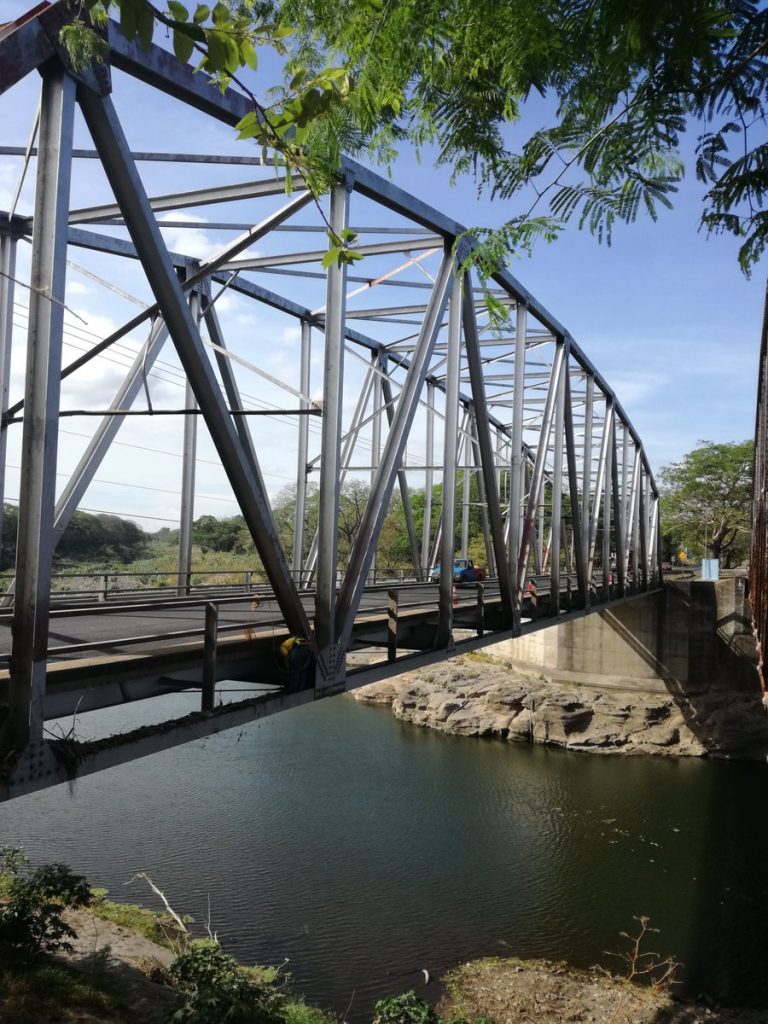
In a nutshell, the report provides decision-makers with necessary information to adopt adaptation measurements towards the maintenance and operation of a climate-resilient bridge. Of equal importance is the development of capacities among as well as the mainstream of the approach. Lastly, the assessment has incentivised to develop of a climate risk assessment tool tailor-made to the Costa Rican context.
This study provides an overview of data, modelling and analytics in the context of disaster risk finance through the lens of a stakeholder analysis in order to identify supply- or demand-side gaps. It supports the InsuResilience Global Partnership (‘the Partnership’) as a point of departure to address these gaps, and to improve data production, access and application for better climate and disaster risk management and to assist with developing risk financing solution.
The EbA Climate Risk Assessment Guidebook is now also available in Russian! The guidebook, developed by GIZ in collaboration with Eurac Research and United Nations University – Institute for Environment and Human Security (UNU-EHS), helps planners and practitioners in designing and implementing climate risk assessments in the context of Ecosystem-based Adaptation projects.
This WWF report, with support from GIZ, outlines a new planning approach integrating considerations of natural capital and ecosystem services, climate risks and resilience, and sustainable development needs to support social-ecological system scale planning.
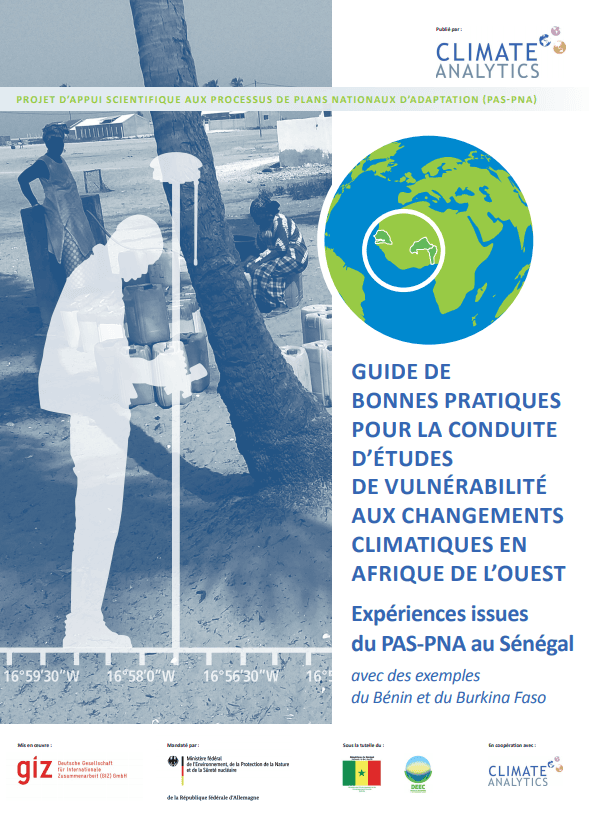
Ce guide pratique vise à présenter les approches utilisées par Climate Analytics dans le cadre du PAS-PNA (co-développement des méthodes et renforcement des capacités) ; à partager les leçons apprises et identifier les pratiques qui fonctionnent bien ; et à fournir un cadre de référence qui puisse permettre aux acteurs/parties-prenantes de reproduire les études de vulnérabilité à travers une approche de renforcement de capacité et en utilisant une méthodologie robuste.