
What are you looking for?

Publications

Here you can find publications on the subject of climate change adaptation in different languages. Please use the filter option to select your preferred language.
  • Topics

  • Types

  • Languages

« Mon village est repris par la mer. » – La voix de Kaboua John tremble lorsqu’il raconte l’histoire de son île natale, Kiribati, un petit État du Pacifique, lors de la Conférence sur le climat de Bonn en 2017. Kiribati n’est pas un cas isolé: Le changement climatique menace de plus en plus les moyens de subsistance des populations du monde entier. En conséquence, les gens quittent leur domicile. Au cours des six dernières années, le programme « Mobilité humaine dans le contexte du changement climatique » a relevé ces défis dans des régions comme les îles du Pacifique, les Caraïbes, l'Afrique de l'Est et les Philippines. Apprenez-en davantage sur leurs histoires et sur la manière dont le programme a collaboré avec plusieurs partenaires pour lutter contre la migration induite par le climat.
This report suggests to link Ecosystem-based Adaptation (EbA) with agroecological approaches to transform our agri-food systems in a climate resilient and nature-friendly way. It outlines three case studies applying the approach in India, Kenya, and Guatemala, providing practical steps to merge agroecology and EbA to adapt agricultural landscapes to climate change.
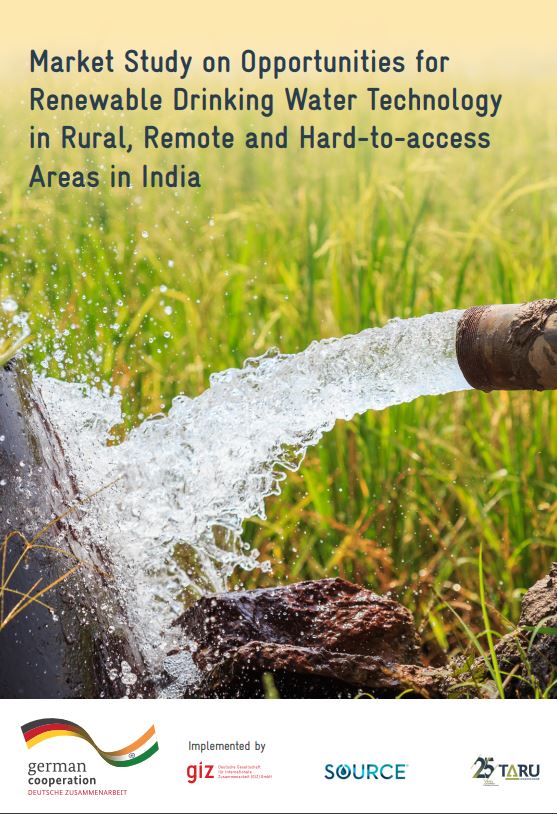
The study focused on rural areas in 8 districts in 4 Indian states, namely, Maharashtra, Odisha, Rajasthan and Uttar Pradesh, was designed to provide a cost-effective and decentralized solution having resilient drinking water source in remote areas.
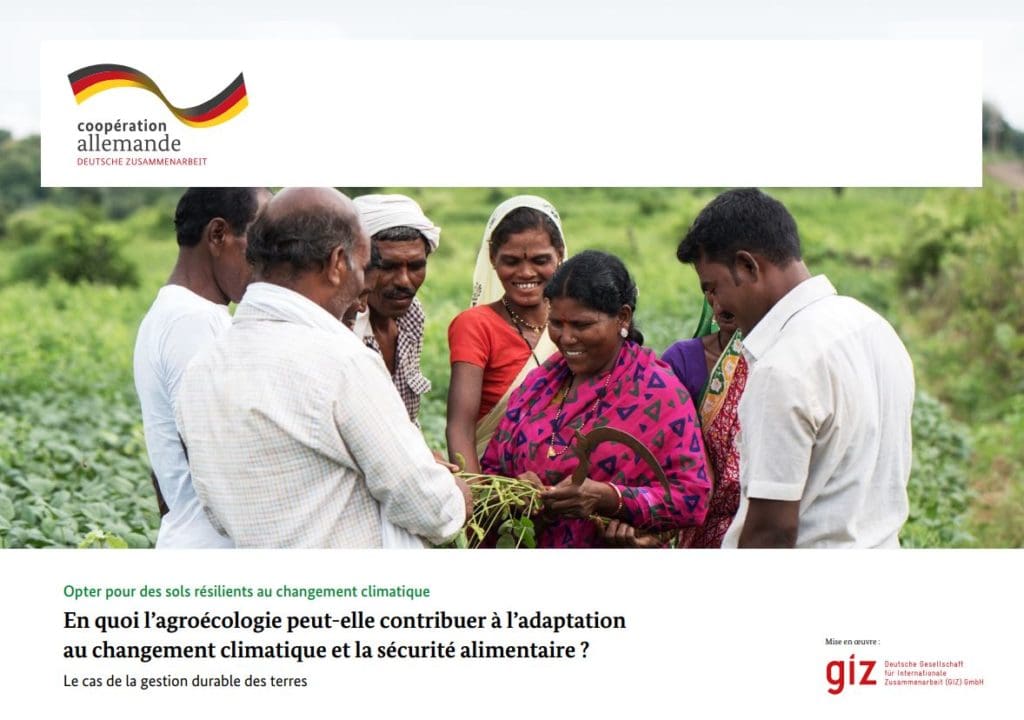
Des approches systémiques telles que l'agroécologie sont nécessaires pour une transformation durable des systèmes alimentaires et une amélioration de la sécurité alimentaire, tout en favorisant l'adaptation au changement climatique. Cette note s'appuie sur des évaluations participatives des pratiques agroécologiques de la gestion durable des terres dans 7 pays. Elle montre comment ces pratiques peuvent contribuer à des stratégies d'adaptation efficaces et fournit des recommandations sur l'intégration des aspects d'adaptation dans les interventions concernant la santé des sols.
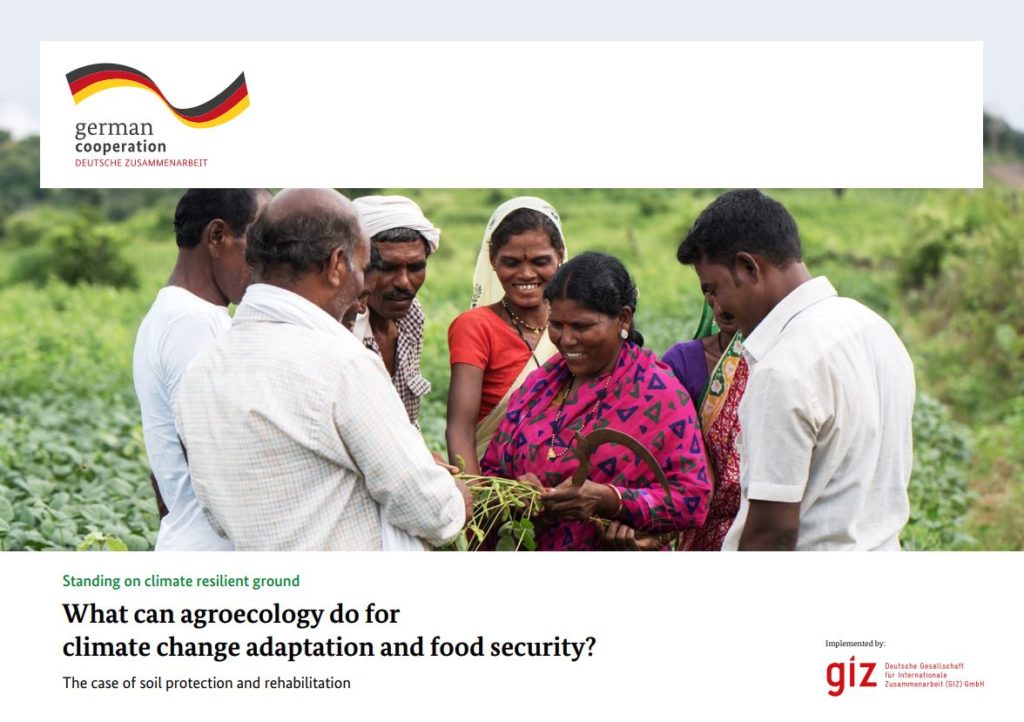
Systemic approaches such as agroecology are needed to sustainably transform food systems and improve food security while fostering adaptation to climate change. This brief draws from participatory assessments of agroecological practices for soil protection and rehabilitation in 7 countries. It demonstrates how such practices can contribute to effective adaptation strategies and provides recommendations on integrating adaptation concerns into soil health interventions.
The central idea of this report is that the blending of Ecosystem-based Adaptation (EbA) with agroecological approaches can increase the organizational capacity and resources devoted to translating national commitments on food security, climate, biodiversity conservation and sustainable land management into action on the ground. To create synergies, this report suggests aligning the knowledge and actions of EbA on the one hand with the agricultural approach of agroecology on the other hand.
This technical background paper dives deep into pastoral systems in Africa's drylands in the face of a changing climate – and complements a shorter policy brief. It highlights the remarkable ability of pastoralists to adapt to the impacts of climate change, gives valuable insights and offers lessons e.g. for smallholder farming in drylands. The publication explores key factors enabling and hampering the resilience of pastoral systems. It demonstrates the link between pastoralists’ climate resilience and agroecological principles of good governance and diversification. As an appropriate enabling environment is based on good governance, access to land and water, strong customary institutions, diversification and integration of different systems.
For the current Cai Be/Cai Lon sluice gate location in southern Vietnam, an ensemble of global climate models can provide some future guidance of precipitation change from present conditions, which can help inform future expectations of meteorological drought. Using the RSI CCHIP tool, ensemble average projections of future precipitation are provided using an ensemble of all AR5 assessment GCMs under the high emission scenario (RCP8.5).
Soil protection and rehabilitation (SPR) technologies often provide several advantages, including benefits for mitigation and adaptation, while supporting farmers' goals to boost and secure their yields. This guide and Excel-based tool provide a participatory method for identifying relevant climate risks and assessing how well SPR technologies address such risks along with their local feasibility.
Based on the PIEVC Protocol, this report is the result of a climate risk assessment for the coastal sluice gate system in Kien Giang, encompassing 83 sluice gates.