
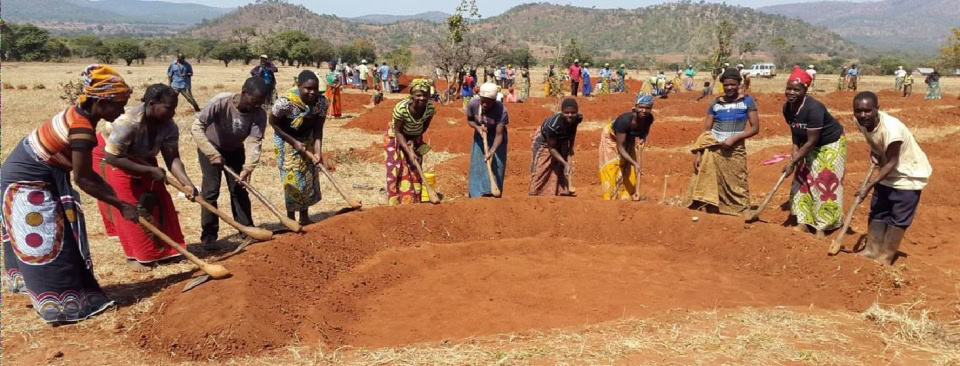
How can social protection systems help societies prepare for climate disasters before they happen? An interactive web story developed by GIZ taskforce on Adaptive Social Protection (ASP) explores this question. The platform presents data, concepts, frameworks, and country examples that show how Adaptive Social Protection (ASP) can strengthen resilience to climate shocks worldwide.
Climate Vulnerability & Social Protection
Globally, climate vulnerability and gaps in social protection are closely linked. Climate-related shocks hit the poorest households with little to no social protection first and hardest, making it harder to cope with disasters or recover from losses.
According to the International Labour Organisation, 3.8 billion people, nearly half of the world’s population, lack any form of social protection. In absolute numbers, the largest populations without social protection live in Pakistan, Nigeria, Bangladesh, and Ethiopia. Meanwhile, countries including Mozambique, Haiti, Uganda and Myanmar have the highest share of unprotected populations.
What is Adaptive Social Protection?
Adaptive Social Protection (ASP) sits at the intersection of social protection, Disaster Risk Reduction and climate change adaptation. By linking these policy areas, ASP strengthens resilience to climate-related risks.
Well designed ASP schemes can act as shock absorbers for vulnerable households, with strong administrative systems, digital registries, and predictable financing. When combined with early-warning triggers, such as forecast-based financing or anticipatory cash, ASP can prevent households from falling into poverty after disasters.

How ASP Systems Work
Unlike traditional responses that mobilise support after losses occur, ASP systems are designed to anticipate, absorb and respond to shocks across the disaster cycle.
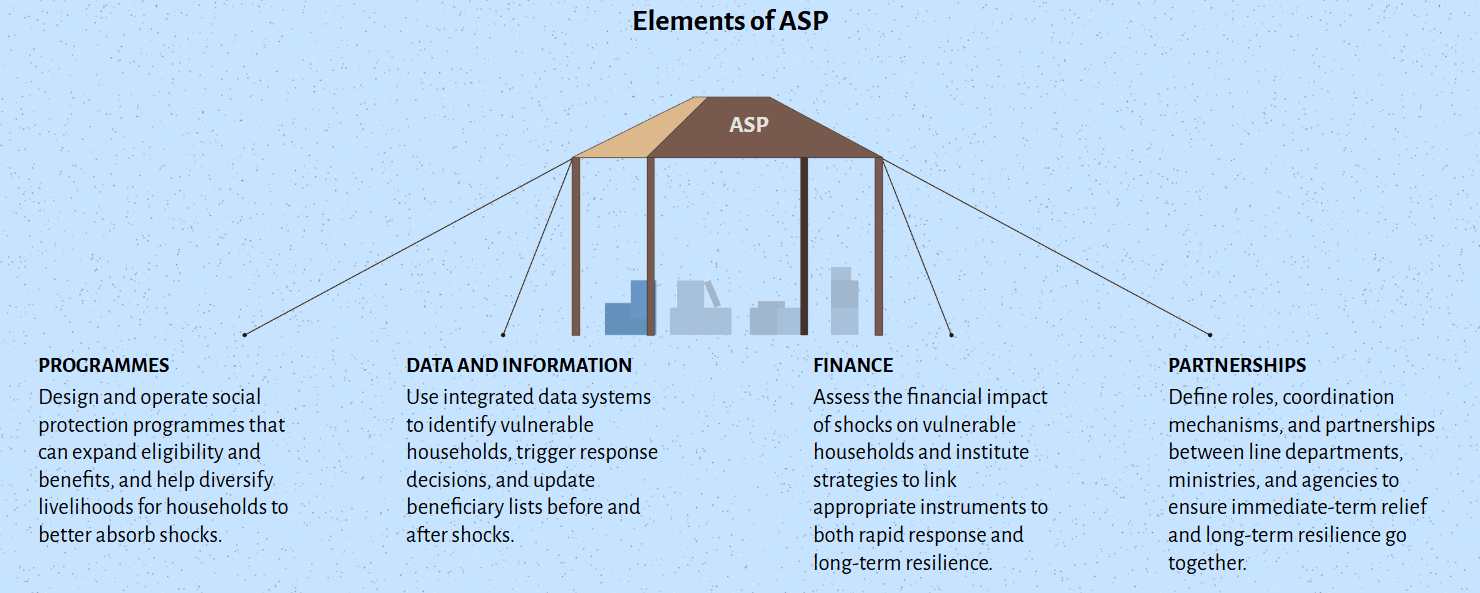
Effective systems link four key components:
- Social protection programmes that strengthen and diversify livelihoods
- Data and information systems that identify vulnerable households and track risks
- Financial mechanisms that enable both rapid crisis response and long-term resilience investments
- Institutional coordination between ministries, agencies, and partners
Together, these elements help governments to prepare for, responds to, and recover from climate shocks more effectively.
Commissioned by the German Federal Ministry for Economic Cooperation and Development (BMZ), GIZ supports ASP-implementation in Indonesia, Cambodia, India, Pakistan, Malawi, and Rwanda, adapting the approach to national policy frameworks and priorities.
Source: Bridging the gap: Building systems to withstand tomorrow’s shocksASP and the Adaptation Finance Gap
Adaptive Social Protection is a practical and scalable solution that turns social protection into a frontline climate resilience instrument as it acts faster than humanitarian assistance, reaches deeper than conventional safety nets, and supports both immediate relief and long-term adaptation.
Despite this potential, the global adaptation sector remains heavily underfinanced. Countries report annual adaptation financing needs of around USD 365 billion, while current funding levels amount to approximately USD 26 billion per year.
ASP in Practice: Country examples
In several partner countries, German development cooperation works with governments to integrate climate and disaster risk considerations into social protection systems. These projects focus on disaster-resilient infrastructure measures, improved multi-hazard risk assessments, pilot programs for emergency cash transfers, mobilizing international climate finance for social protection, and investing in sustainable, adaptive and inclusive livelihood models.
Partner countries are benefiting from integrated social protection solutions when climate disaster strikes and governments can quickly scale up and deliver targeted support to the most vulnerable households.
Explore the Interactive ASP Story
To learn more about the concept and see how Adaptaive Social Protection works in different contexts, visit the interactive web story developed by the Sector Network Rural Development Asia-Pacific.
Explore the full story and discover how Adaptive Social Protection strengthens climate resilience: here.