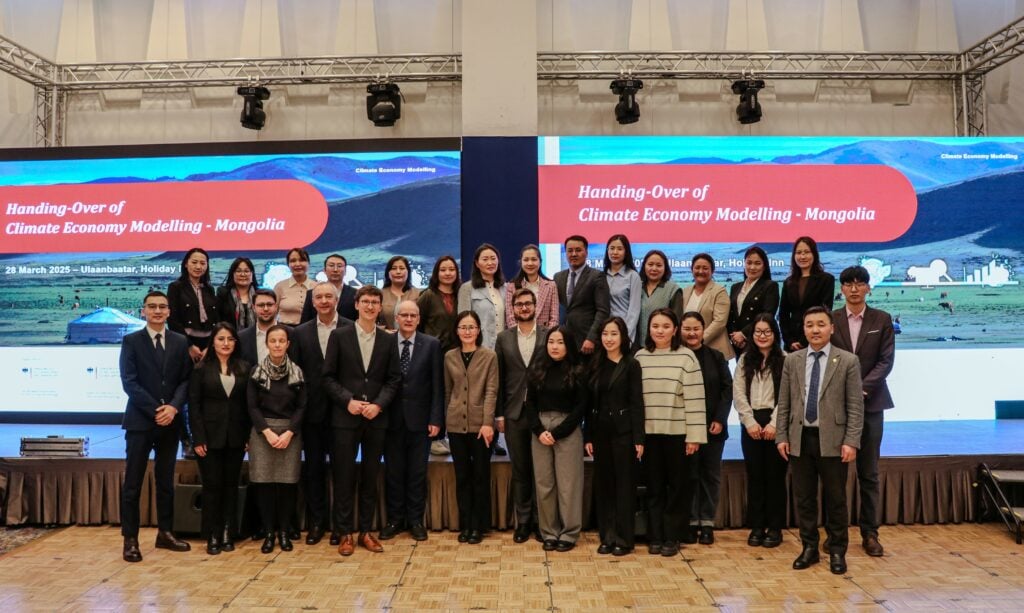
Integrating economic analysis with climate adaptation is critical for sustainable development. We’re proud to announce the completion of Mongolia’s Climate Economy Model, implemented by GIZ with the Ministry of Economy and Development, Ministry of Environment and Climate Change, Central Bank, and other institutions.
This collaborative effort identified climate risks, assessed damages, and integrated climate policies despite data challenges. We successfully built a comprehensive database connecting climate, environmental, and economic factors.
Key findings reveal agriculture and water sectors are most vulnerable to climate change, highlighting the urgent need for adaptation strategies. Results show adaptation measures not only reduce damages but boost Mongolia’s economic productivity over coming decades.
Capacity development was central to this initiative. Through training sessions this spring and last summer, partners gained expertise to apply the model independently—ensuring sustainability by aligning with Mongolia’s specific needs and using national data.
The model provides quantitative evidence on economic impacts of climate policies, serving as a powerful tool for evidence-based policymaking. It strengthens Mongolia’s position with investors by demonstrating economic benefits of climate action.
Similar approaches are being implemented in Georgia, Kazakhstan and Nigeria, and can be adapted for other interested countries.
Read the full report here: Economy-Wide Impacts of Climate Change and Adaptation in Mongolia