
Adaptation is no longer the quiet corner of climate policy. The Brazilian Presidency, aiming to make COP30 – starting in less than a week – the “COP of Adaptation”, underscores that resilience is as vital as mitigation. The Global Goal on Adaptation (GGA) now stands at a turning point, with negotiators expected to advance the UAE–Belém Work Programme on Indicators and accelerate progress on national adaptation plans (NAPs).
As of September 2025, 144 developing countries have launched NAP processes, and 67 developing countries — including 23 Least Developed Countries (LDCs) and 14 Small Island Developing States (SIDS) — have submitted plans to the UNFCCC. At COP30, countries aim to finalise the global NAP assessment, strengthen support for implementation, and advance the Baku–Belém Roadmap, linking COP29 (Baku) and COP30 (Belém) as a bridge toward the GGA.
Adaptation as a Shared Responsibility
Adaptation is being reframed as a collective survival strategy — essential for sustainable development, equity, and global stability. The Brazilian Presidency highlights that resilience must be seen as a moral obligation and a matter of justice, warning against a “divided future” where wealthier nations protect themselves while poorer communities remain exposed.
Closing the Adaptation Finance Gap
Despite growing awareness, adaptation finance remains far below needs, currently representing less than one-third of total climate finance. Developing countries continue to call for a tripling of adaptation finance, alongside more grant-based and concessional funding, particularly for LDCs and SIDS.
There is broad recognition that public funds alone will not suffice. Mobilising private capital — through guarantees, risk-sharing mechanisms, and blended finance — will be crucial to unlock investments in infrastructure, food systems, and water resilience. Country platforms are emerging as key tools to align investments with national priorities, while Multilateral Development Banks (MDBs) and Climate Funds (MCFs) are expected to expand the use of innovative financial instruments, including resilience bonds and debt-for-resilience swaps.
Germany’s Role: Metrics, Impact, and Implementation
For Germany and the Federal Ministry for Economic Cooperation and Development (BMZ), the focus is clear:
- Finalising the UAE–Belém Work Programme on Indicators to establish metrics that measure real progress, not paperwork.
- Supporting the Baku–Belém Roadmap as a driver for the Global Goal on Adaptation and aligning national strategies with global objectives.
- Scaling up adaptation finance that is predictable, effective, and accessible — with a focus on quality, equity, and country ownership.
Adaptation as Investment, Not Cost
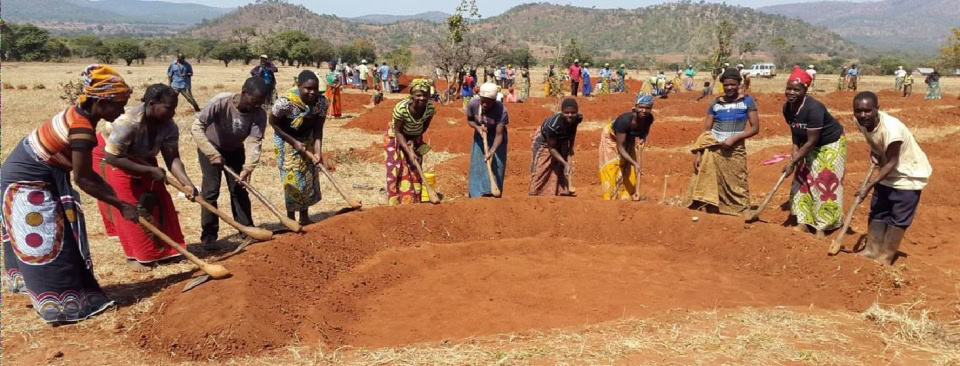
Adaptation is not a cost to be managed — it is an investment in stability and long-term prosperity. Climate-related disasters already cost African economies 2–5% of GDP annually, while every euro invested in resilience generates multiple benefits through avoided losses and strengthened livelihoods.
As COP30 approaches, the challenge is to turn commitments into impact, the foundation of sustainable development.