The biodiversity and climate crises are inextricably interlinked, as recognized by the UN Framework Convention on Climate Change (UNFCCC) and the Convention on Biological Diversity (CBD). Aligning climate mitigation, adaptation, and biodiversity commitments and strategies ensures a holistic approach, allowing different commitments and strategies to reinforce each other. It will help build coherence, minimize risks, support the efficient use of valuable resources, and avoid duplication of work.
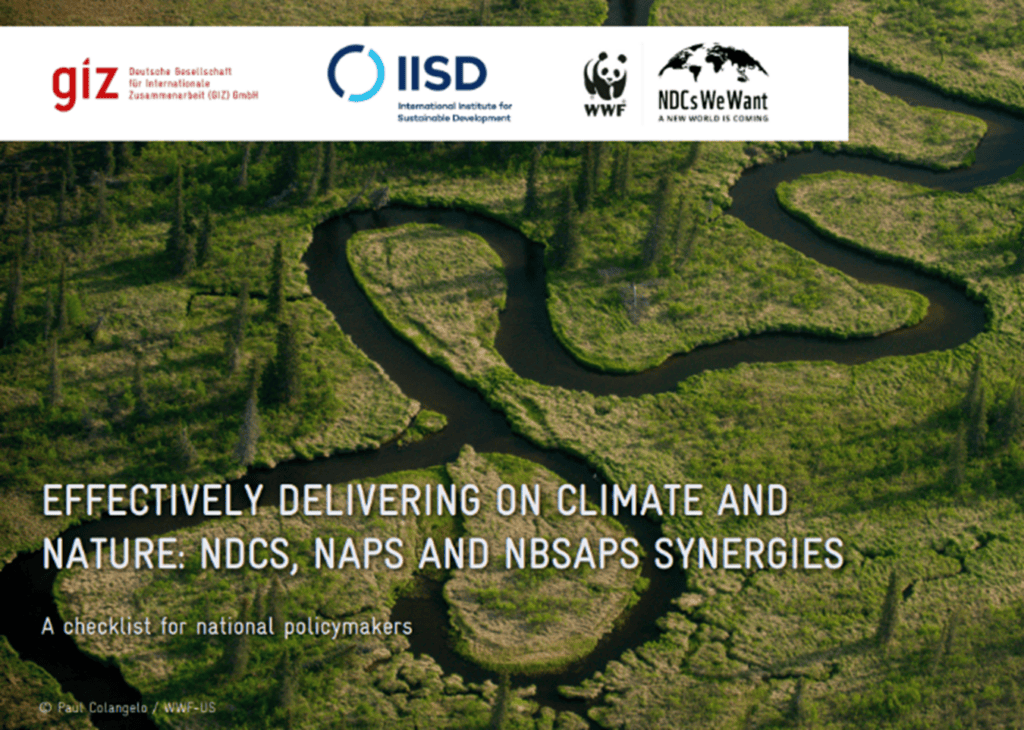
The next two years represent an important opportunity to foster synergies, integration, and alignment in the planning and implementation of national climate change and biodiversity commitments and strategies, such as the UNFCCC’s NDCs and NAPs, and the NBSAPs under the CBD. The Deutsche Gesellschaft für Internationale Zusammenarbeit (GIZ) in cooperation with the International Institute for Sustainable Development (IISD), and the World Wildlife Fund (WWF) developed a brief looking across these policy instruments with an integrated lens to provide practical recommendations on how national-level policymakers could—without causing any further delay—advance synergistic, just, and gender-responsive actions on climate and nature at this critical juncture. Check out the recently published brief here.
The included checklist for national policymakers illustrates potential opportunities and interactions during the development or update of NDCs, NAPs, and NBSAPs. It provides key points to consider for enhancing synergies and co-benefits, ensuring gender-responsive and socially inclusive approaches throughout the planning and implementation phases.