We are pleased to invite you to participate at our virtual launch of a new research publication:
Home Lands – Policymaking for Human Mobility in the Context of Climate Change
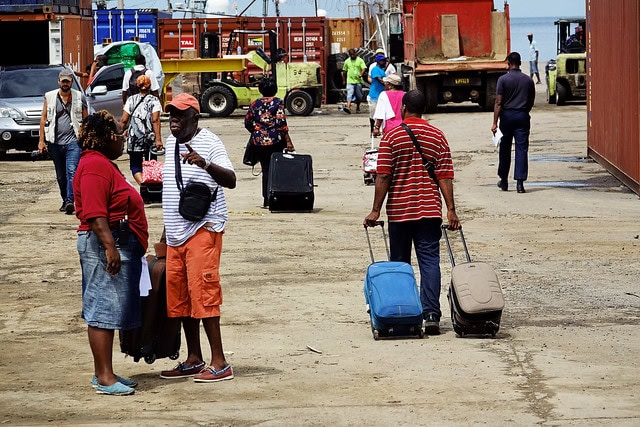
What happened after the hurricanes destroyed almost all infrastructure on the island Barbuda?
Which problems arise in the context of planned relocations in Pacific island countries?
What do we know about the link between (labour) migration and climate change in the Philippines?
…These and other question are discussed in the study.
The Global Programme Human Mobility in the Context of Climate Change, implemented by GIZ on behalf of the Federal Ministry for Economic Cooperation and Development (BMZ), has partnered with the Potsdam Institute on Climate Impact Research (PIK) to gather knowledge on the relationship of climate change and migration, displacement and planned relocation in the partner regions of the project.
Extensive research, including more than 90 interviews, provides the basis for deep insights into the phenomenon of climate-induced migration, relevant actors, and the policy framework in the Caribbean, the Pacific and the Philippines. The researchers also provide comprehensive recommendations for the political shaping of the issue at global, regional and national level.
Join us for the launch of this publication!
Agenda:
Welcome address: Dr Heike Henn, BMZ
Presentation of research findings: Dr Kira Vinke, PIK (author)
Panel discussion with:
• Dr Elke Siehl, GIZ,
• Prof. Dr Johan Rockström, PIK,
• Dr Juan Antonio Perez, Popcom Philippines (tbc)
• Crispin D’Auvergne, OECS Commission.
Please register via event-hmccc@giz.de with your name and institution until September 2nd.