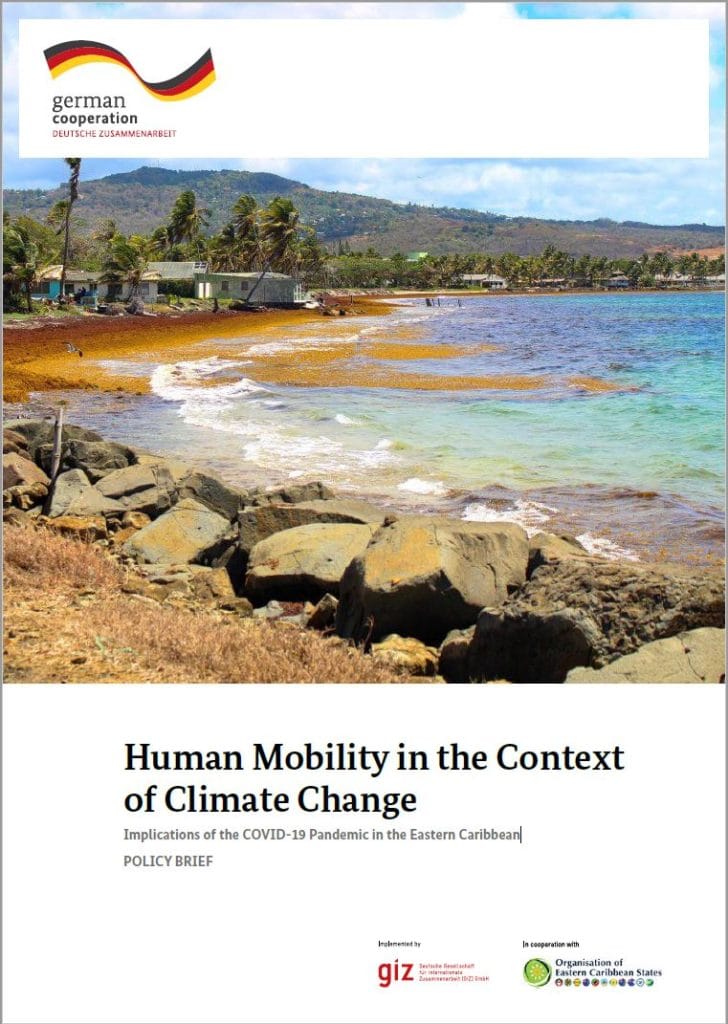
The Eastern Caribbean region is currently faced with a dilemma: On the one hand, the region is struggling with the management of the COVID-19 pandemic which has necessitated extended State of Emergency periods with established curfews and other measures to encourage people to stay home, practice social distancing and move as little as possible. Also, borders are largely closed, hence, the Free Movement of People Regime in the Organisation of Eastern Caribbean States (OECS) region is restricted due to COVID-19. These situations imply that people cannot move within the region and internal movements are also restricted. On the other hand, the OECS region is expecting an above-average active hurricane season which, based on past experience, might require people to move within their countries or across borders as a result of hurricanes or other climate-related events. These two different crises demand contrasting kinds of action: remaining versus moving.
With support from the German Federal Ministry for Economic Cooperation and Development (BMZ), through its Global Programme “Human Mobility in the Context of Climate Change” (GP HMCCC), the OECS Commission sought to explore the implications for human mobility in the event of a hurricane impacting OECS Member States during the COVID-19 pandemic. This policy brief seeks to better understand the nexus between COVID-19, climate change/hurricane season and human mobility in the OECS region.