Climate and Disaster Risk Finance in Malawi: Gap Analysis Report
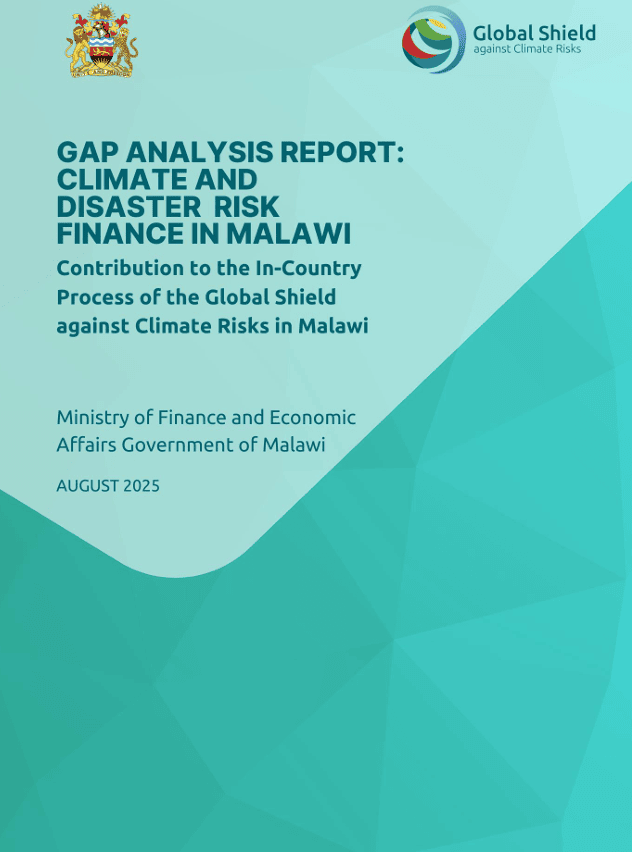
This report outlines key climate and disaster risk finance (CDRF) gaps in Malawi’s financial instruments and mechanisms, national strategies and policies, and its enabling environment. It also highlights development needs in the insurance sector to support Malawi’s resilience against climate-related disaster risks. The report includes suggestions for interventions for overcoming these gaps. Through these, Malawi can build a more resilient system to protect its people, infrastructure and economy from the adverse impacts of climate-related disasters.
Nigeria – Assessment of Climate Finance Flows
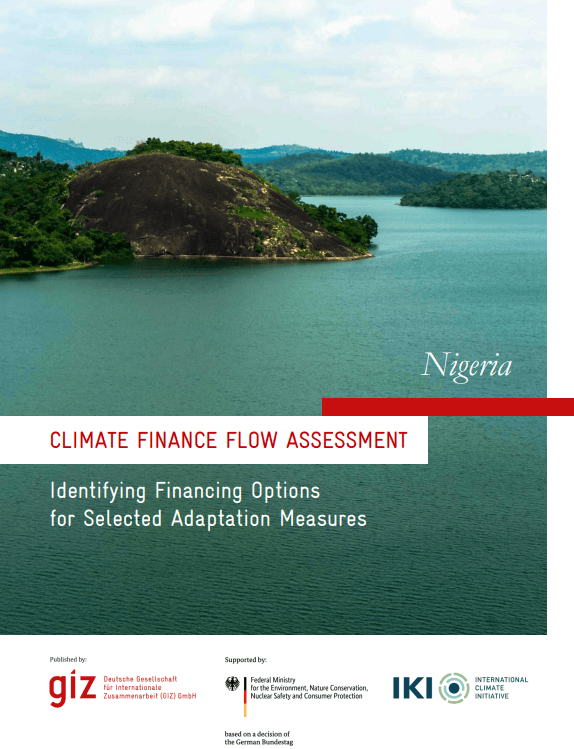
This report assesses climate adaptation finance flows in Nigeria, using publicly available data and documents.
Global Report on Financing Options for Sectoral Adaptation Programmes
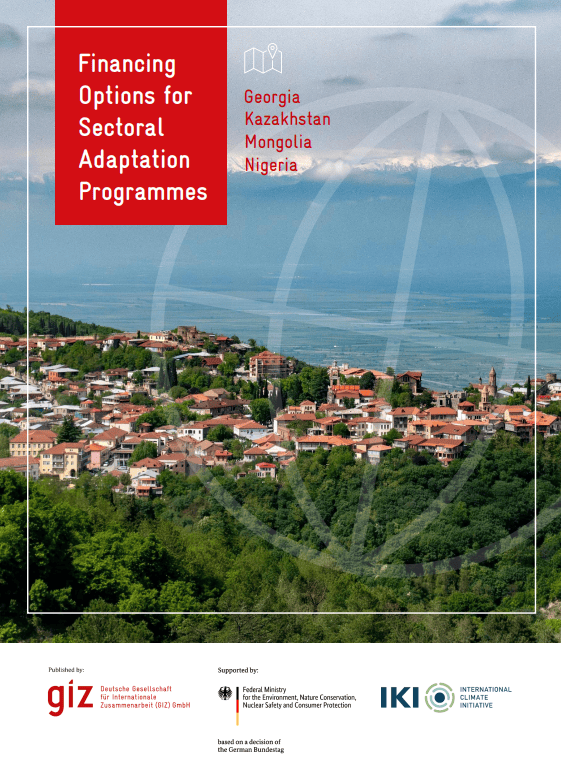
This global report is a practical resource for designing financing options for selected sectoral adaptation programmes in Georgia, Kazakhstan, Mongolia and Nigeria.
Policy Handbook on Strategies for a Climate Resilient Economy in Mongolia
This handbook is a practical resource for designing adaptation strategies based on evidence and tailored to policy needs in Mongolia.
Policy Handbook on Strategies for a Climate Resilient Economy in Georgia
This handbook is a practical resource for designing adaptation strategies based on evidence and tailored to policy needs in Georgia.
Policy Handbook on Strategies for a Climate Resilient Economy in Kazakhstan
This handbook is a practical resource for designing adaptation strategies based on evidence and tailored to policy needs in Kazakhstan.
Economy-wide Impacts of Climate Change and Adaptation in Kazakhstan
This report presents the economy-wide impacts of climate change and adaptation in Kazakhstan for the main climate hazards and four adaptation measures.
Financing Options for Sectoral Adaptation Programmes in Georgia
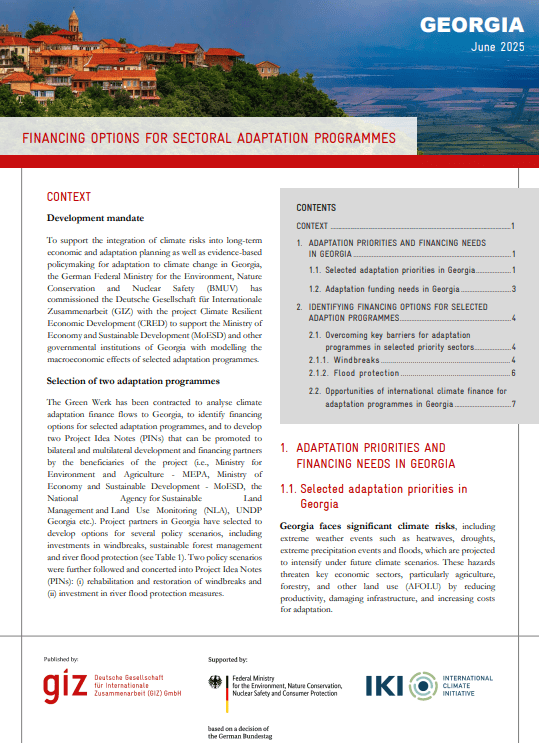
This adaptation finance report for Georgia presents financing options for two selected sectoral adaptation programmes.
Financing Options for Sectoral Adaptation Programmes in Nigeria
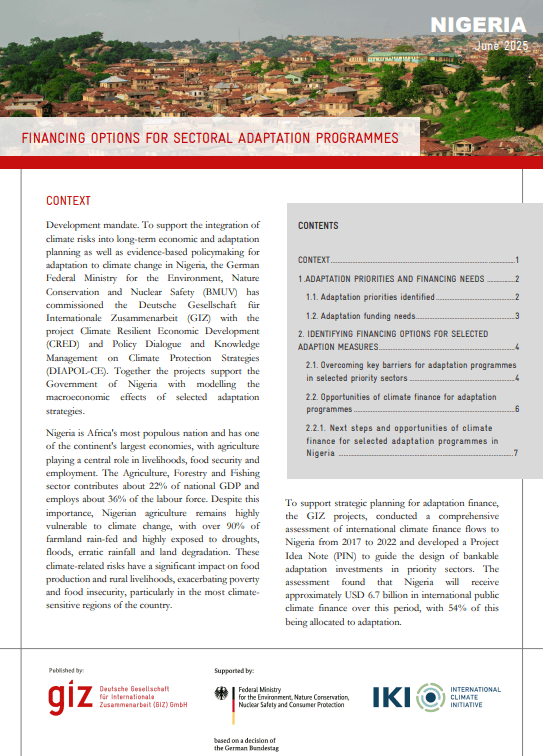
This adaptation finance report for Nigeria presents financing options for two selected sectoral adaptation programmes.
Financing Options for Sectoral Adaptation Programmes in Mongolia
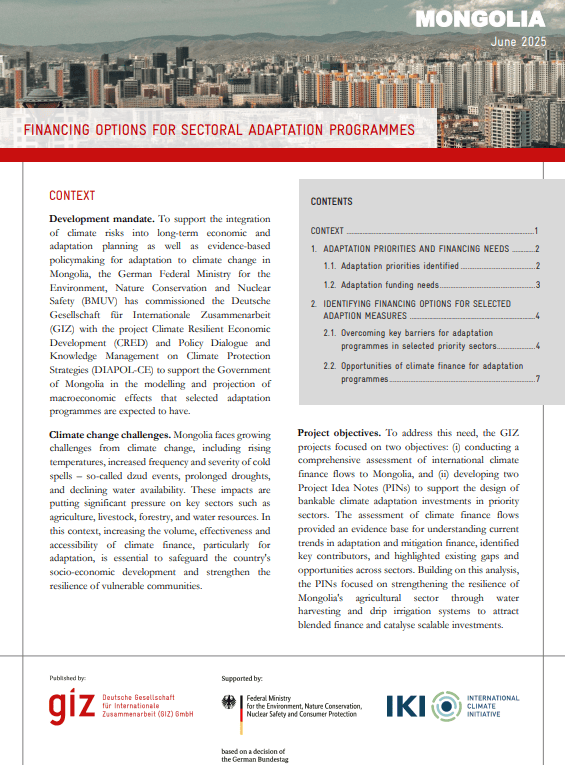
This adaptation finance report for Mongolia presents financing options for two selected sectoral adaptation programmes.