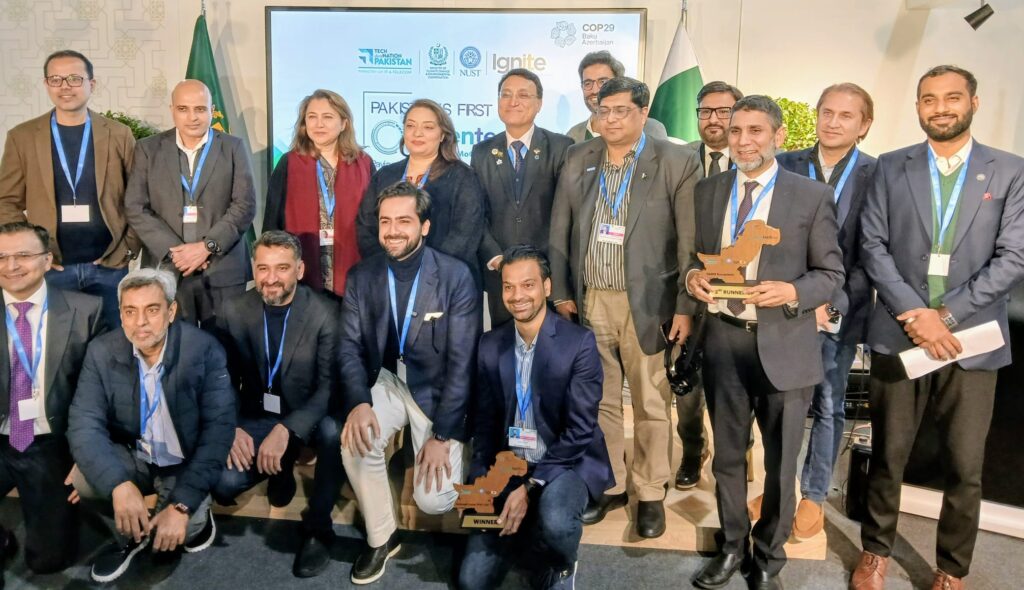
In Pakistan, climate change is reshaping agriculture. SAWiE Ecosystems, an agritech company and participant of the Deutsche Gesellschaft für Internationale Zusammenarbeit (GIZ) PrivABoo programme supporting growth-stage SMEs, operates at the intersection of farm-level adaptation and global supply chains, turning climate challenges into scalable solutions. We spoke with SAWiE’s founder, Dr. Khalid Mahmood, about scaling climate adaptation from farm to market and the role of smallholder farmers in climate resilience.
“My journey into climate resilience is deeply personal,” says Dr. Khalid Mahmood, founder of SAWiE. He grew up in a smallholder farming family in Layyah in southern Pakistan, where rising temperatures, water scarcity and unstable incomes directly shaped daily life. Climate stress, he notes, often magnifies existing inequalities in rural communities. “Farming is not only about growing crops, but about dignity, resilience, and survival.”
His later work in the United Kingdom exposed him to systemic changes in agriculture. “I saw how science, policy and markets can transform agriculture,” he says. “That is when it became clear that agriculture can be part of the climate solution rather than the problem.” This insight ultimately led him to found SAWiE.
From systemic problem to business model
SAWiE was founded on World Food Day in October 2021 in Islamabad to address a structural gap: smallholder farmers are expected to adopt sustainable practices but are rarely integrated into the economic benefits of sustainability, such as improved market access, financial services, or sustainability-linked incentives. Today, SAWiE employs 35 people, nearly half of them women.
“Smallholders are often blamed for carbon emissions and environmental degradation, yet they remain excluded from markets, finance and decision-making,” Dr Mahmood says. At the same time, global supply chains increasingly demand transparency and verifiable sustainability data on food and fibre commodities.
Adaptation as measurable impact
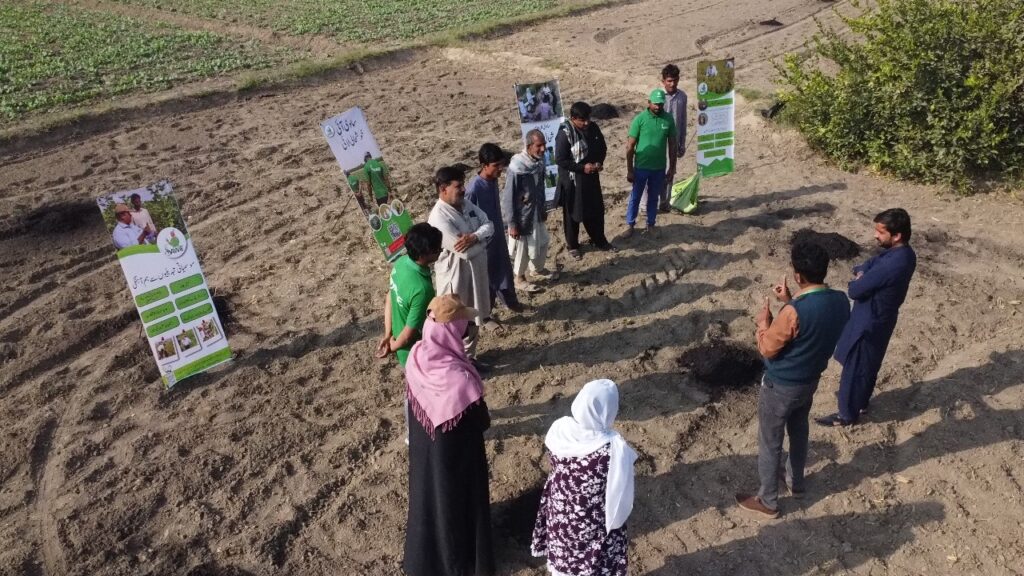
SAWiE addresses this challenge through a digital platform that combines satellite-based monitoring, AI-driven analytics and field-level agronomic advisory to improve soil health and promote sustainable agricultural practices. Farmers receive tailored recommendations on soil, water, input management, as well as harvesting and storage practices.
By linking farm-level data to downstream actors such as processors and brands, SAWiE enables new forms of value creation, including traceability, better returns for decarbonisation efforts through access to carbon markets through Voluntary Carbon Markets (VCM) and improved access to finance. “We have initiated two flagship climate-smart agriculture projects”, explains Dr. Mahmood. “The rice initiative promotes practices such as Alternative Wetting and Drying (AWD), reducing methane emissions while improving water efficiency. The cotton initiative converts crop residues into biochar, avoiding open burning while enhancing soil health and carbon storage.”
The effectiveness of this approach is reflected in tangible outcomes. “We have supported tens of thousands of smallholder farmers with climate-smart advisory, achieving yield improvements of 30-40% while reducing water use and agricultural inputs by up to 40%, improving farmers’ bottom line”.
In key crop systems such as cotton and rice, farmers adopting SAWiE’s model have reduced input misuse, improved soil and water efficiency, and increased incomes.
Traceability as a Lever for Systemic Change
A central element of the model is linking adaptation outcomes to measurable and verifiable date, enabling integration into supply chains. “Currently, there is no credible data linkage between brands, processors, and farmers,” explains Dr. Mahmood. “But sustainability claims must be grounded in real, field-level data.”
SAWiE enables this by providing end-to-end traceability, tracking commodities such as cotton from farm to bale and linking them to sustainable fashion and responsible sourcing. The platform integrates geo-referenced farm data, input usage tracking, and production metrics, alongside carbon footprint calculations, creating transparency across the value chain.
This allows companies to better understand and report Scope 3 emissions—indirect emissions across their supply chains—while responding to growing expectations around due diligence, ESG, and transparency requirements. These requirements are becoming increasingly relevant in the context of emerging EU regulations on supply chain accountability, reporting and product transparency.
As global regulatory expectations tighten, traceability is no longer optional. As Dr. Mahmood highlights: “Traceability should become a license to operate, not a sustainability add-on.” In this context, robust traceability systems help reduce risk, support credible sustainability claims, and unlock value through transparent, climate-smart supply chains.
Barriers to scaling adaptation
Despite these advances, building an adaptation-focused small and medium-sized enterprise (SME) presents structural challenges. “One of the biggest challenges was building trust with farmers where lack of incentives for transition from business as usual to a sustainable CSA adaptation,” Dr. Mahmood notes, particularly in environments where previous technology-driven interventions have failed due to lack of market connectivity. In parallel, the lack of reliable baseline data and enabling policy frameworks complicates implementation.
Financing represents another constraint. “Securing patient capital is difficult because our work focuses on long-term resilience rather than short-term returns.”
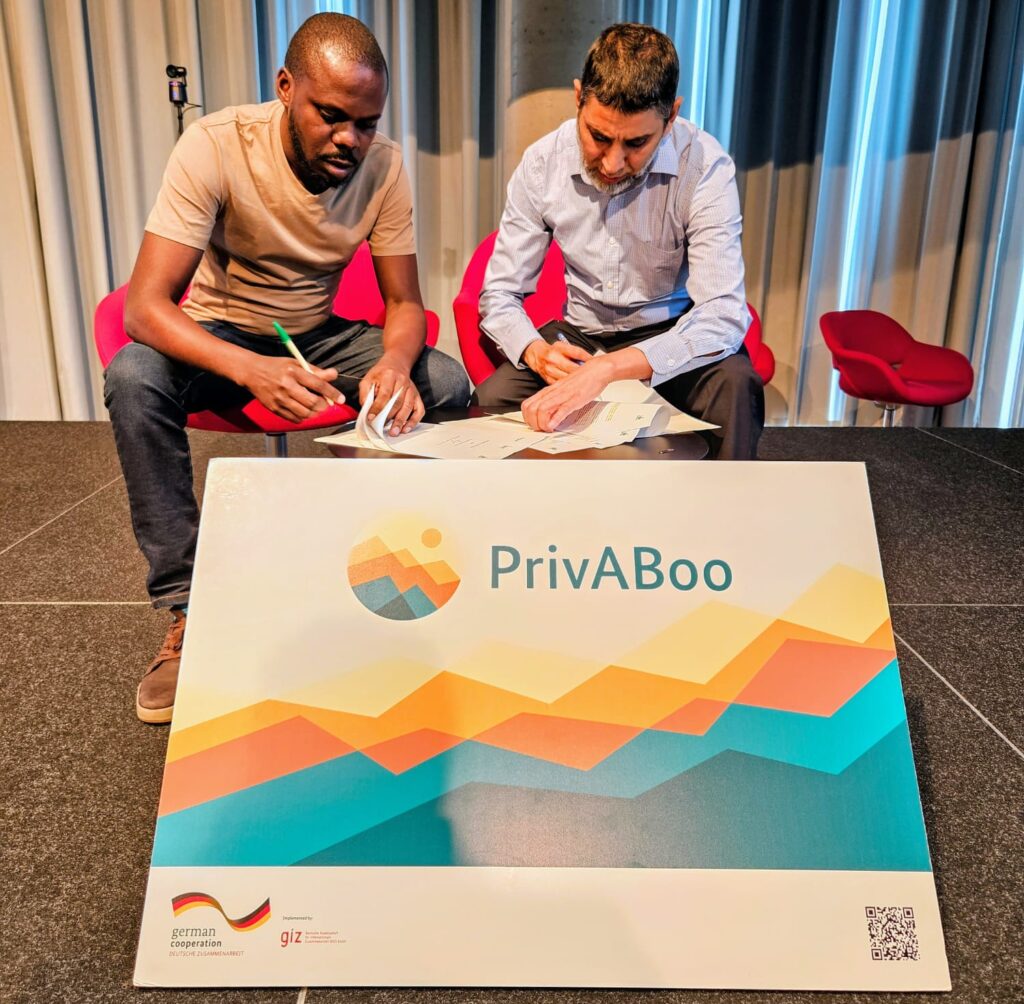
Addressing this gap was a key objective of the Private Adaptation Investment Bootcamp(PrivABoo) programme. Until the end of 2025, it supported SMEs offering adaptation-relevant technologies, such as SAWiE, in improving investment readiness and accessing capital markets. The18-monthprogramme, implemented in Nigeria, Kenya, Rwanda, Pakistan and Pacific Island States by the Deutsche Gesellschaft für Internationale Zusammenarbeit (GIZ) GmbH and commissioned by BMZ, helped translate climate impact into investable business models.
The challenges faced by the company have led to a clear conclusion: “Technology alone does not drive change – incentives, market pull, regulatory support and trust do.” A central insight from SAWiE’s work is that adaptation must be economically viable to scale. “If costs are local and benefits global, adoption will stall.”
From pilot to system change
With support from the PrivABoo programme, SAWiE refined its business model and investment strategy, enabling further scaling. “It helped us strengthen our investment readiness and articulate a clear business and impact narrative.”
“Hands-on mentorship, peer learning, and direct investor exposure were most valuable, helping our team think bigger, move faster, and align impact with scalability. PrivABoo has been a catalyst for our next growth phase”.
SAWiE’s trajectory illustrates a broader shift in climate adaptation: from isolated technical solutions to integrated, system-level approaches. It also highlights the role of development cooperation in enabling private-sector innovation that contributes to climate resilience.
For Dr. Mahmood, the core principle remains unchanged: “Adaptation will only work when farmers are recognised not as the problem, but as essential partners in the solution.”