The Management of climate-related risks is a complex process which needs to be approached from various levels and perspectives. Based on past experiences and project insights, the Global Programme on Risk Assessment and Management for Adaptation to Climate Change (Loss and Damage) has developed a new 6-step methodology as a guideline for climate risk assessments (CRA) which is now available here.
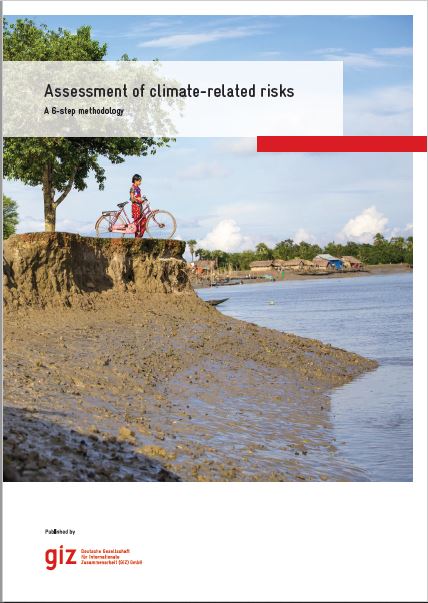
The 6-step CRA methodology provides practitioners and decision-makers with a guidance on how to assess climate-related risks and how to translate the assessment into measures. Mainly the methodology includes the participation of all stakeholders, the assessment of hazards along the entire spectrum from slow onset processes to extreme weather events, the consideration of non-economic losses and damages as well as the focus on risk tolerance levels. By means of combining proven instruments from climate change adaptation and disaster risk management with innovative instruments addressing residual risks, the 6-step CRA methodology aims at identifying a smart mix of climate risk management measures. In this way, CRA can support evidence-based and risk-informed decision making and planning in the context of climate change.
We hope you enjoy the new publication, and look forward to your comments and feedback!