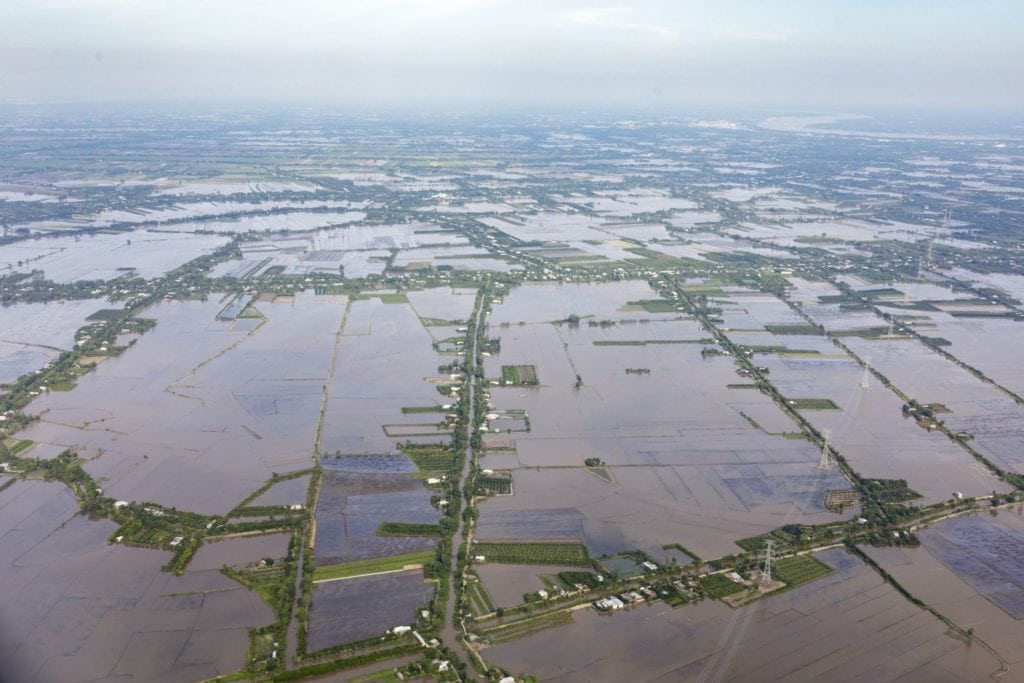
90% of Vietnam´s rice exports and 70% of aquaculture is produced in the Mekong Delta, highlighting the importance as well as dependency of the region to rain. With the changing climate, crop failure due to saltwater intrusion is becoming more frequent. The well-functioning of sluice gates is therefore vital to prevent disasters and guarantee the provision of food in Vietnam.
An infrastructure-oriented climate risk assessment was piloted for the planned Cai Lon – Cai Be sluice gate system project in the Mekong Delta– an infrastructure investment by the Government of Vietnam with an estimated budget of USD 145 million, starting from 2018 until 2021 with a significant function to prevent salt water intrusion, especially with regards to higher probabilities of severe droughts.
An assessment team of Vietnamese hydro-meteorologist, climatologist, water infrastructure engineers and planners, and civil experts was formed to conduct a climate risk assessment according to the PIEVC Protocol (Public Infrastructure and Engineering Vulnerability Committee).
The study results proved that the PIEVC Protocol has a high potential to be applied for climate risk assessments of infrastructures (both planned projects and existing infrastructure) in Viet Nam. With enhanced capacities, the climate risk assessment can serve as a nationwide decision support tool for the infrastructure investors and planners in Viet Nam.
Download the report here.