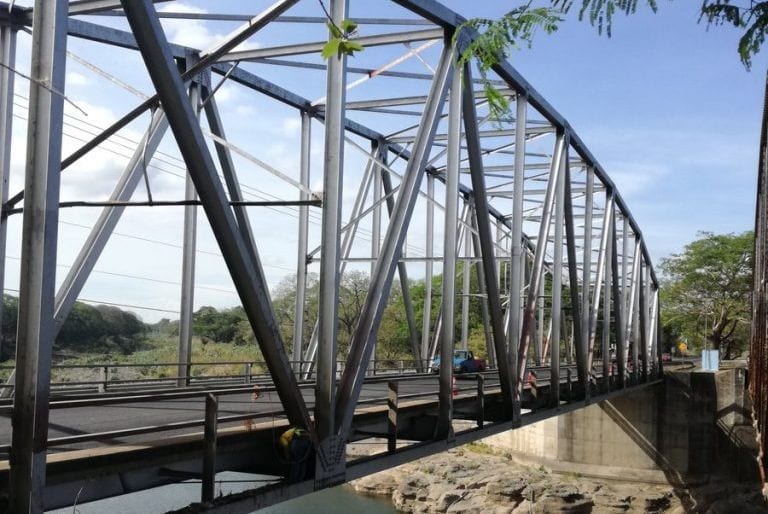
In 2017 a tropical storm in Costa Rica caused damages worth 577 Million dollars which are the equivalent of 1% of their GDP. Extreme floods, storms and hurricanes are increasing due to climate change. These hydro-meteorological events pose a big threat to the well-functioning of infrastructures as well as to the provision of those services. To name one example, the road surface as well as the structure of the bridge over the Tempisque river in Guardia was damaged during extreme floods. Over 20 000 vehicles cross it every day, highlighting the socio-economic impact on the population.
To analyse the exposure and hazard of this infrastructure, a climate risk assessment was piloted based on the PIEVC Protocol. The multidisciplinary approach of this methodology required collaborative work between diverse organisations; from the Ministry of Environment and Energy (MINAE) or the National Meteorological Institute (IMN) to the National Road Council (CONAVI), building thus new networks. Throughout the assessment, the current vulnerability of the bridge´s components were analysed as well as the impact of current and future hydro-meteorological events were estimated.
In a nutshell, the report provides decision-makers with necessary information to adopt adaptation measurements towards the operation of a climate-resilient bridge. Of equal importance is the development of capacities among the local population as well as the mainstream of the approach.
Lastly, the assessment has incentivised to develop a climate risk assessment tool tailor-made the to Costa Rican context. The report is only available in Spanish.
Download the full report here.