Gender Analysis of Climate and Disaster Risk Finance and Insurance in Madagascar
Madagascar is highly exposed to climate-related shocks, including recurrent cyclones and droughts, which disproportionately affect women due to entrenched social norms, high poverty levels, and limited access to land ownership and financial services. This report, commissioned by the Centre of Excellence on Gender-smart Solutions and conducted by Oxford Policy Management, examines how Climate and Disaster Risk Finance and Insurance (CDRFI) policies and programmes in Madagascar integrate Gender Equality and Social Inclusion (GESI), and assesses whether existing frameworks effectively address differentiated vulnerabilities.
Gender Analysis of Climate and Disaster Risk Finance and Insurance in Senegal
Climate change poses significant risks and impacts that disproportionately affect vulnerable groups, particularly women. While measures such as access to credit, savings tools, and affordable insurance products can help mitigate losses and damages caused by climate-related events, there are stark gender-specific differences in how these risks and impacts are experienced.
This review primarily focuses on the integration of gender considerations in CDRFI policies and programmes in Senegal, with only partial exploration of other aspects of social inclusion. The aim is to identify gaps and provide recommendations for integrating and/or strengthening gender-responsive approaches within CDRFI.
Global Shield Annual Report 2025
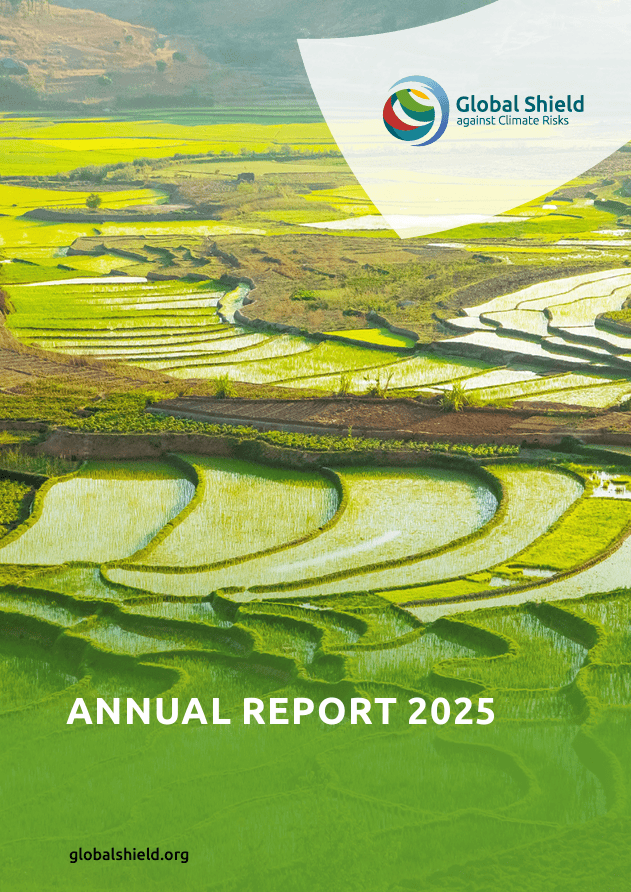
Since its launch at COP27 in 2022, the Global Shield has charted a new course for climate risk finance: from fragmented, reactive responses to a systematic, country-led framework for pre-arranged financial protection.
Enhancing Risk Assessments (ERA) for Improved Country Risk Financing Strategies – Factsheet
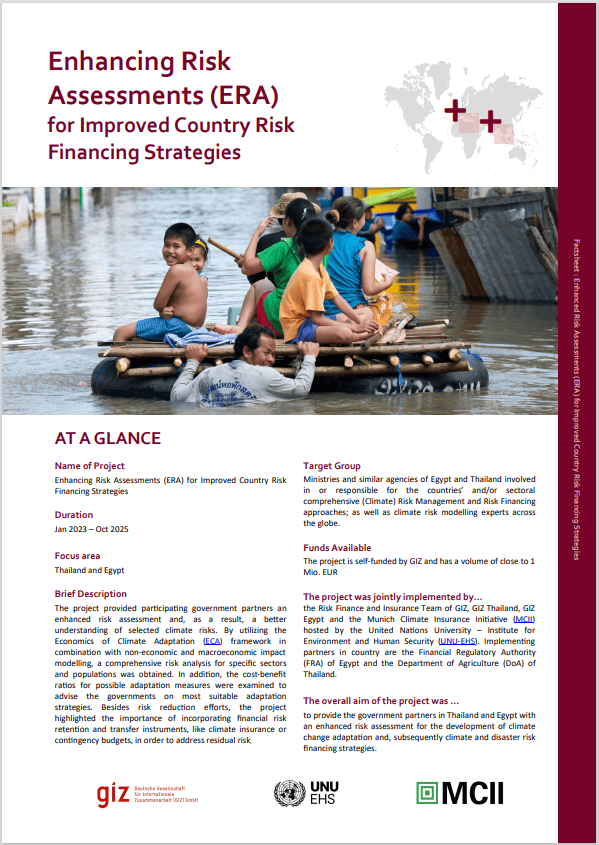
The overall aim of the ERA project was to provide the government partners in Thailand and Egypt with an enhanced risk assessment for the development of their adaptation and risk financing strategies. The project was implemented by GIZ together with the Munich Climate Insurance Initiative (MCII) hosted by the United Nations University.
Enhancing Risk Assessments (ERA) for Improved Country Risk Financing Strategies – Final Report Thailand

The overall aim of the ERA project was to provide the government partners in Thailand with an enhanced risk assessment for the development of their adaptation and risk financing strategies.This final report delivers a comprehensive assessment of climate risks in Egypt to support adaptation planning and risk financing strategies.
Enhancing Risk Assessments (ERA) for Improved Country Risk Financing Strategies – Final Report Egypt

The overall aim of the ERA project was to provide the government partners in Egypt with an enhanced risk assessment for the development of their adaptation and risk financing strategies.
This final report delivers a comprehensive assessment of climate risks in Egypt to support adaptation planning and risk financing strategies.
Enhancing Risk Assessments (ERA) for Improved Country Risk Financing Strategies – Policy Brief Thailand

A brief outline of the main climate risks and recommendations for policymakers from the ERA project for Thailand.
Enhancing Risk Assessments (ERA) for Improved Country Risk Financing Strategies – Policy Brief Egypt

A brief outline of the main climate risks and recommendations for policymakers from the ERA project for Egypt.
Enhancing Risk Assessments (ERA) for Improved Country Risk Financing Strategies – Infographic Thailand
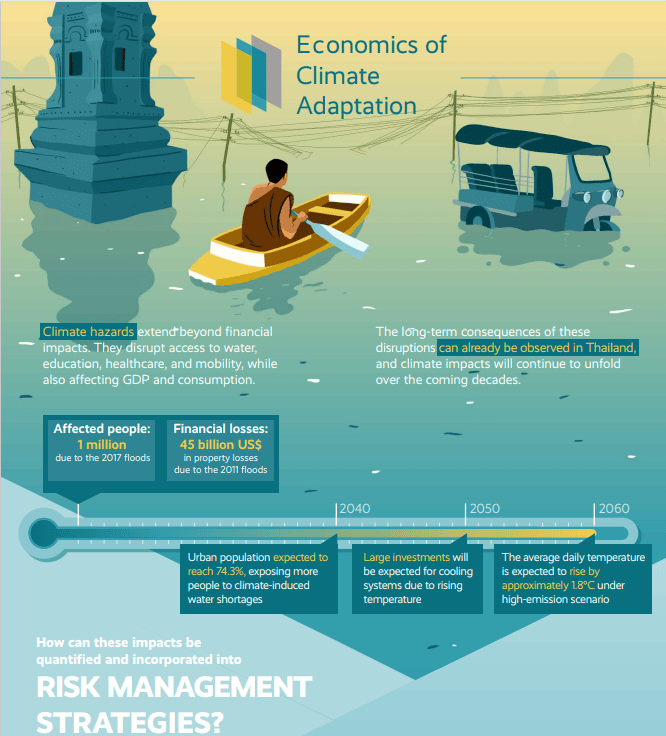
This infographic highlights the key components of the ERA project for Thailand, presenting its approach, main findings, and the tools and partners involved in a clear and visual way.
Enhancing Risk Assessments (ERA) for Improved Country Risk Financing Strategies – Infographic Egypt
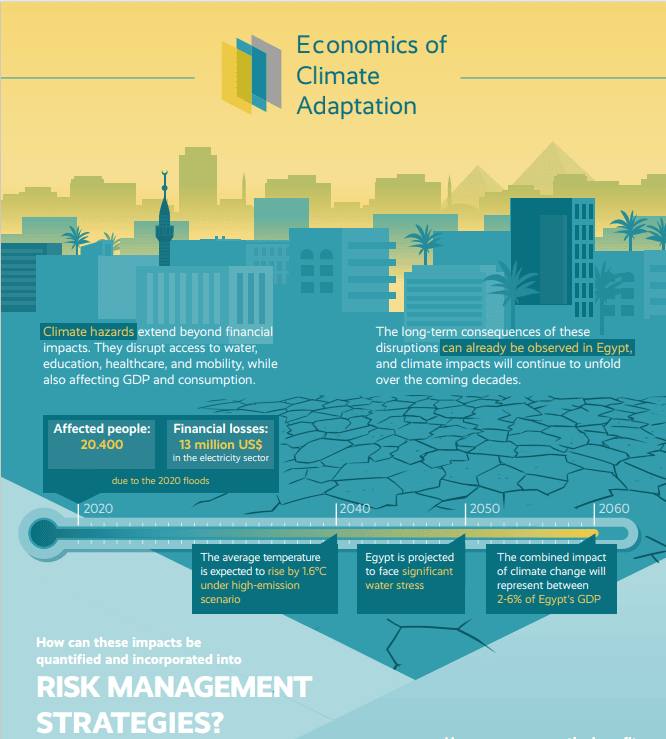
This infographic highlights the key components of the ERA project for Egypt, presenting its approach, main findings, and the tools and partners involved in a clear and visual way.