Gender Analysis of Climate and Disaster Risk Finance and Insurance in the Pacific
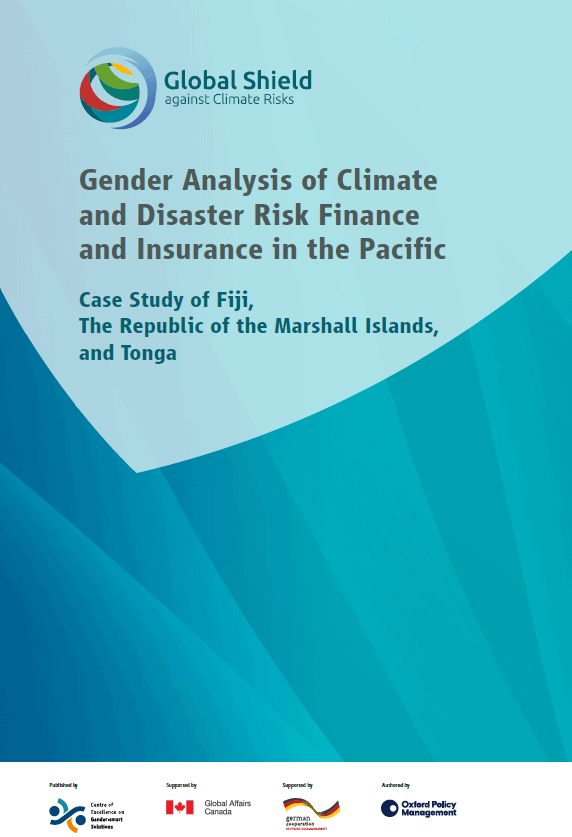
Climate change and disasters in Pacific Island Countries (PICs) disproportionately impact women and vulnerable groups due to existing gender inequalities, limited economic access, and sociocultural barriers. These events cause economic losses and while emerging initiatives are now integrating gender and social inclusion into climate and disaster risk finance and insurance (CDRFI) solutions, significant gaps remain in ensuring women’s equitable access to insurance, participation in decision-making, and financial literacy. This analysis looks at tailored, gender- sensitive financial products that can enhance women’s resilience and inclusion in climate risk management efforts.
Scaling Social Protection for Climate Action: Insights from and for Multilateral Climate Funds

The Guidance Note serves as both a knowledge resource and a practical guide, it provides recommendations for national social protection actors, policy makers, multilateral climate funds, and development organisations on how to embed social protection across climate action.
Analyse des Besoins sur le Financement et l’Assurance des Risques Climatiques et de Catastrophes au Senegal
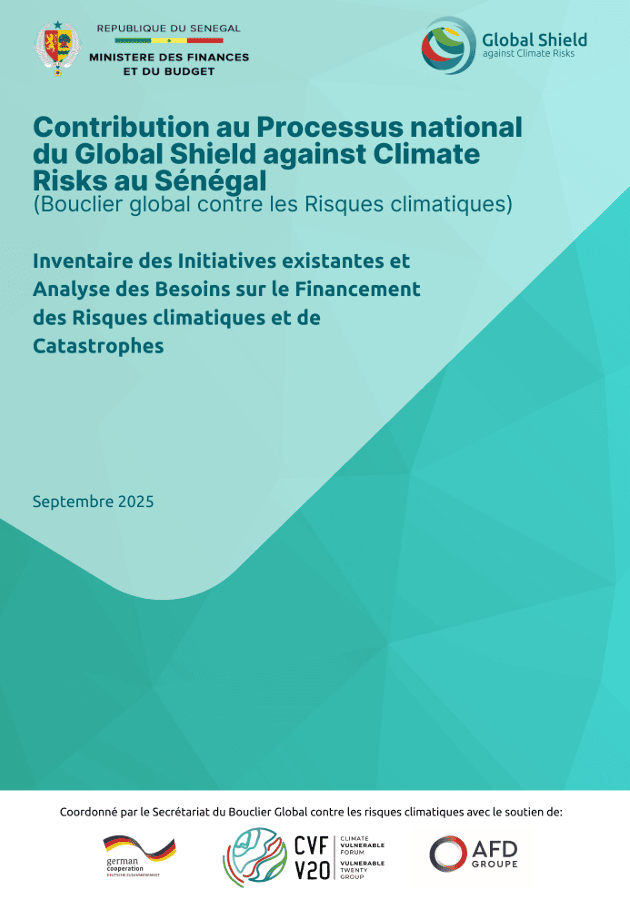
Le Sénégal est un pays fortement vulnérable aux chocs climatiques et aux risques de catastrophes. Ces risques impactent négativement l’équilibre budgétaire du pays, la stabilité macro-économique, les moyens de subsistance des ménages, la durabilité des investissements des petites et moyennes entreprises. Le présent document rassemble les éléments et conclusions développés dans le cadre des deux premières étapes de l’initiative Global Shield against Climate Risks (Bouclier Global contre les Risques Climatiques).
The Gambia Global Shield In-Country Process: Stocktake and Gap Analysis
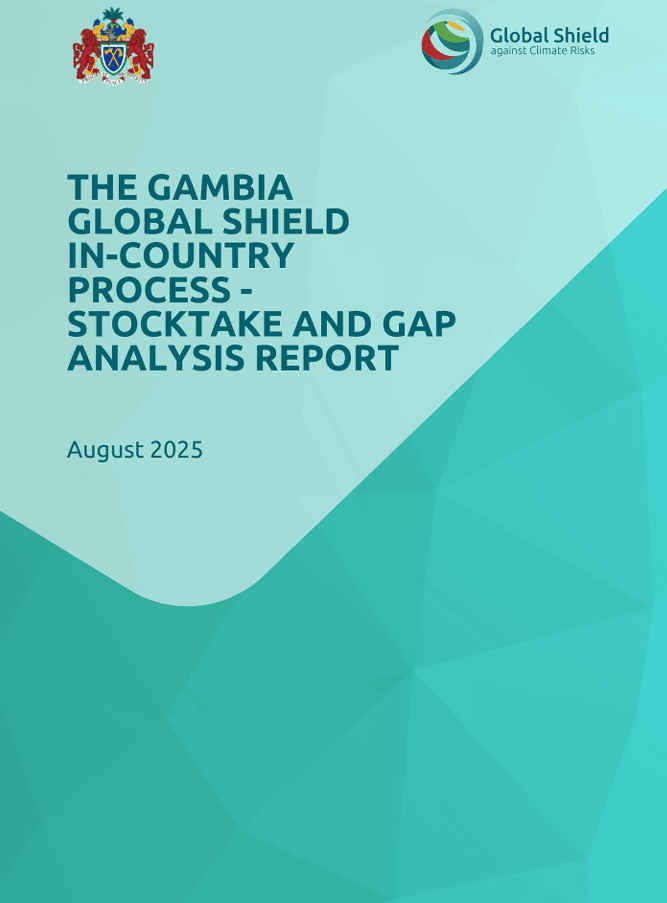
This Stocktake and Gap Analysis Report is a comprehensive account of the CDRFI landscape, protection gaps, and opportunities to close these gaps in The Gambia.
Climate and Disaster Risk Finance in Malawi: Gap Analysis Report
This report outlines key climate and disaster risk finance (CDRF) gaps in Malawi’s financial instruments and mechanisms, national strategies and policies, and its enabling environment. It also highlights development needs in the insurance sector to support Malawi’s resilience against climate-related disaster risks. The report includes suggestions for interventions for overcoming these gaps. Through these, Malawi can build a more resilient system to protect its people, infrastructure and economy from the adverse impacts of climate-related disasters.
Analyse des Besoins sur le Financement et l’Assurance des Risques Climatiques et de Catastrophes a Madagasikara
Le présent rapport d’analyse des besoins en matière de gestion et de financement des risques climatiques à Madagasikara s’inscrit dans la continuité des travaux menés sous l’égide de la Cellule de Prévention et d’appui à la Gestion des Urgences (CPGU) et du Ministère de l’Economie et des Finances (MEF), avec l’appui du processus Global Shield.
Inventaire des Initiaitves Existantes sur le Financement et l’Assurance des Risques Climatiques et de Catastrophes a Madagasikara
Madagasikara est l’un des pays les plus exposés et vulnérables aux risques climatiques, subissant régulièrement des catastrophes majeures telles que les cyclones tropicaux, les écheresses prolongées ou les inondations fluviales. Entre 2000 et 2022, plus de 60 événements climatiques extrêmes ont été enregistrés. Cette intensité devrait s’accentuer sous ’effet du changement climatique, aggravant les pressions sur les écosystèmes, l’agriculture, les infrastructures et les populations déjà fragiles.
Climate and Disaster Risk Finance in Malawi: Stocktake Report
Malawi is highly vulnerable to natural hazards and climate-related risks, particularly droughts and floods. Approximately 73% of the population live in areas susceptible to climate-related hazards. The country’s economy relies heavily on agriculture, making it especially susceptible to climate risk. Despite ongoing efforts, Malawi’s DRF framework faces significant challenges, including fiscal constraints, low insurance penetration, and limited financial protection mechanisms. Malawi faces several challenges in the use of CDRF instruments as financial tools for responding to climate and disaster risks.
Insurance and Sustainable Development (SDSN Position Paper 2025)
The SDSN Position Paper highlights the insurance sector’s vital but underutilized role in sustainable development, emphasizing its potential to manage risk, build resilience, and support transformative change.
Gender Analysis of Climate and Disaster Risk Finance and Insurance in Costa Rica
Through in-depth desk research and key informant interviews, this paper synthesises the Climate Disaster Risk Finance and Insurance (CDRFI) landscape in Costa Rica, focusing on identifying relevant gaps in integrating gender and, in part, social inclusion. To this end, the report presents Costa Rica’s vulnerability to climate-induced disasters, the differentiated vulnerabilities to climate change impact, and a review of the country’s CDRFI-related policy frameworks, ongoing initiatives and emerging opportunities.