Climate and Disaster Risk Finance and Insurance in Costa Rica: Stocktake and Gap Analysis
Due to its geographic location and geotectonic features, Costa Rica is highly exposed to geophysical and hydrometeorological phenomena. Disasters connected to these kinds of natural events have a social, economic and financial impact, with 77.9% of the population and 80.1% of the country’s economic activity concentrated in areas of high disaster risk. According to the risk profiles available for Costa Rica, floods, tropical cyclones and earth quakes have been identified as the most frequent and severe hazards. By 2030, annual losses associated with the aforementioned hazards, amongst others, could exceed USD 7 billion, and could reach almost USD 30 billion by 2050 (both figures adjusted to 2006 constant dollars).
Financiamiento y Seguros para Enfrentar el Riesgo Climático y de Desastres en Costa Rica: Informe Inventario y Análisis de Brechas
Por su ubicación geográfica y características geotectónicas, Costa Rica es un país altamente expuesto a fenómenos geofísicos e hidrometeorológicos. Los desastres asociados a este tipo de eventos naturales tienen un impacto social, económico y financiero, con el 77,9% de la población y el 80,1% de la actividad económica del país concentradas en áreas de alto riesgo de desastres. Según los perfiles de riesgo disponibles para Costa Rica, las inunda ciones, ciclones tropicales y los terremotos han sido identificados como las amenazas de mayor frecuencia y gravedad. Para el año 2030, las pérdidas anuales asociadas a las amenazas mencionadas, entre otras, podrían ascender a más de USD 7.000 millones, y para el 2050 a casi USD 30.000 millones (ambas cifras constantes del 2006).
Climate and Disaster Risk Finance: A Mosaic of Instruments
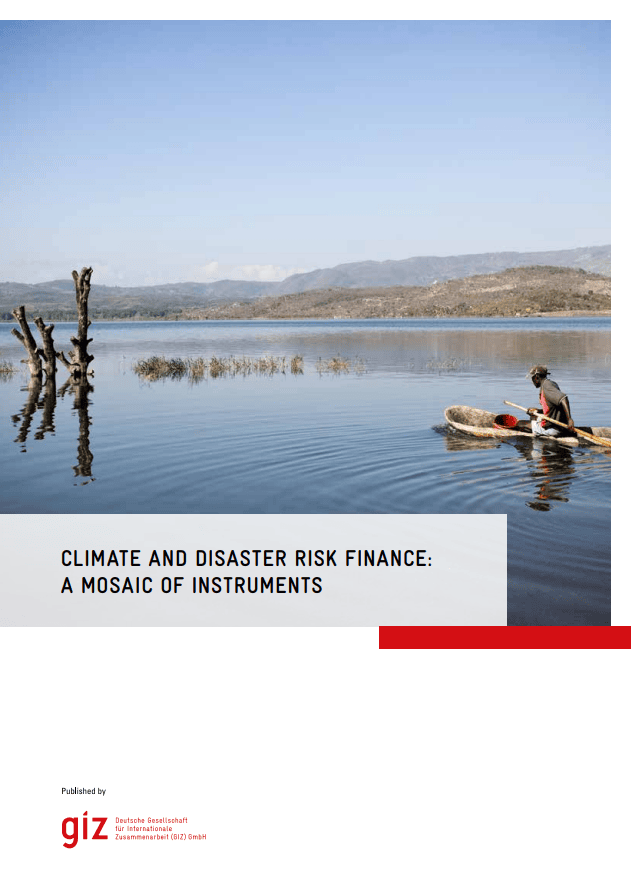
Climate and Disaster Risk Finance and Insurance (CDRFI) is a long-term agenda that requires political commitment, technical expertise, and strong collaboration between public and private actors. This publication maps the financial instruments and management approaches used across the five phases of CDRFI, while recognising that boundaries between them are often fluid.
Vision 2025 Update: Achievements in 2024
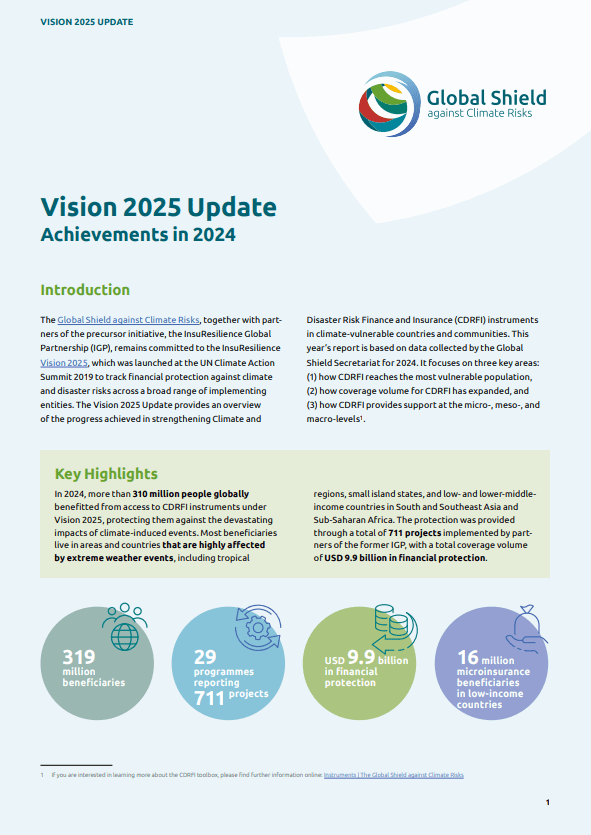
The Vision 2025 Update provides an overview of the progress achieved in strengthening Climate and Disaster Risk Finance and Insurance (CDRFI) instruments in climate-vulnerable countries and communities. This year’s report is based on data collected by the Global Shield Secretariat for 2024.
Compendium of proposals for CALMA RIESGOS
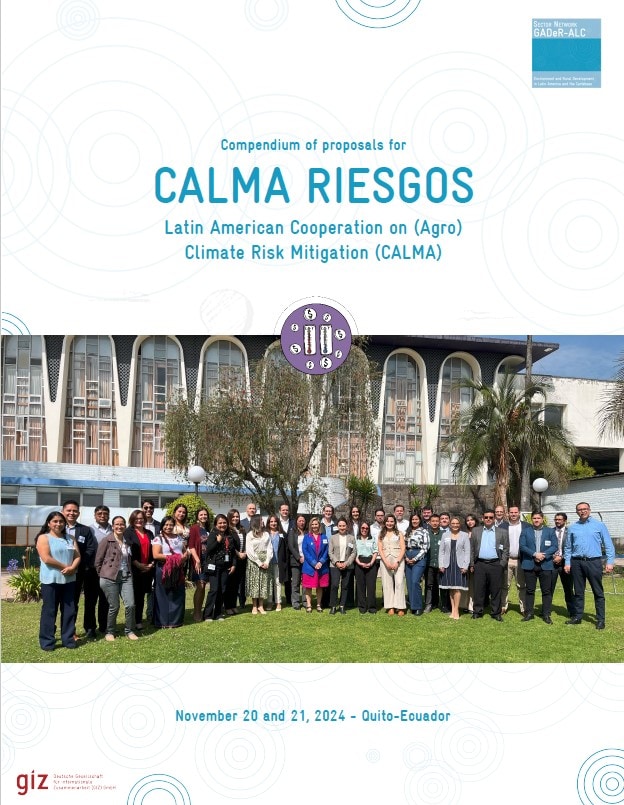
Compendium of proposals for CALMA RIESGOS
Latin American Cooperation on (Agro) Climate Risk Mitigation (CALMA)
“Boosting insurance for climate risks” convened 35 representatives to share experiences on the implementation of rural insurance in their respective countries and discuss opportunities to strengthen regional cooperation on climate adaptation and market development.
Pakistan Global Shield In-Country Process: Stocktake and Gap Analysis
The report presents a detailed stocktake of existing CDRFI mechanisms in Pakistan, identifies critical protection gaps, and outlines key areas for financial and technical support. It highlights the country’s economic and social vulnerabilities to climate-induced disasters, assesses the regulatory and policy environment, and examines the enabling conditions for CDRFI, including institutional capacities, insurance sector challenges, financial protection gaps and inclusion in key sectors.
Typhoon Risk Insurance for Marine Protected Areas in the Philippines
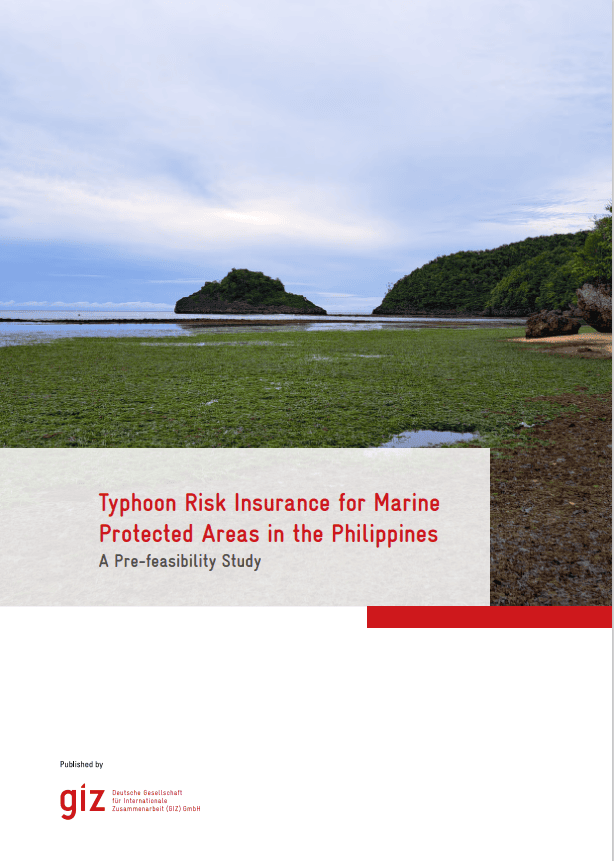
The Philippines is host to more than 1800 Marine Protected Areas (MPAs) and is committed to significantly expand their number and size under the 30 x 30 framework. These MPAs face an increasing threat from multiple hazards, most notably typhoons, which can severely damage mangroves, coral reefs and seagrass meadows. Already chronically underfunded, many MPA management councils struggle to replace lost monitoring assets and finance rehabilitation work. The Deutsche Gesellschaft für Internationale Zusammenarbeit (GIZ) commissioned this pre-feasibility study in order to analyse the potential of new insurance solutions to assist MPAs bouncing back quickly in the aftermath of typhoon events.
Report on Ecosystem-based Adaptation and Nature-based Insurance Solutions in the Philippines and Asia
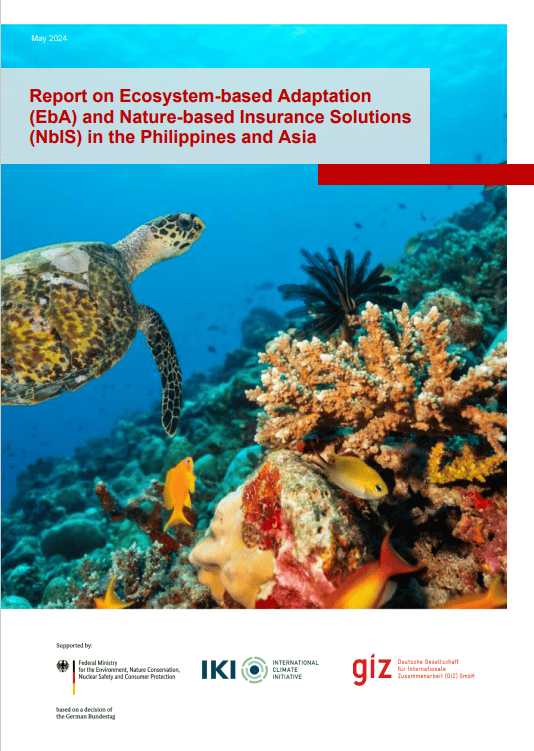
This study aims to explore how Ecosystem-Based Adaptation (EbA) and Nature-Based Insurance Solutions (NbIS)
can effectively mitigate the impacts of climate-related hazards in the Philippines and in the region. It delves into
understanding the policy landscape, examining market practices through case studies, identifying challenges in
the sector, and proposing steps to scale EbA and NbIS solutions in the country.
Foundations of Climate and Disaster Risk Finance and Insurance (CDRFI) and Impactful Civil Society Engagement
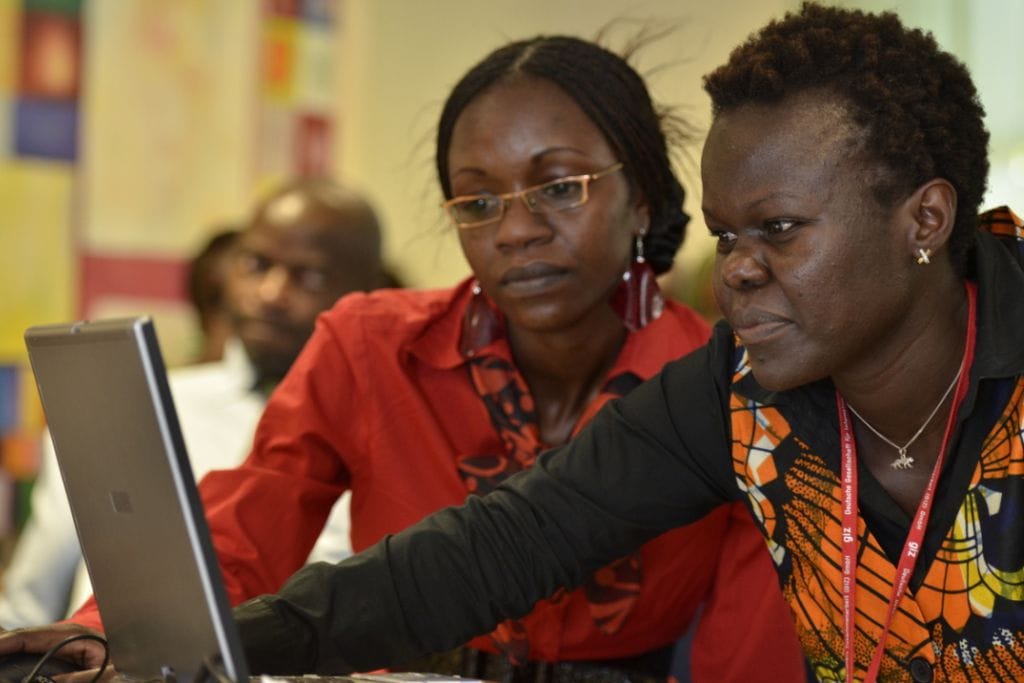
This free, self-paced eLearning course gives a profound introduction to climate and disaster risk finance and insurance (CDRFI) and the political processes surrounding it.
Roadmap for Integrated Climate Risk Management in Ghana: Flood Risk Management & Transfer
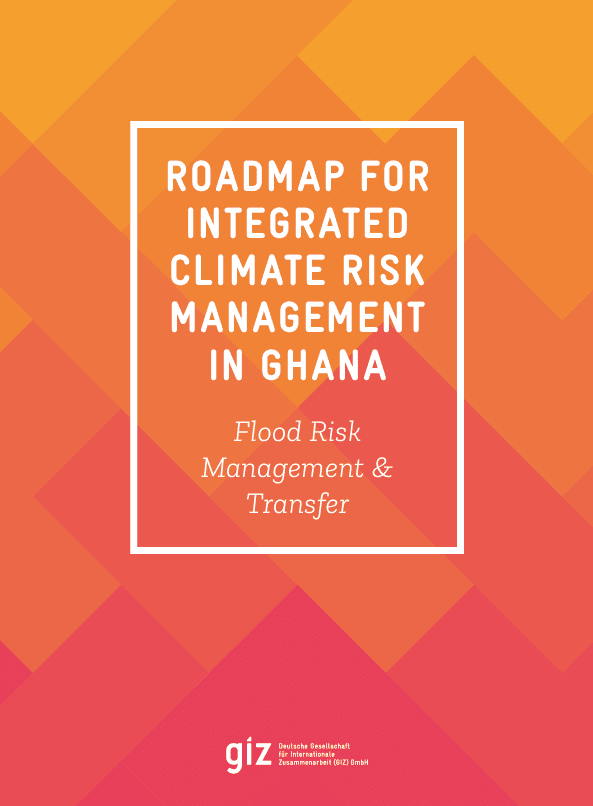
This roadmap was developed as part of the project “Developing Risk Management Approaches for Climate Risks in Ghana” that was implemented by GIZ and Allianz Re in cooperation with local partners in Ghana. The roadmap describes both the approach taken and the route followed by the project partners in applying the Integrated Disaster Risk Management concept in the context of managing flood risk of public infrastructure assets owned or managed by the three municipalities of Accra.