Gender-Lens Investing in Climate and Disaster Risk Financing and Insurance (CDRFI) Solutions
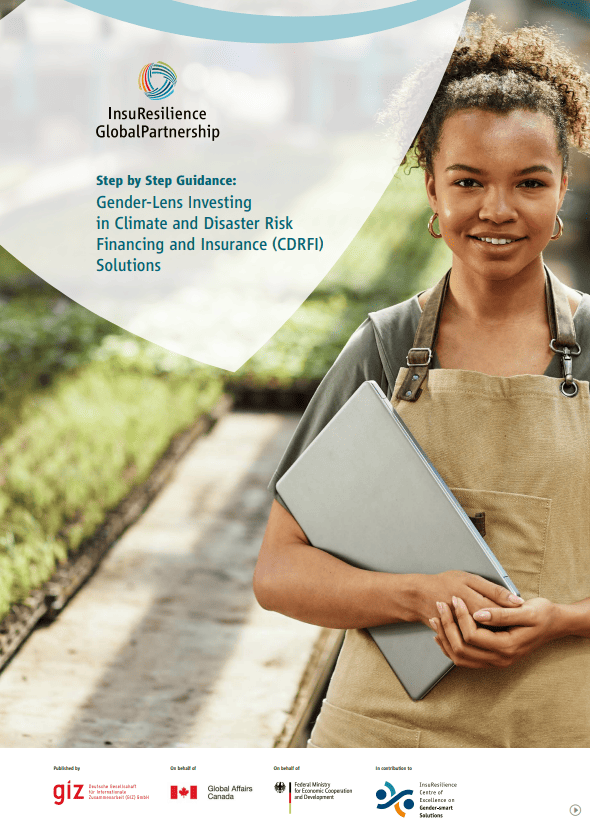
This guidance note specifically focuses on the deployment of development finance with a gender lens in CDRFI-related investment and grant making opportunities to fill an existing gap in practical resources on this topic. It is intended for Members of the InsuResilience Global Partnership (IGP) and the broader CDRFI community that are involved in the financing, design and implementation of gender-smart CDRFI solutions.
Smart Premium and Capital Support: Enhancing Climate and Disaster Risk Finance Effectiveness Through Greater Affordability and Sustainability
Climate and disaster risk finance and insurance (CDRFI) promises substantial resilience benefits. The Policy Note aims to present a common understanding among InsuResilience members and partners regarding recipient eligibility, volume, duration, and form of premium and capital support as well as the conditions under which this support will be provided.
The Value of Reefs for Protecting the Most Vulnerable Populations in the Dominican Republic, Jamaica and Grenada
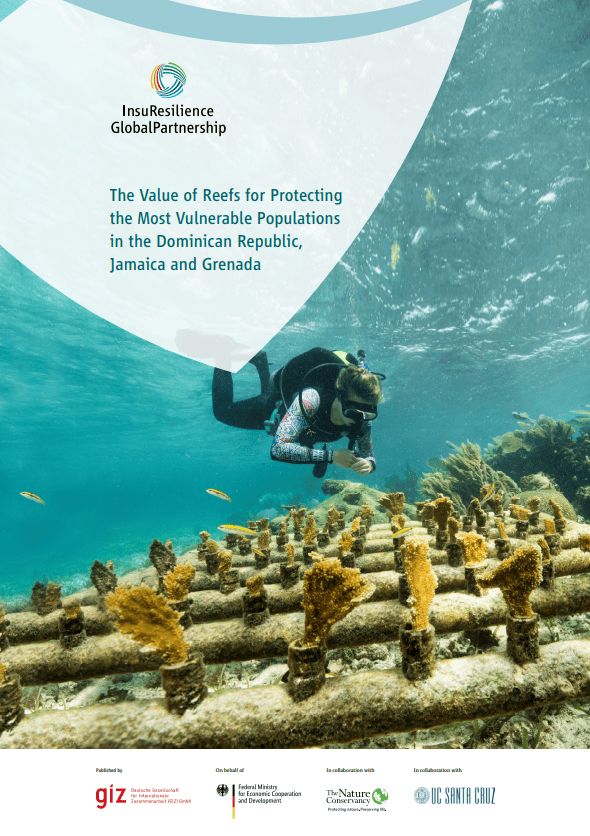
The quantitative, spatially-explicit analyses applied in this study highlight where reefs provide the greatest flood protection services to vulnerable populations in DR, Jamaica and Grenada. This work identifies where future reef loss may have the greatest impacts on vulnerable populations and where enhanced conservation and restoration will deliver the most benefits.
Glossary: Climate and Disaster Risk Finance and Insurance
This glossary provides an overview of relevant terms to the thematic intersection of financing and insurance instruments with overall disaster and climate risk management. It therefore limits coverage of terminology from these fields to concepts and definitions which are directly relevant for the solution space of climate and disaster risk finance and insurance in the overall context of the InsuResilience Global Partnership.
The landscape of financing options to address human mobility in the context of climate change
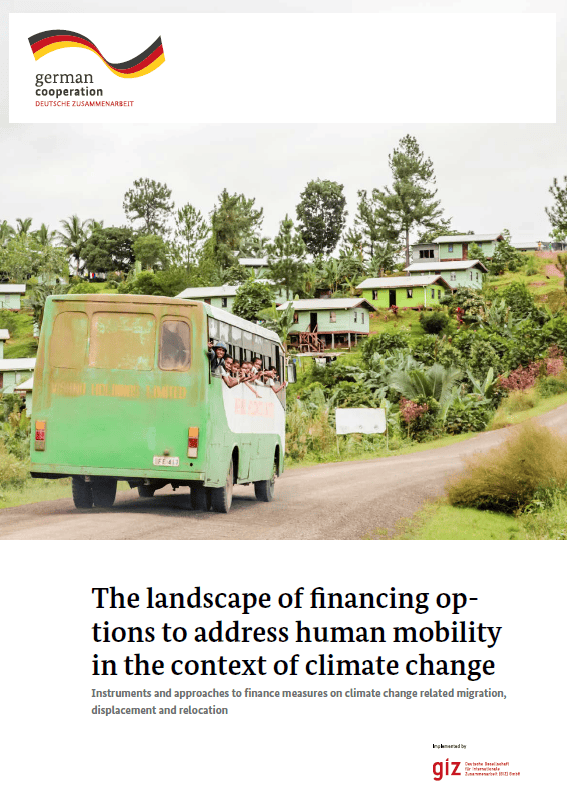
Slow onset processes and extreme weather events related to global warming are driving human mobility in context of climate change (HMCCC). Due to related extremes and slowly evolving processes such as floods, droughts, and rising sea-level, increasingly more livelihoods are destroyed, homes become inhabitable and economic opportunities are mitigated, resulting in migration, displacement, and planned relocation. To reduce those adverse effects related to climate change, the implementation of timely and diversified financing is needed. Therefore, with a focus on developing countries, this study presents and reflects on different relevant finance sources and instruments in terms of their linkage to HMCCC, effect on climate risks, implementation timing, and gender aspects. 10 finance instruments and tools that address HMCCC have been selected with a non-exhaustive approach for analysis, coming from a range of international, public, and private sources. Additionally, the effect of the COVID-19 pandemic on financing flows and options for HMCCC has been considered in an exclusive chapter. The study closes with recommendations for different target groups, especially national governments, and donor organizations.
Factsheet: Climate and Disaster Risk Finance in the IPCC Sixth Assessment Report
This factsheet sheds light on the IPCC’s assessment of the role of Climate and Disaster Risk Finance and Insurance global climate change adaptation. It summarizes the key messages on CDRFI in Working Group II’s contribution on Impacts, Adaptation and Vulnerability to the IPCC’s Sixth Assessment Report (AR6).
The Nexus between International Gender and Climate and Disaster Risk Finance and Insurance Frameworks to Support with National Action
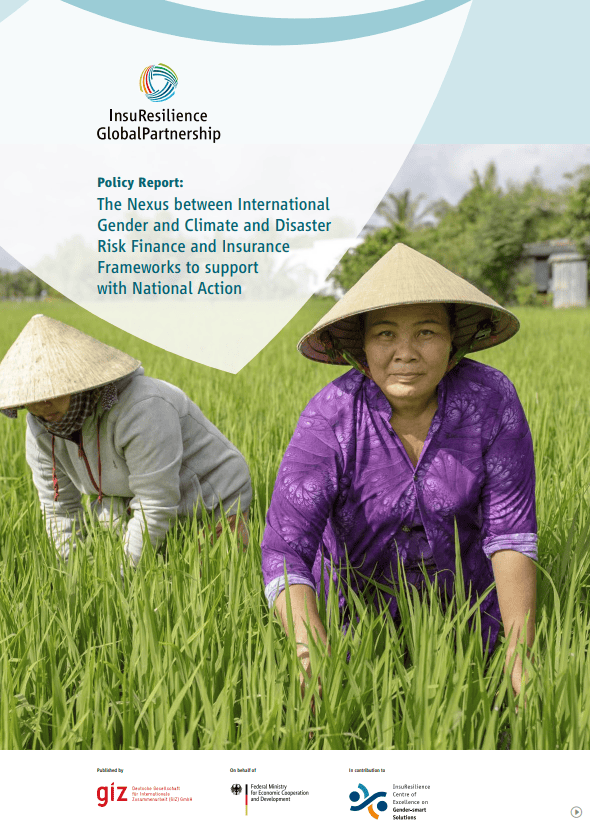
The InsuResilience Global Partnership (IGP) Vision 2025, supported by the Pro-poor Principles and the Declaration on Gender, unite policymakers from these diverse policy agendas under the common vision of building the resilience of the most vulnerable to climate change through financial protection. This document sets out an overview of these international commitments relevant to improving gender-smart CDRFI solutions as a starting point to advance global learning on the theme.
Step By Step Guidance: How to Translate International Commitments into Action to Achieve Gender-Smart Climate Disaster Risk Finance and Insurance Solutions
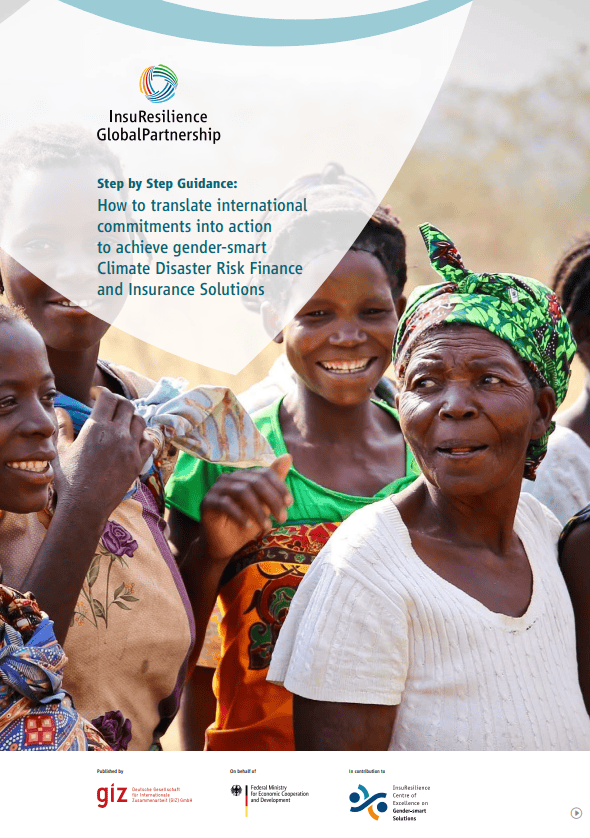
This guidance provides advice on how to integrate gender and CDRFI considerations into the policy development process and policy content. It assesses the guidance that these policy frameworks offer for the CDRFI financing ‘sector,’ it also explores the challenges and opportunities in converting international, national, and institutional strategies into action.
From Innovation to Learning: A Strategic Evidence Roadmap for Climate and Disaster Risk Finance and Insurance
This roadmap is a community document, facilitated by the InsuResilience Global Partnership. It builds on the InsuResilience Global Partnership’s Pro-Poor Principles and addresses one of main objectives of InsuResilience Vision 2025 – to increase the evidence base for CDRFI and to move the focus from one of innovation to one of learning.
A gender-smart approach to monitoring and evaluation (M&E) of Climate and Disaster Risk Finance and Insurance (CDRFI) Programmes
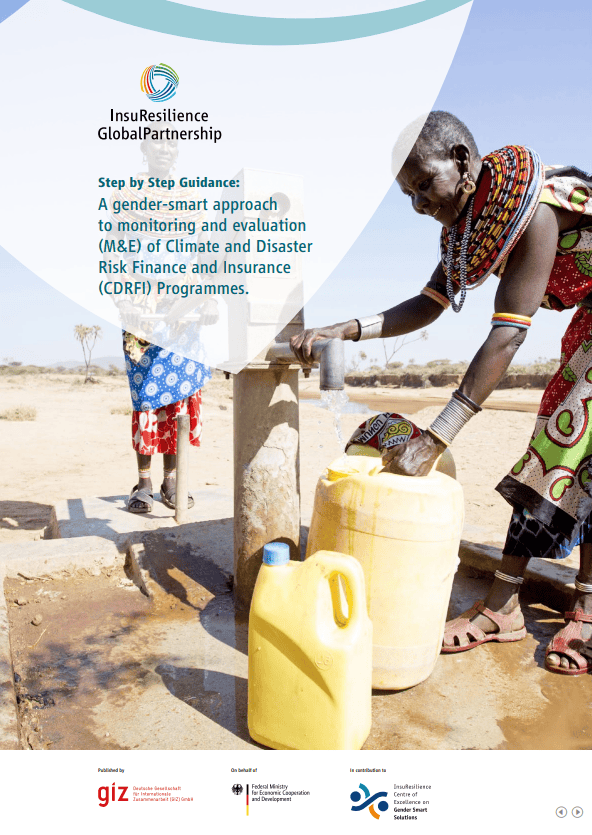
This guidance note provides practical step-by-step guidance on how to achieve a gender-smart Climate and Disaster Risk Finance and Insurance (CDRFI) programme through effective planning for monitoring and evaluation (M&E) throughout each stage of the programme cycle. The target audience for this guidance note is practitioners involved in the design and/ or implementation of any stage of the programme cycle of a CDRFI project.