Adapting From The Ground Up – Enabling Small Businesses in Developing Countries to Adapt to Climate Change
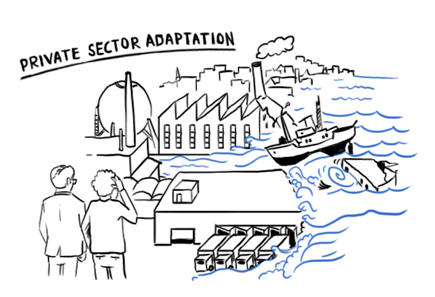
The report highlights how the public sector, with assistance from development partners, NGOs, and others, can create an enabling environment which will encourage micro and small enterprises (MSEs) in developing countries to invest in adaptation. The analysis is based on numerous case studies.
The Business Case for Responsible Corporate Adaptation: Strengthening Private Sector and Community Resilience.
This report highlights how companies can adapt to climate change, and how to address the most pressing challenges that hamper private sector progress. It shares lessons learned from 17 case studies and provides actionable guidance for public and private sector leaders to accelerate responsible corporate adaptation.
Making Adaptation a Private Sector Business: Insights from the Pilot Program for Climate Resilience in Nepal
This case study assesses a private sector project run by the IFC in Nepal. The project engages and develops the capacity of agribusiness firms and local commercial banks to transfer skills and resources to farmers, thus promoting climate resilience in the agricultural sector. The report also explores opportunities for scaling-up and replicating private sector engagement.
Climate change realities in Small Island Developing States in the Caribbean
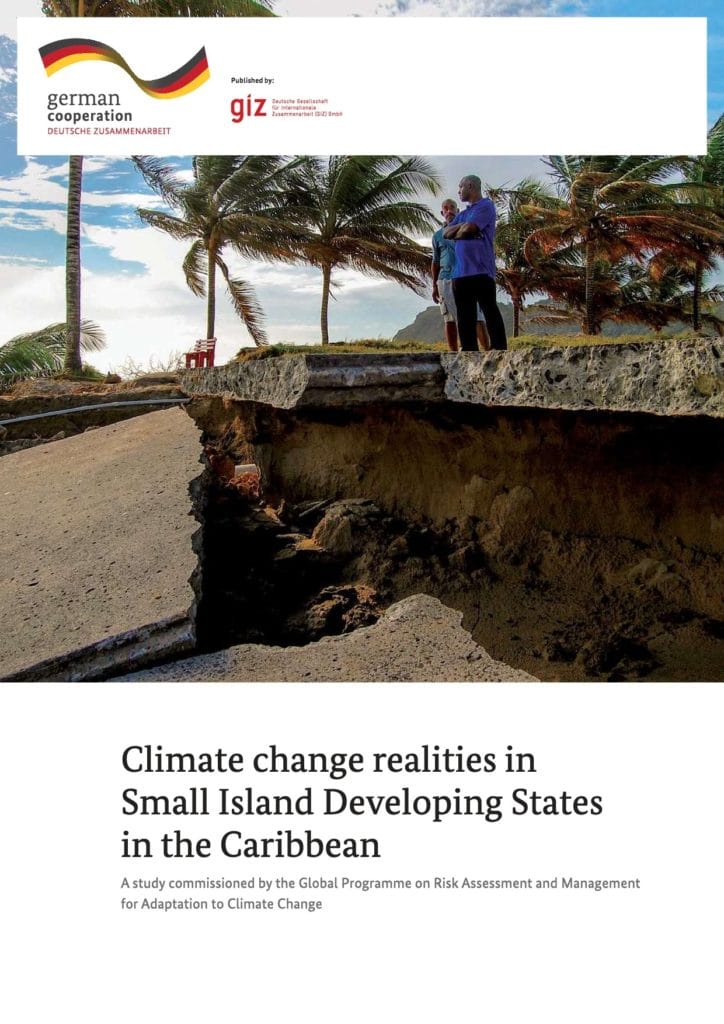
This report aims at making the case for developing and implementing a comprehensive, structured approach at the local, national, regional and international levels to deal with residual risk associated with climate-related events. The report focuses on the Caribbean region with a special emphasis on Grenada, which illustrates the consequences and the responses to deal with climate risk arising from climate change-related extreme events and slow onset changes through concrete case studies.
Post-Pam: lessons learned for [German] development cooperation in Vanuatu and the Pacific
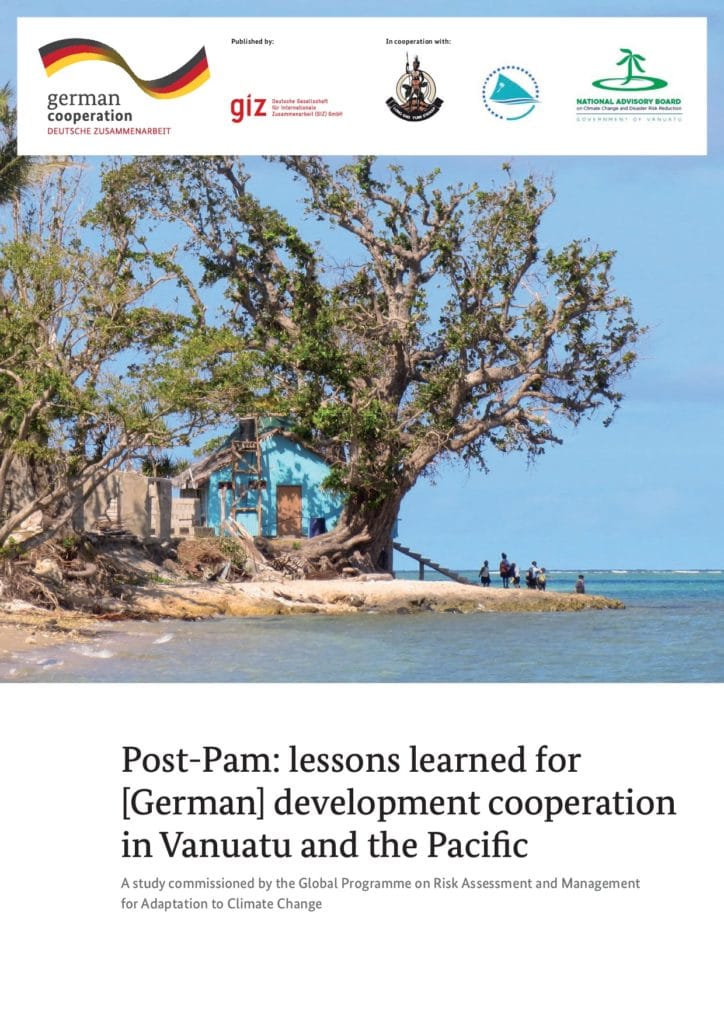
Tropical Cyclone Pam has been recognised as an opportunity to learn lessons and draw up recommendations for [German] development cooperation and its partners in the region on how to address the issue of comprehensive climate risk management, including climate risk insurance. The objectives of this study were to identify those lessons in order to inform Germany’s current and future regional cooperation in Vanuatu and the South Pacific region. The study gives an overview of socio-economic characteristics, disaster risk, and CRM institutions and programmes in Vanuatu and the region.
Cost and Benefits of Ecosystem Based Adaptation: The Case of the Philippines
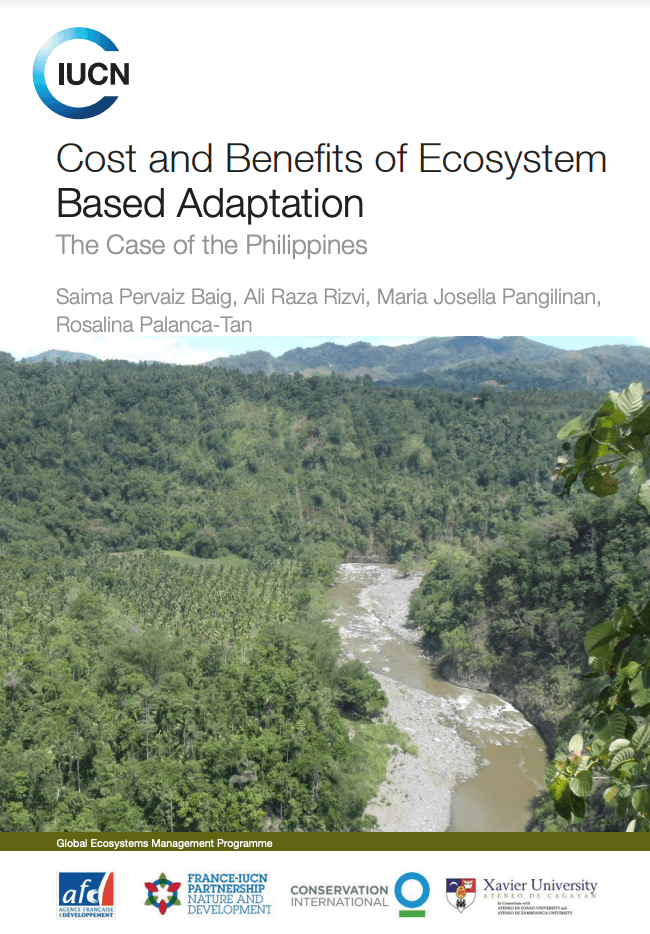
This report will build upon the previous scoping study (Ecosystems Based Adaptation: Knowledge Gaps in Making an Economic Case for Investing in Nature Based Solutions for Climate Change (Rizvi et al., 2015)) and will assess the importance of nature based solutions to address climate risks and identify knowledge gaps in economic data from the field in the Philippines. The purpose of this study is to “increase understanding of the economic effectiveness of ecosystems based approaches and provide additional important information that would assist decision making at the local, national and global levels.”
Seguimiento y Evaluación de la Adaptación a Niveles Agregados: Un Análisis Comparativo de Diez Sistemas

Suivre et évaluer l’adaptation au changement climatique à haut niveau : analyse comparative de dix systèmes
Monitoring and Evaluating Adaptation at Aggregated Levels: A Comparative Analysis of Ten Systems
Saved health, saved wealth: an approach to quantifying the benefits of climate change adaptation