
What are you looking for?

Publications

Here you can find publications on the subject of climate change adaptation in different languages. Please use the filter option to select your preferred language.
  • Topics

  • Types

  • Languages

Climate change and disasters in Pacific Island Countries (PICs) disproportionately impact women and vulnerable groups due to existing gender inequalities, limited economic access, and sociocultural barriers. These events cause economic losses and while emerging initiatives are now integrating gender and social inclusion into climate and disaster risk finance and insurance (CDRFI) solutions, significant gaps remain in ensuring women’s equitable access to insurance, participation in decision-making, and financial literacy. This analysis looks at tailored, gender- sensitive financial products that can enhance women’s resilience and inclusion in climate risk management efforts. 
The Guidance Note serves as both a knowledge resource and a practical guide, it provides recommendations for national social protection actors, policy makers, multilateral climate funds, and development organisations on how to embed social protection across climate action.
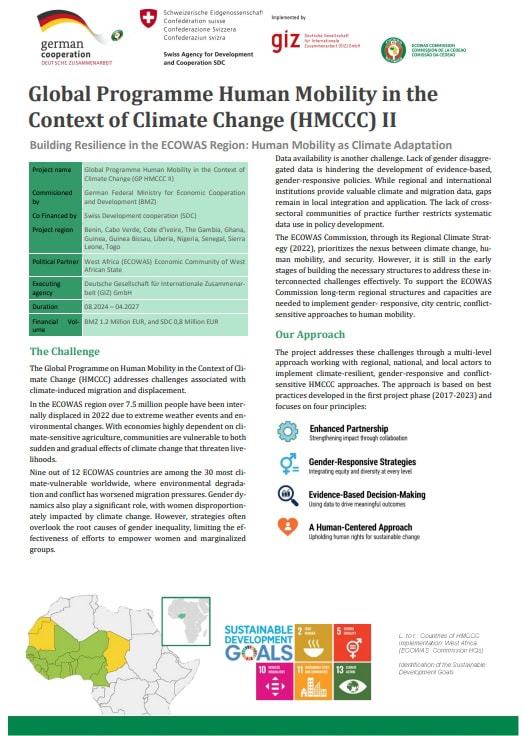
Le Programme global HMCCC II soutient les acteurs locaux et nationaux dans la mise en œuvre d’approches sensibles au genre, aux conflits et résilientes au climat pour faire face à la mobilité liée aux changements climatiques, en mettant particulièrement l’accent sur les groupes marginalisés et l’intégration de la mobilité humaine dans la planification du développement. 
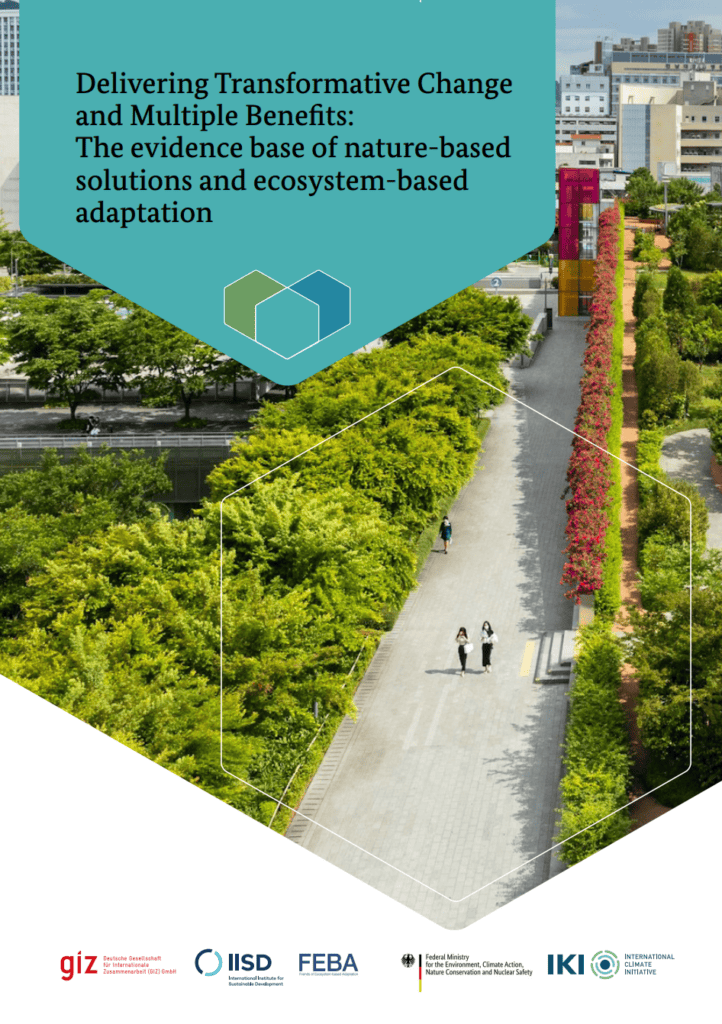
With an increasing number of global assessments, studies, and reports on the effectiveness of Nature-based Solutions (NbS) and Ecosystem-based Adaptation (EbA), this brief provides state-of-the-art summary and analysis of the latest science–policy interface assessments and relevant reports related to NbS and EbA. It outlines the evidence base for the ability of NbS and EbA to deliver multiple benefits and transformative change to solve societal and environmental challenges and provides forward-looking recommendations on scaling up the implementation and support of NbS and EbA. This brief is targeted toward policy-makers, climate change and biodiversity practitioners as well as UNFCCC and CBD negotiators.
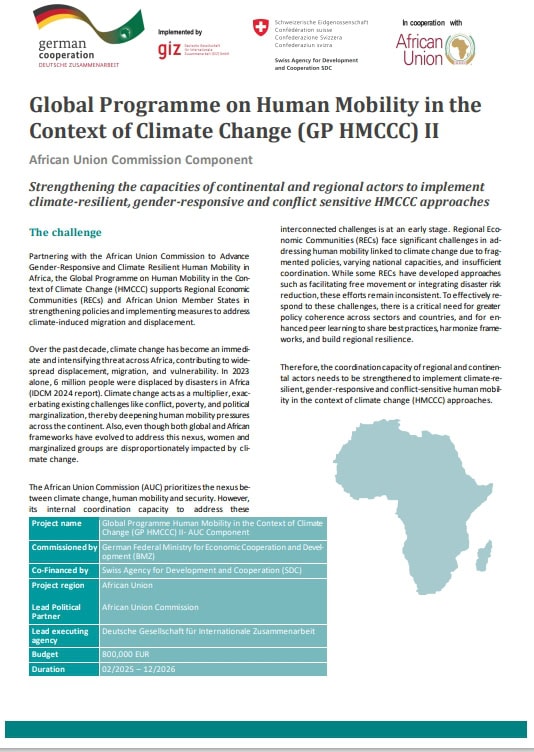
GP HMCCC II supports local and national actors in addressing climate-related mobility through gender-responsive, conflict-sensitive, and climate-resilient approaches - with a particular focus on marginalized groups and the integration of human mobility into development planning.
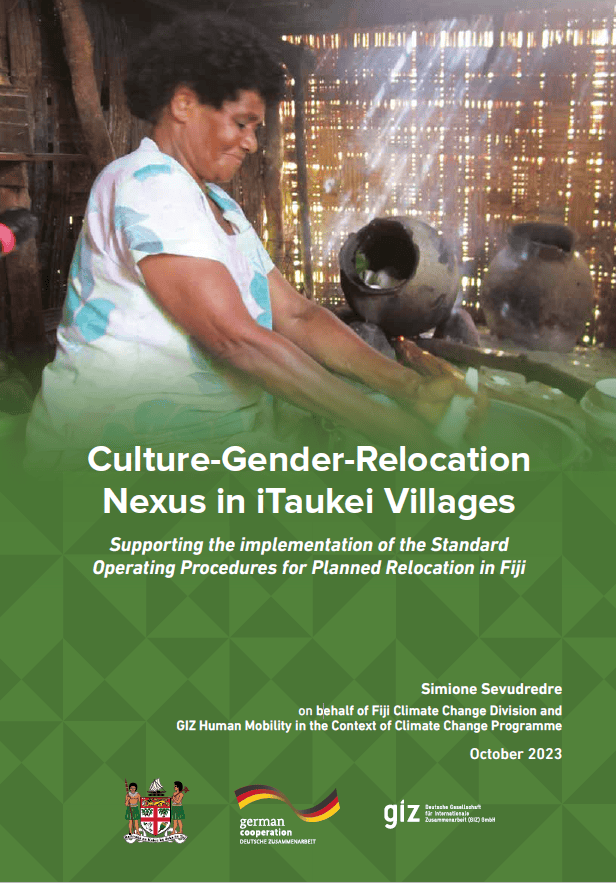
Indigenous Communities in Fiji have a long history of migration and adaptation, deeply rooted in living with nature. Today, climate change forces communities to relocate, risking the loss of cultural identity. Drawing on oral traditions and decolonizing approaches can help shape relocation strategies that respect and strengthen Indigenous Resilience.
GP HMCCC II supports local and national actors in addressing climate-related mobility through gender-responsive, conflict-sensitive, and climate-resilient approaches - with a particular focus on marginalized groups and the integration of human mobility into development planning.
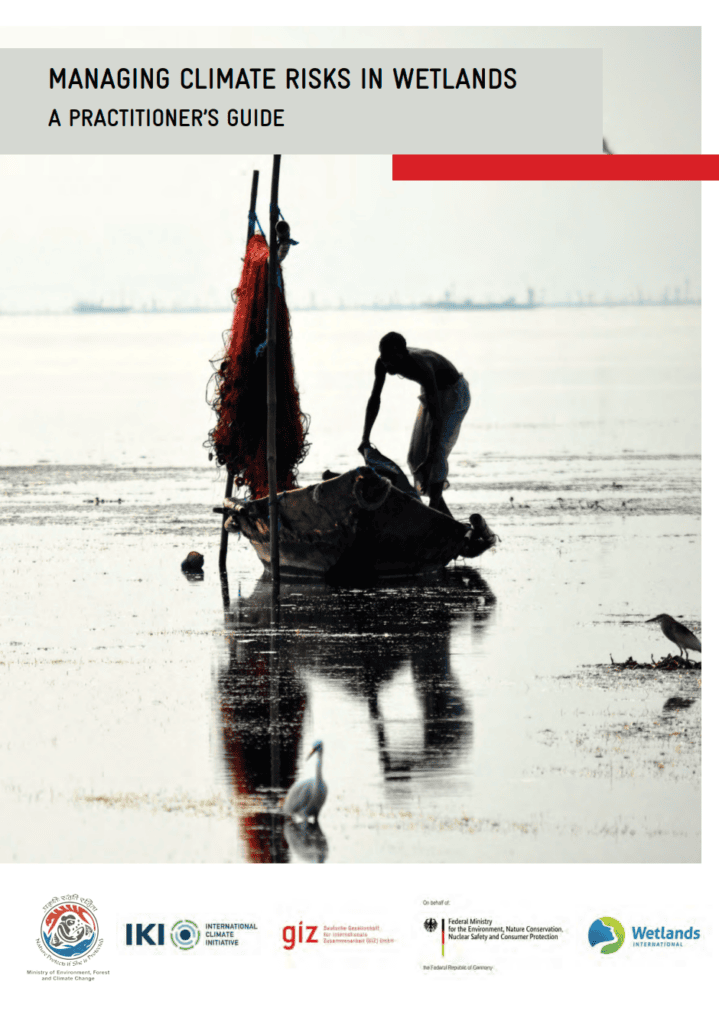
This guide is an assessment methodology for integrated site-level climate risk assessment and adaptation planning. It outlines 3 steps of climate change integrated site management, including vulnerability assessment, adaptation planning, and adaptation implementation and review, and can best be used as a priority-setting process for mainstreaming climate adaptation in wetland management.
En el sur de la ciudad de Mérida se encuentra un área conocida como la zona de transición, que separa los límites urbanos con la Reserva Cuxtal, un área de gran valor ecológico. Este documento presenta una estrategia integral para fortalecer la resiliencia climática en la zona de transición de manera sostenible y equitativa. De esta manera, le provee a la ciudad de Mérida de herramientas necesarias para combatir los efectos adversos del cambio climático en su población y ecosistemas.