
Why working with nature pays off: The case for investing in Ecosystem-based Adaptation
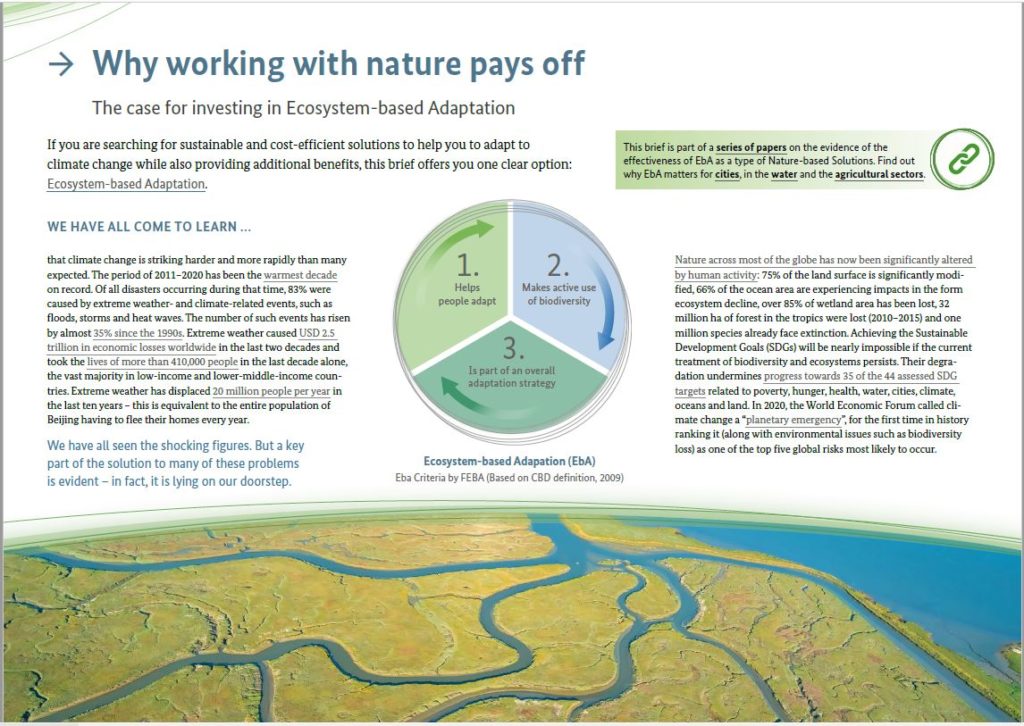
This series of papers compiles arguments, facts and examples on the evidence of the effectiveness of EbA in the form of short, easy to read briefs.
Looking first at why EbA pays off in general, then at EbA in the water sector, in agriculture and in cities, it showcases why EbA offers cost-efficient solutions for adaption to climate change while also providing additional benefits for people and nature.
Each of the four briefs can also be used as a stand-alone document e.g. when discussing adaptation options with planners and decision makers in water management, land use or urban planning.
Peer Learning for Climate Action – Why it works and how funders can support it
This brief showcases peer learning as an effective approach to developing capacity for responding to the challenges of climate change. It is aimed at practitioners in funding and implementing agencies, particularly those working in policy processes at national levels, but it is relevant for all those interested in strengthening capacity for climate action.
Thematic Paper 6: Delivering Financing for Joint Biodiversity and Climate Solutions
Thematic Paper 6 emphasises the need for more coordinated joint climate and biodiversity funding at the international and national levels and outlines examples of possible sources of finance.
Thematic Paper 5: From National to Local Implementation: A Collaborative, Multi-Level Effort to Achieve Joint Climate and Biodiversity Goals
Thematic Paper 5 makes the case for collaborative and inclusive multi-level governance systems to achieve joint climate and biodiversity goals.
Thematic Paper 4: Good Governance for Integrated Climate and Biodiversity Policy-Making
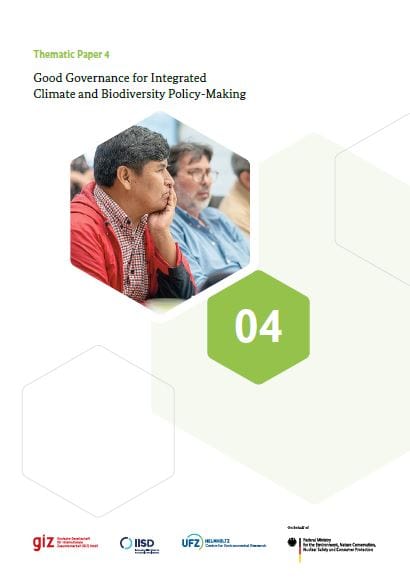
Thematic Paper 4 analyses the role of good governance for integrated climate and biodiversity policy-making.
Thematic Paper 3: Nature-Based Solutions: An Approach for Joint Implementation of Climate and Biodiversity Commitments
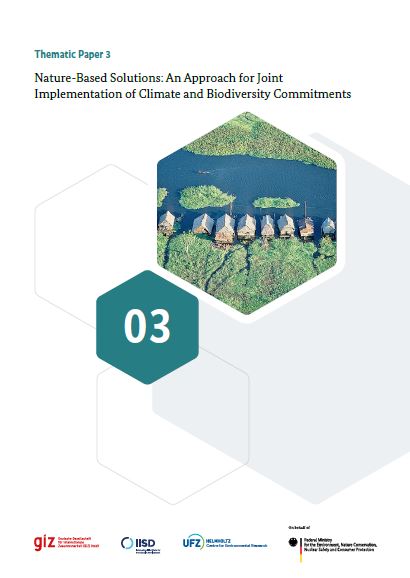
Thematic Paper 3 unpacks the concept of Nature-based Solutions (NbS) as an approach for the joint implementation of climate and biodiversity commitments.
Thematic Paper 2: Linkages Between Biodiversity and Climate Change and the Role of Science-Policy-Practice Interfaces for Ensuring Coherent Policies and Actions
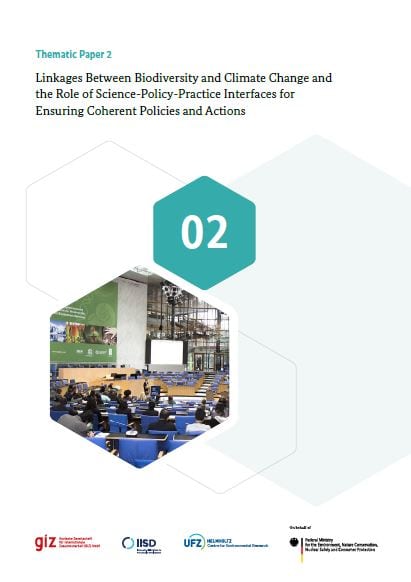
Thematic Paper 2 scrutinises the role of science-policy-practice interfaces for ensuring coherent biodiversity and climate change policies and actions.
Assessment of Climatic Impact Drivers in India
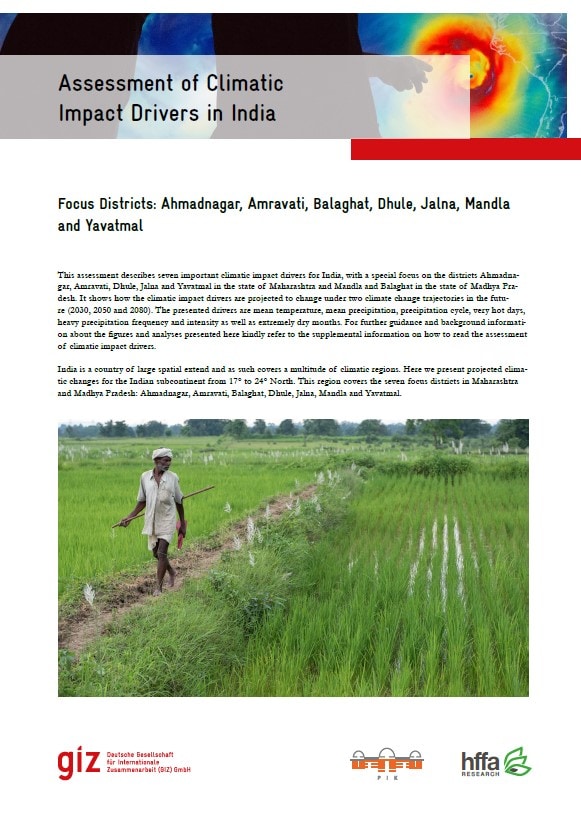
This assessment describes seven important climatic impact drivers for India, with a special focus on the districts Ahmadnagar, Amravati, Dhule, Jalna and Yavatmal in the state of Maharashtra and Mandla and Balaghat in the state of Madhya Pradesh. It shows how the climatic impact drivers are projected to change under two climate change trajectories in the future (2030, 2050 and 2080).
Assessment of Climatic Impact Drivers in Kenya
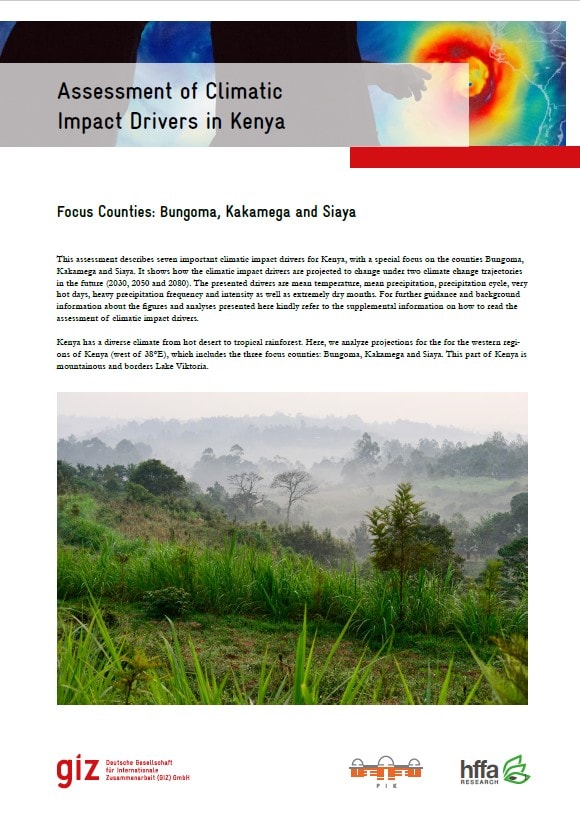
This assessment describes seven important climatic impact drivers for Kenya, with a special focus on the counties Bungoma, Kakamega and Siaya. It shows how the climatic impact drivers are projected to change under two climate change trajectories in the future (2030, 2050 and 2080).
Assessment of Climatic Impact Drivers in Ethiopia
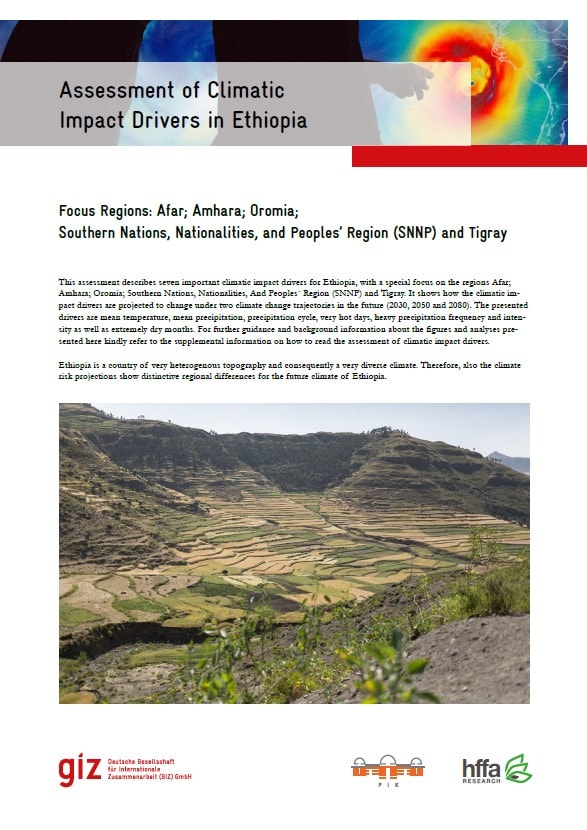
This assessment describes seven important climatic impact drivers for Ethiopia, with a special focus on the regions Afar; Amhara; Oromia; Southern Nations, Nationalities, And Peoples´ Region (SNNP) and Tigray. It shows how the climatic impact drivers are projected to change under two climate change trajectories in the future (2030, 2050 and 2080).