Overview of Fiji’s Response to International Frameworks on Human Mobility in the Context of Climate Change
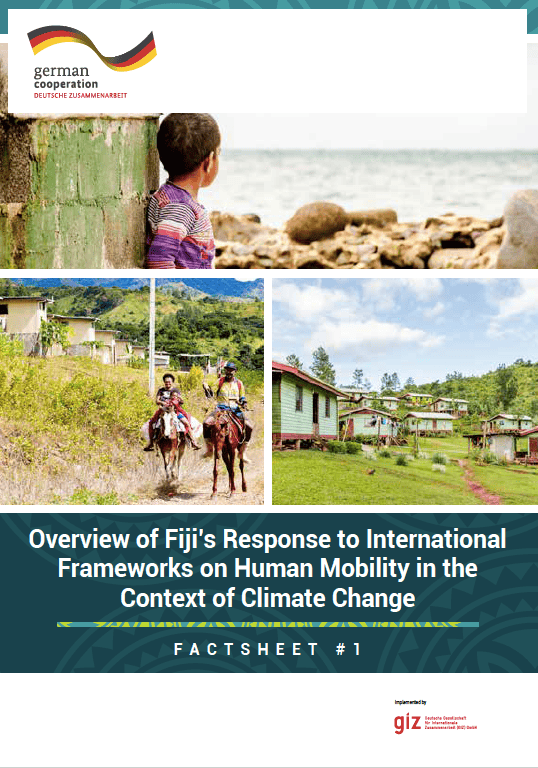
This document provides an overview of how Fiji, a Pacific Island country affected by climate change, has responded nationally to international and regional frameworks and guidelines on adaptation and human mobility in the context of climate change. It covers, inter alia, how Fiji developed its Planned Relocation Guidelines – A framework to undertake climate change related relocation, the first to ever be developed in the Pacific Islands.
Enhancing National Climate Plans through Nature-Based Solutions
In the framework of a SPA grant agreement, WWF US developed eight simple recommendations for countries to include nature-based solutions in their climate plans (NDCs) and thereby show their commitment to take ambitious climate action.
Comprehensive Risk Management. The Approach of German Development Cooperation for Dealing with Disaster and Climate Risks
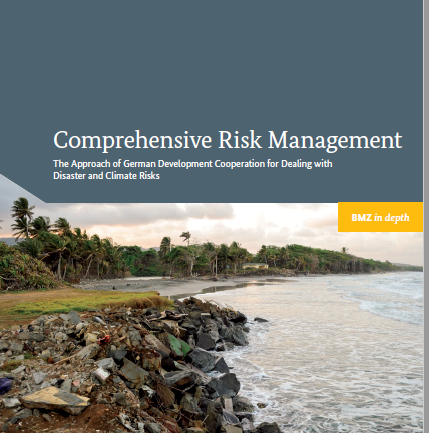
Comprehensive risk management involves bringing together strategies and measures to reduce disaster and climate risks. Rather than a series of individual measures, it combines both tried-and-tested and innovative instruments from the fields of climate change mitigation, climate change adaptation, disaster risk management and social protection into a single holistic approach.
Voluntary guidelines for the design and effective implementation of ecosystem-based approaches to climate change adaptation and disaster risk reduction and supplementary information
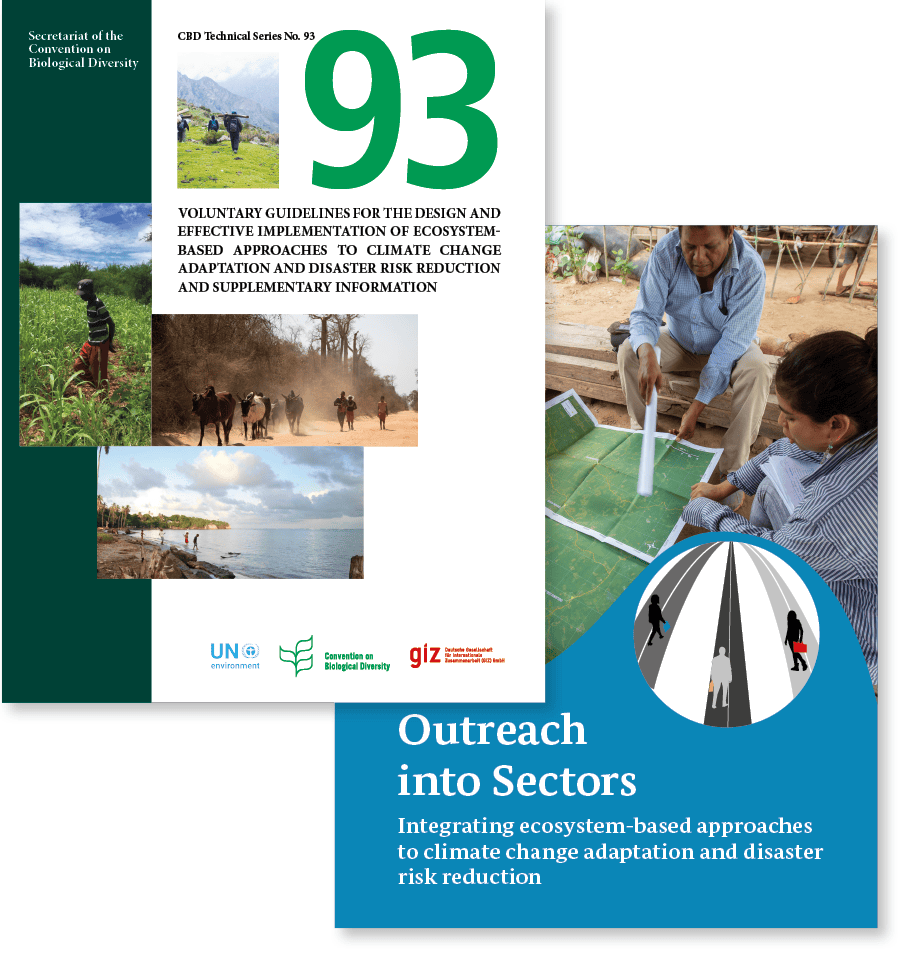
The present report, set up by SCBD, UN-Environment and GIZ, contains the version of the guidelines as adopted by the 14th CBD Conference of the Parties as well as updated supplementary information.
Article: Climate Services for a Resilient Infrastructure: Planning Perspectives for a Sustainable Future of Vietnam

This article summarizes some initial findings of Viet Nam’s efforts and presents an innovative approach with 3 strategic measures: 1) To enhance provision of user-friendly climate services for infrastructure planners; 2) To enhance the use of climate services and consideration of climate risk assessment for infrastructure planning process and 3) To mainstream the approach of climate-proofing for infrastructure into the SEDP, NDC and NAP of Viet Nam.
Climate Services for Infrastructure Investments – Baseline Assessment Report for the Nile Basin Countries

In order to enhance the provision of Climate Services for infrastructure investments, a baseline assessment of available Climate Services has been conducted focusing on the assessment of respective capabilities of National Meteorological and Hydrological Services (NMHS) in Burundi, DR Congo, Ethiopia, Kenya, South Sudan, Sudan and Uganda.
Assessment of Climate Service Providers Capabilities in Brazil
The Assessment of Climate Service Providers Capabilities in Brazil has been conducted as part of the baseline asssessment for the Climate Service for Infrastructure Investment (CSI) project. It demonstrates that a diverse set of stakeholders exist that provides Climate Services for different sectors and decision making context. The report is in Portuguese.
Tracking Successful Adaptation. Smart monitoring for good results. Adaptation Partnership Workshop Report 2012.
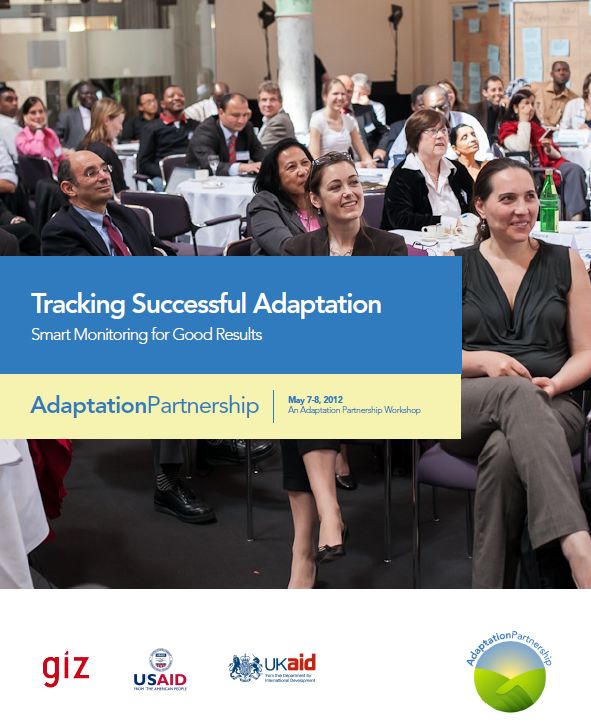
Report of the 2012 Workshop on M&E of Adaptation organised by the Adaptation Partnership, GIZ and USAID.
The Business Case for Responsible Corporate Adaptation: Strengthening Private Sector and Community Resilience.
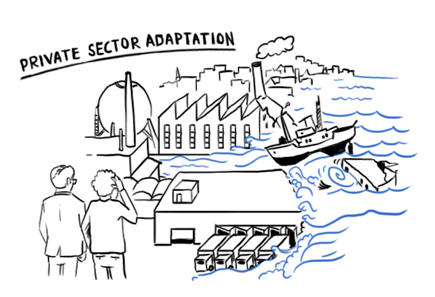
This report highlights how companies can adapt to climate change, and how to address the most pressing challenges that hamper private sector progress. It shares lessons learned from 17 case studies and provides actionable guidance for public and private sector leaders to accelerate responsible corporate adaptation.
Strategic Mainstreaming of Ecosystem-based Adaptation in Vietnam: Vulnerability Assessment for Ecosystem-based Adaptation – Overall Approach: Vulnerability Assessment for Socio-Ecological Systems

The GIZ project “Strategic Mainstreaming of EbA in Vietnam” is working to promote EbA approaches in Climate Change Adaptation planning across government policy and planning systems. Institutional considerations are thus important. While much of CCA policy is produced at the national level, practical planning for CCA is primarily the responsibility of the Provincial Peoples’ Committees. Thus, as part of its portfolio of activities the project has selected two provinces – Quang Binh and Ha Tinh to demonstrate EbA vulnerability assessments and identify EbA interventions.