Glossary of key terms and concepts for gender, as it relates to Climate and Disaster Risk Finance and Insurance
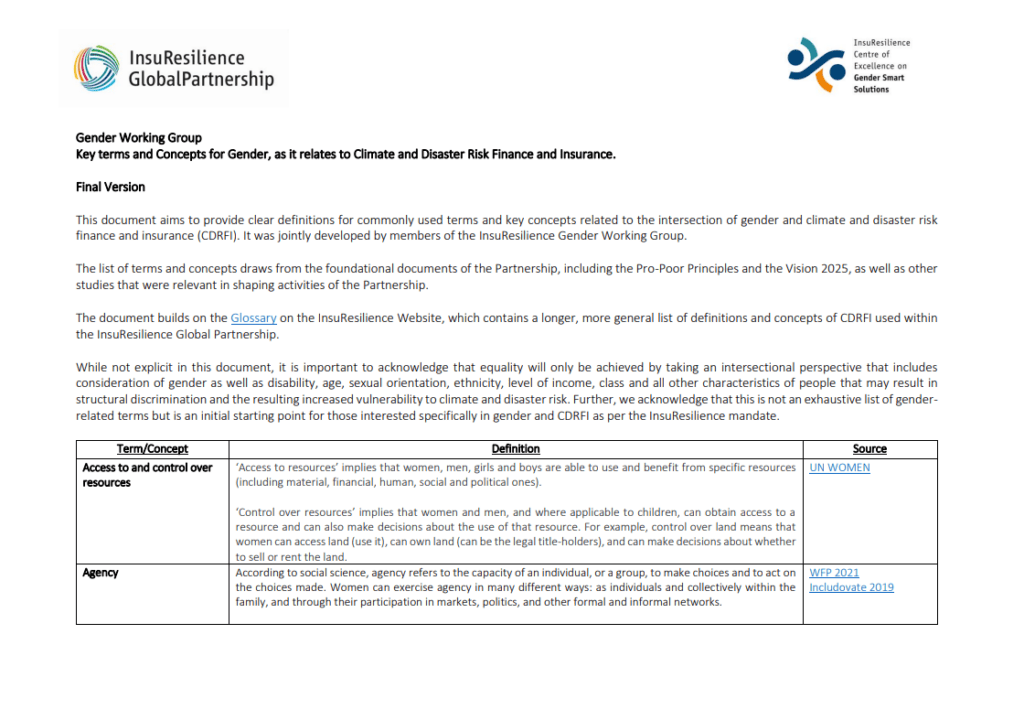
This document aims to provide clear definitions for commonly used terms and key concepts related to the intersection of gender and climate and disaster risk finance and insurance (CDRFI). It was jointly developed by members of the InsuResilience Gender Working Group.
Scoping Paper: Climate Change, Human Mobility and Climate Risk Insurance Tools
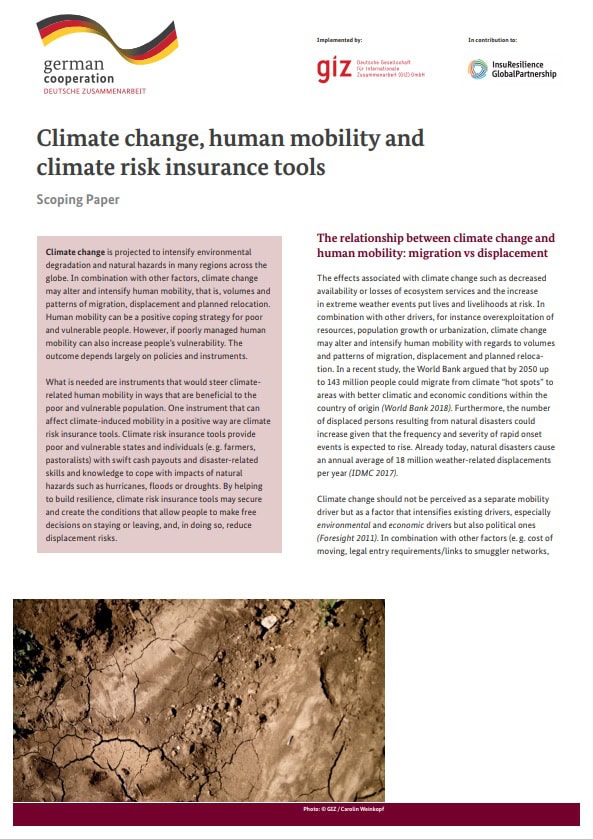
This scoping paper, produced by the BMZ-funded GIZ Global Programme on Human Mobility in the Context of Climate Change in collaboration with the InsuResilience Global Partnership, deals with the relationship between climate change and human mobility and the potential role of climate risk insurance tools (CRI tools) as an influencing factor on human mobility.
Working together for climate resilience – Challenges and success factors for collaboration between technical and financial partners in development cooperation
Acknowledging previous and on-going discussions on aid effectiveness, this working paper seeks to shed light on challenges and entry points for practical collaboration between technical and financial development partners in projects on the ground.
Insurance For Climate Adaptation: Opportunities And Limitations
Informing the Global Commission on Adaptation’s flagship report for the UN Cimate Action Summit, a new report has been published on “Insurance for Climate Adaptation: Opportunities And Limitations”. Its content elaborates on climate and disaster risk insurance, its role, its making and recommendations.
Steering International Adaptation Finance Towards the Local Level
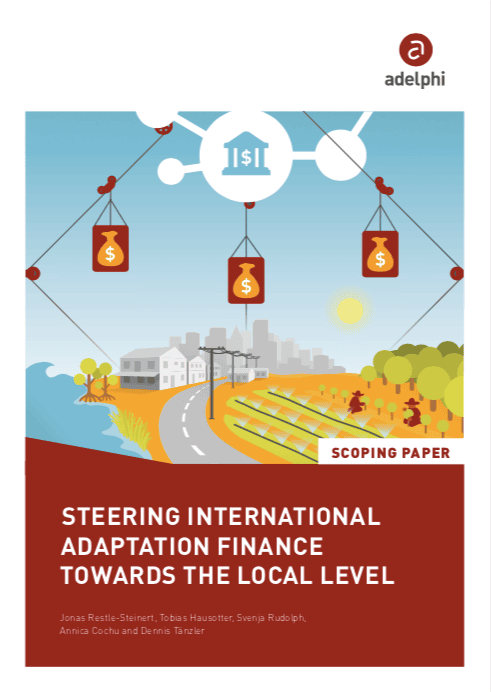
The provision of climate finance, especially for adaptation needs in vulnerable and local communities, is considered a key element and political goal in the international climate change space. In this paper, several key challenges and potential solutions for channeling money from the international to the local level have been identified and analysed.
Defining Adaptation – and Distinguishing It From Other Development Investments
How can we distinguish an adaptation project from a regular development project and what exactly is the additionality of adaptation? This question is often raised by ministries, funding institutions and development practitioners.
The Future of Disaster Risk Pooling for Developing Countries: Where Do We Go from Here?
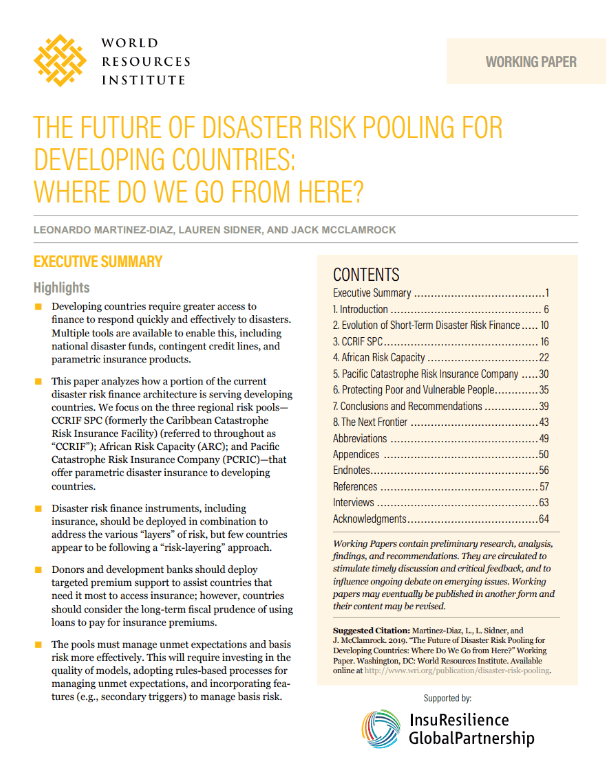
Developing countries require greater access to finance to respond quickly and effectively to disasters. Multiple tools are available to enable this, including national disaster funds, contingent credit lines, and parametric insurance products. This paper analyzes how a portion of the current disaster risk finance architecture is serving developing countries.
Insurance for Climate Adaptation: Opportunities and Limitations
Climate change jeopardizes socioeconomic stability, and sets back efforts at development. The increasing frequency and severity of climate-change-driven disasters threaten lives and livelihoods, food security, water supply, property security, and economic prosperity across the globe. Adaptation is vital to make society resilient to the impacts of climate change.
The Relation Between Climate Change Adaptation & Coastal Protection Planning in the Mekong Delta – The Role of Climate Services for the Decision Support System to Avoid Loss & Damage and Minimize Future Costs
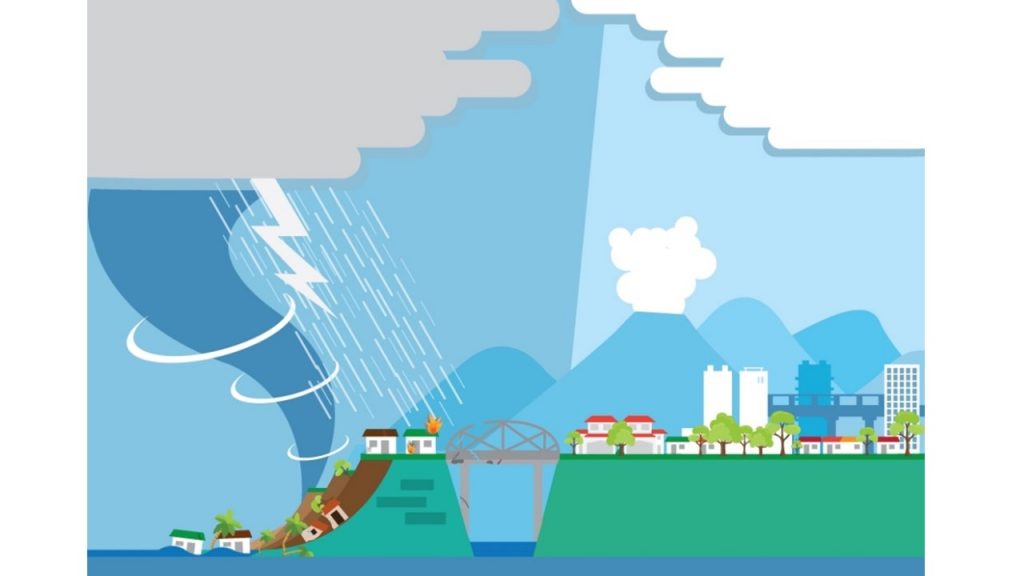
This essay elaborates on the role of tailor made Climate Services for decision-making advice for coastal infrastructure planning and how Climate Services can be incorporated into the DST handled by the Vietnamese Government.
Assessment of Climate Service Providers Capabilities in Brazil
The Assessment of Climate Service Providers Capabilities in Brazil has been conducted as part of the baseline asssessment for the Climate Service for Infrastructure Investment (CSI) project. It demonstrates that a diverse set of stakeholders exist that provides Climate Services for different sectors and decision making context. The report is in Portuguese.