Oportunidades para reforzar la resiliencia mediante la integración de financiación y seguros contra riesgos climáticos y desastres naturales (CDRFI por sus siglas en inglés) en los procesos del Plan Nacional de Adaptación (PNAD)
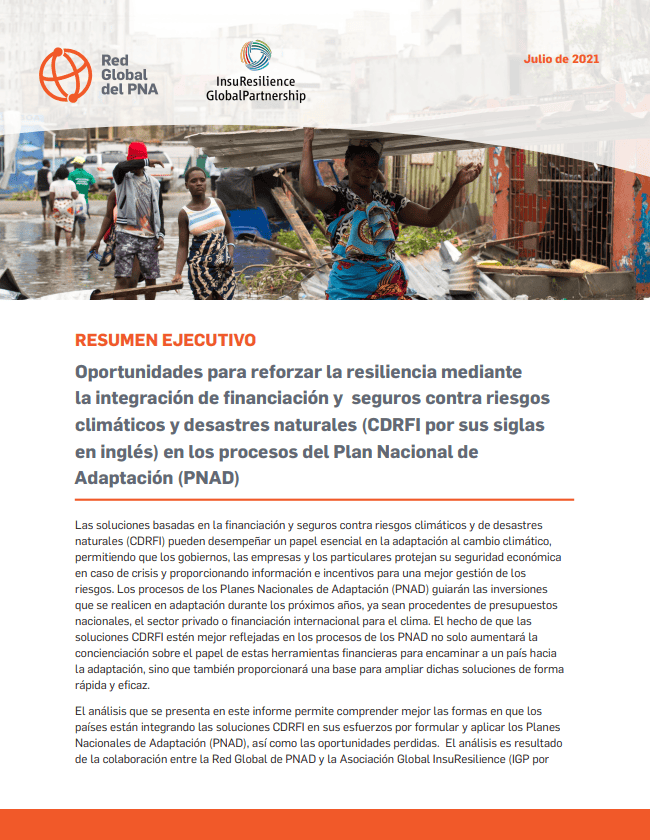
El análisis que se presenta en este informe permite comprender mejor las formas en que los países están integrando las soluciones CDRFI en sus esfuerzos por formular y aplicar los Planes Nacionales de Adaptación (PNAD), así como las oportunidades perdidas. El análisis es resultado de la colaboración entre la Red Global de PNAD y la Asociación Global InsuResilience (IGP).
Possibilités de renforcer la résilience en intégrant le financement et l’assurance des risques climatiques et de catastrophes (CDRFI) dans les Plans nationaux d’adaptation (PNA)
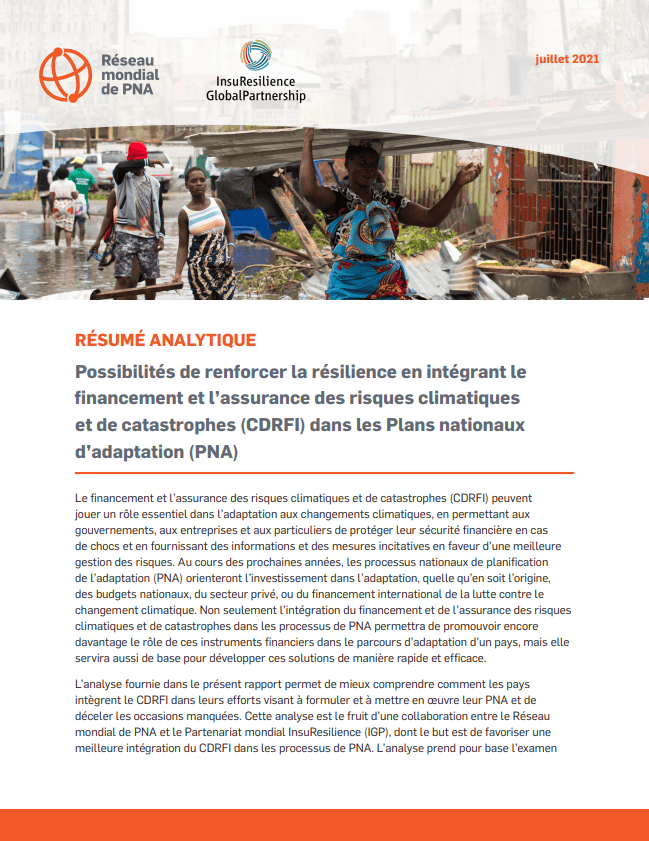
L’analyse fournie dans le présent rapport permet de mieux comprendre comment les pays intègrent le CDRFI dans leurs efforts visant à formuler et à mettre en œuvre leur planification de l’adaptation PNA et de déceler les occasions manquées. Cette analyse est le fruit d’une collaboration entre le Réseau mondial de PNA et le Partenariat mondial InsuResilience (IGP).
Green Recovery for Practitioners: Examples from around the World for Building Forward Better
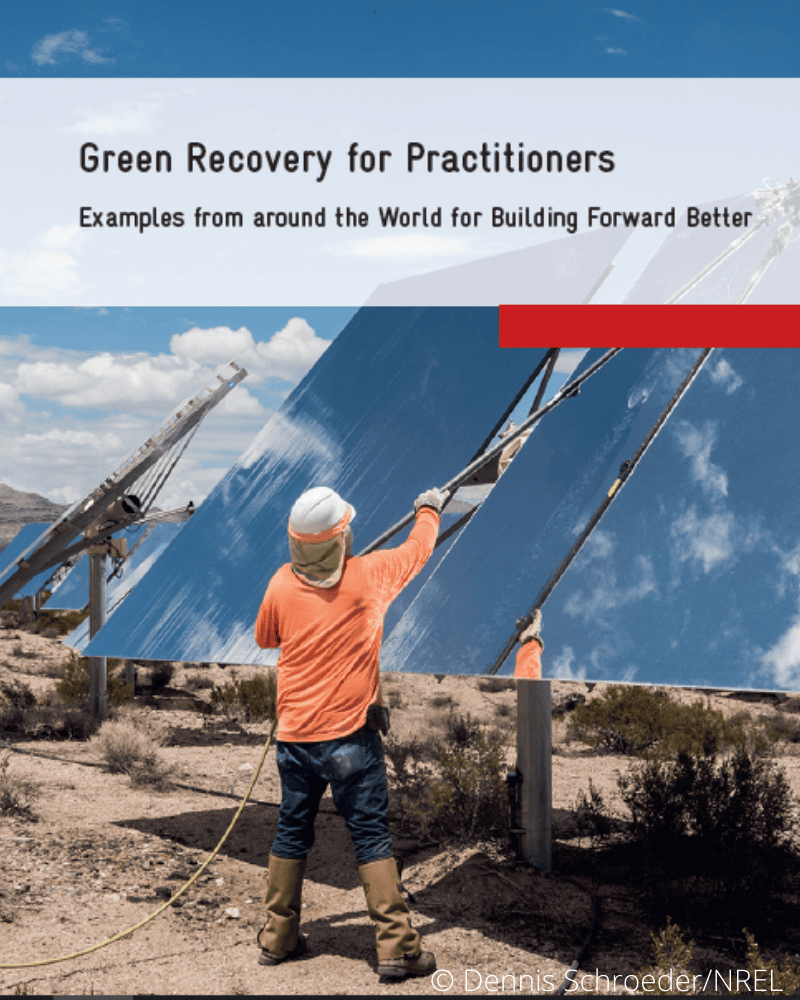
This report from the publication series ‘Green Recovery for Practitioners’ presents a compilation of 23 examples that show how communities, cities and countries have implemented the idea of a green recovery. Covering a wide range of sectors, entry levels and approaches, it draws upon measures and instruments that have been deployed in more than 20 countries, particularly in developing and emerging economies. Each example reflects on the actors involved, the progress made and the lessons learned so far.
Building Resilience With Nature: Ecosystem-based Adaptation in National Adaptation Plan Processes
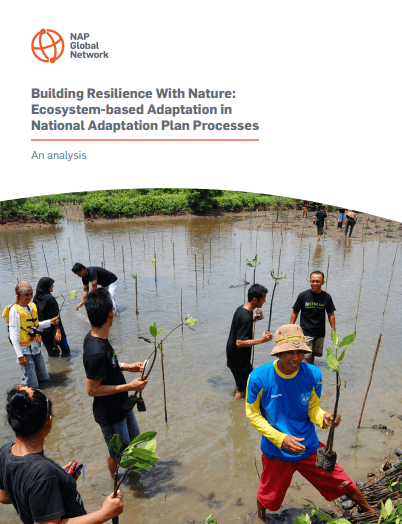
National Adaptation Plan (NAP) processes present a strategic opportunity to raise the profile of EbA approaches, providing a framework—and, potentially, financial resources—for implementation at scale. Based on this , the NAP Global Network undertook a review of 19 NAP documents to better understand the extent to which EbA, as a tool for adaptation, has been taken up in NAP processes. This analysis highlights the extent of integration and identification of ecosystems and EbA into National Adaptation Plans (NAPs), trends in how EbA was incorporated, and opportunities to strengthen the profile and quality of EbA.
Coherence as the process of joint and integrated policy making. Lessons learned from a cross-project collaboration to analyze the implementation of global agendas in Germany.
Publication of a case study at the interface of Sustainable Development, Adaptation to Climate Change and Disaster Risk Management
Integrating EbA and IWRM for climate-resilient water management
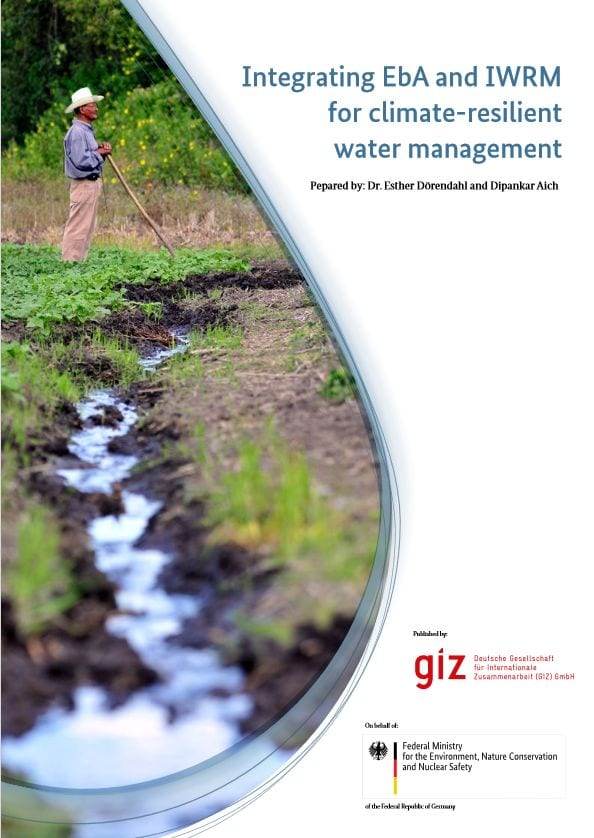
This study explores how the two leading approaches in water resources management and ecosystem thinking for climate change adaptation – i.e. IWRM and EbA – can be merged to achieve greater climate resilience in watersheds. It entails a conceptual analysis of both approaches and showcases nine practical implementation examples of integrated EbA-IWRM projects around the world. The case studies reveal structural similarities, key lessons, and enabling and inhibiting factors for integrated EbA-IWRM approaches. From this, the study derives and promotes a set of guiding principles for integrated EbA-IWRM projects.
Climate Change and small-scale fisheries. A case for comprehensive climate risk management
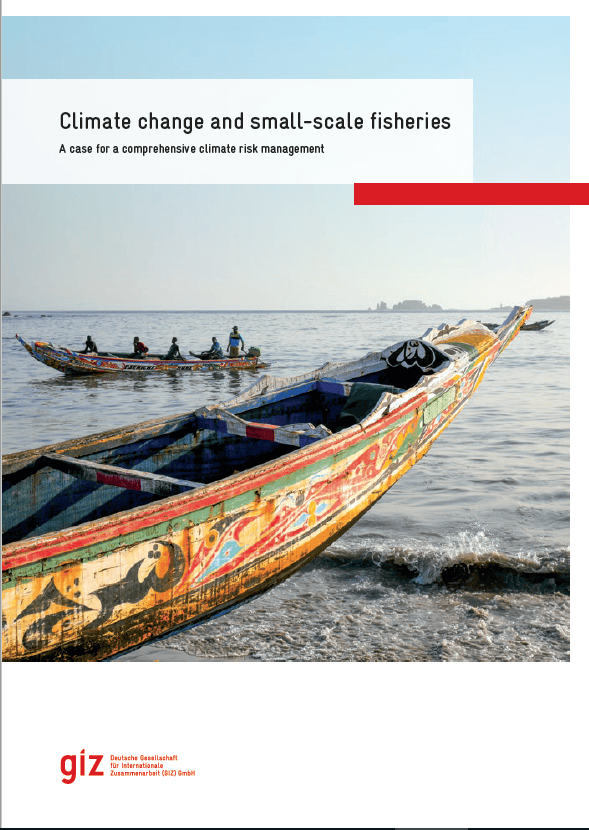
The effects of climate change and increasing extreme weather events on the oceans are key challenges for small-scale fisheries. This study highlights some of the economic as well as non-economic losses and damages associated with these effects.
Diving into the gap: Gender dimensions of Climate Risk Management
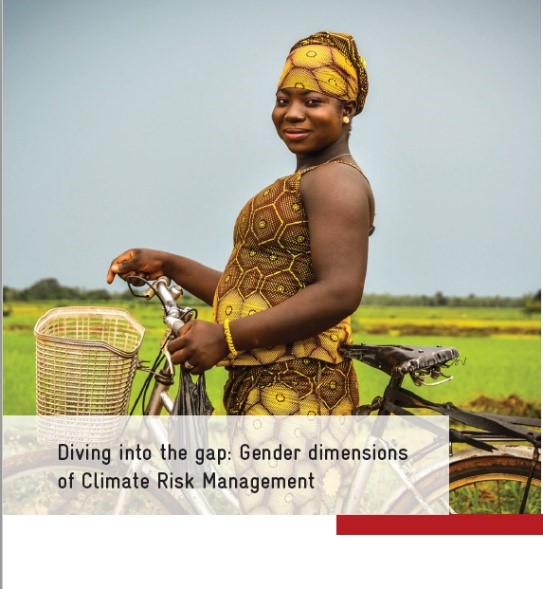
This study gives insight into the specific areas in which women and girls suffer significantly higher losses and damages than men. Furthermore, it explores how social norms create and exacerbate these vulnerabilities to climate change.
Home Lands: Island and Archipelagic States’ Policymaking for Human Mobility in the Context of Climate Change (Executive Summary)
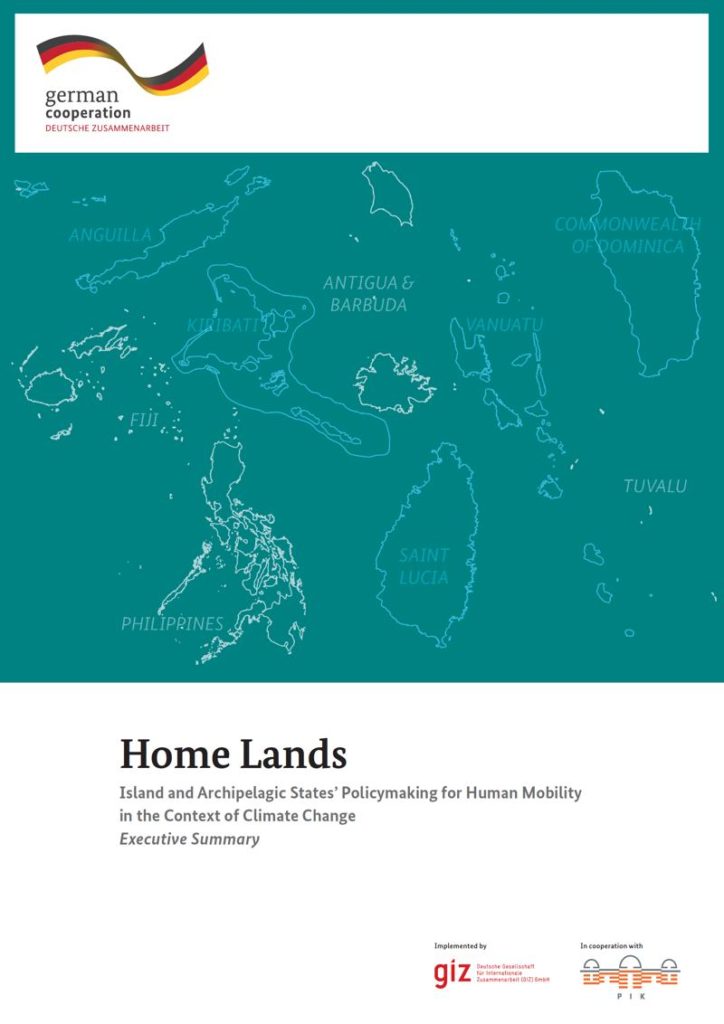
This report provides an overview of how human mobility in the context of climate change (HMCCC) fits into the policy landscape of nine island and archipelagic countries: Anguilla, Antigua & Barbuda, Dominica, and St. Lucia in the Eastern Caribbean; Fiji, Kiribati, Tuvalu, and Vanuatu in the South Pacific; and the Philippines in the Western Pacific. All of these nations are heavily affected by climate impacts like sea level rise, ocean acidification, tropical cyclones and hydrological extremes.
Home Lands: Island and Archipelagic States’ Policymaking for Human Mobility in the Context of Climate Change
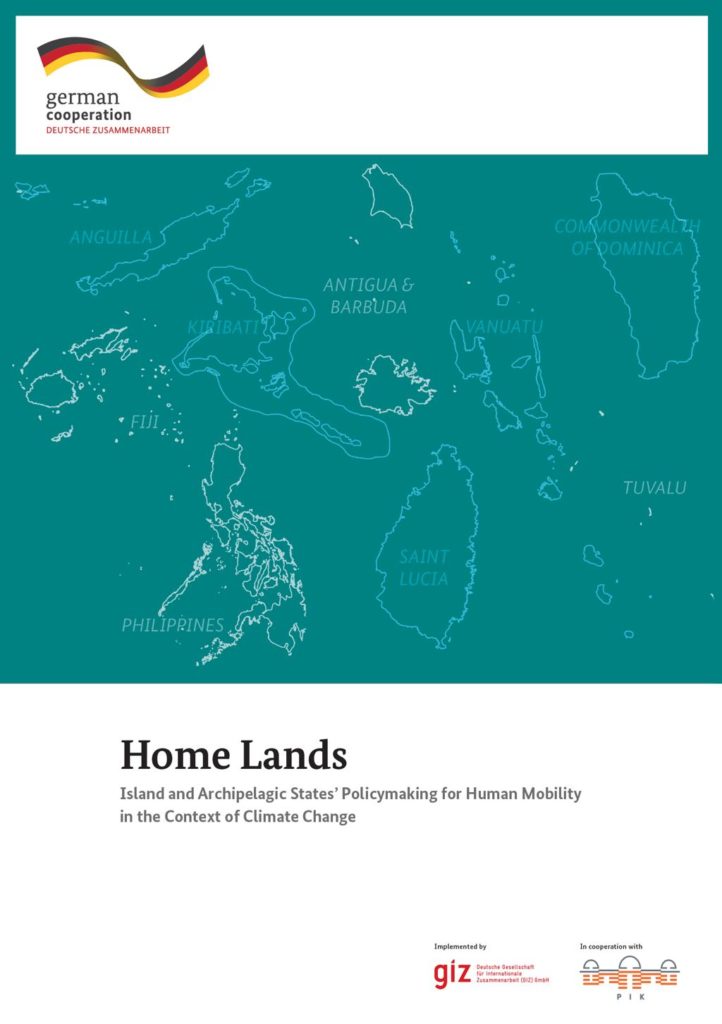
This report provides an overview of how human mobility in the context of climate change (HMCCC) fits into the policy landscape of nine island and archipelagic countries: Anguilla, Antigua & Barbuda, Dominica, and St. Lucia in the Eastern Caribbean; Fiji, Kiribati, Tuvalu, and Vanuatu in the South Pacific; and the Philippines in the Western Pacific. All of these nations are heavily affected by climate impacts like sea level rise, ocean acidification, tropical cyclones and hydrological extremes.