Hacia una adaptación basada en ecosistemas con enfoque de género: Por qué es necesaria y cómo conseguirla
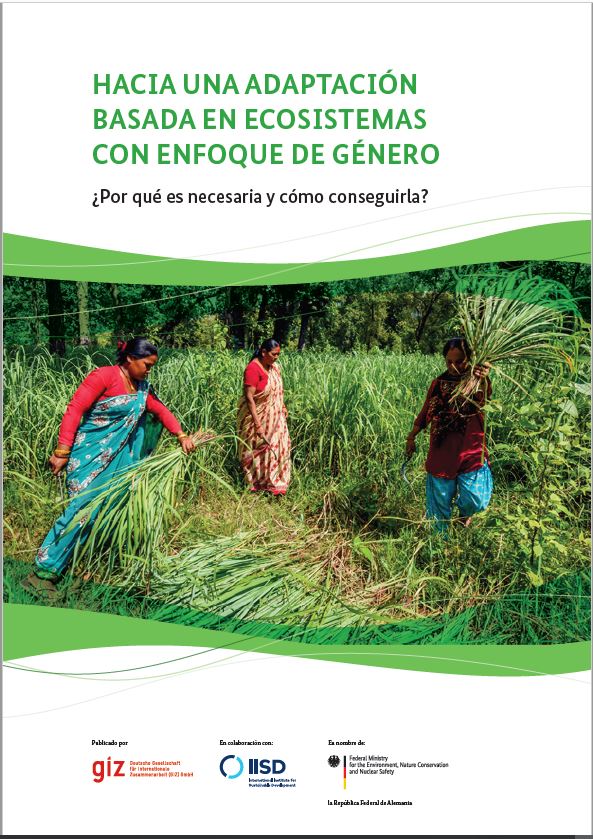
Este informe tiene dos propósitos: ilustrar la importancia de integrar las cuestiones de género en las medidas AbE y brindar ejemplos reales de cómo se puede realizar esto en la práctica. Este informe está diseñado para quienes practican la AbE y quienes tienen la responsabilidad política sobre la adaptación, incluidas las personas encargadas de tomar decisiones del gobierno y el personal de soporte técnico, las organizaciones de la sociedad civil, las empresas del sector privado y las instituciones de investigación.
A City in Motion – Migration, Climate Change, and Governance in Baguio City
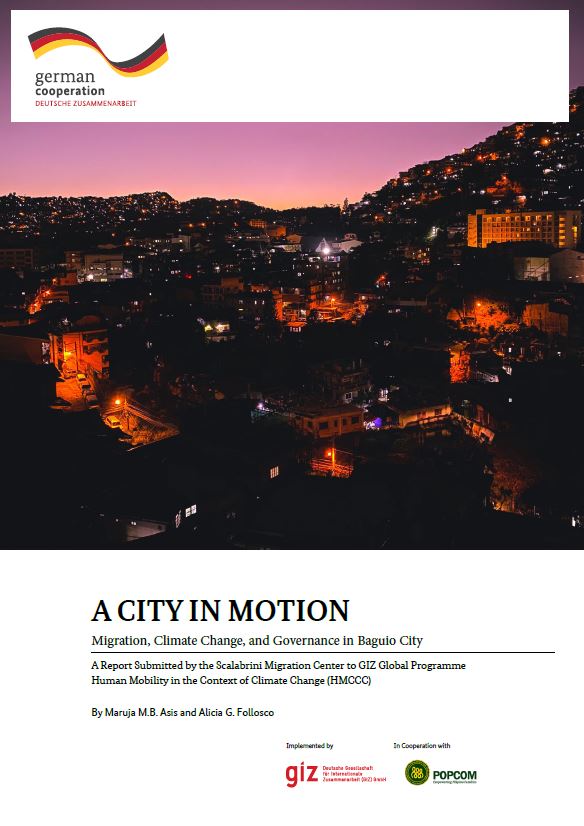
Baguio City is known for being a migration magnet as well as for having reached its ideal population size decades ago. This study attempted to examine and link three strands in Baguio City: migration, climate change (particularly slow onset events), and governance.
Internal Migration In The Philippines: Adaptation To Climate Change (IMPACT)
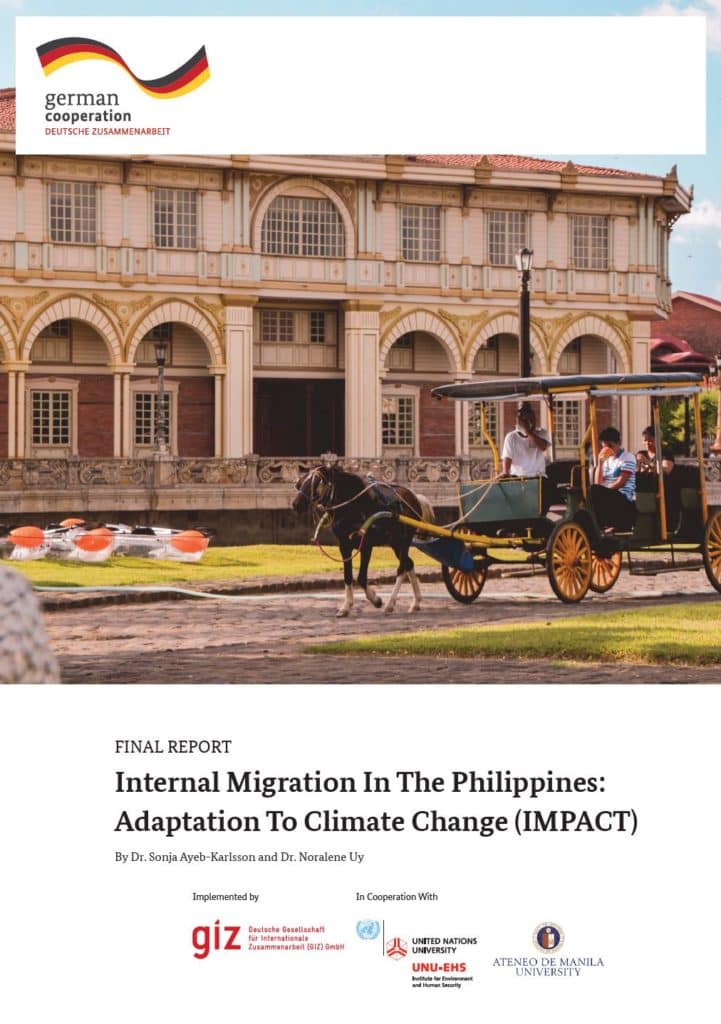
Many regions in the Philippines are at risk of slow onset processes, such as sea level rise, land degradation and desertification, changes in rainfall and drought. The IMPACT project undertook a study of perceptions of slow onset climatic risks and migration in the Philippines, and the causality and impact both in the destination and origin areas. By following a people-centered research approach, the study is based on Key Expert Interviews, Participatory Rural Appraisals and Individual and Collective Storytelling Interviews, which have been conducted across the three major island groups of the Philippines (Mindanao, Visayas and Luzon). The collected data have been evaluated regarding internal and international migration patterns, as well as, for each of the considered areas, perceptions of environmental change, adaptation strategies and constraints, and aspects related to gender, wellbeing, and social cohesion in context of migration. The IMPACT study is closed by providing recommendations for adaptation and disaster risks, positive migration effects, and negative migration effects that can feed into policymaking.
Implementing the Commitments Related to Addressing Human Mobility in the Context of Disasters, Climate Change and Environmental Degradation – A Baseline Analysis Report Under the Global Compact Safe, Orderly and Regular Migration
The Global Compact for Safe, Orderly and Regular Migration (GCM) is a non-binding agreement comprising comprehensive commitments for governing international migration under the obligations and principles of international law. To support an effective implementation process, this report reviews existing policies and legal instruments on regional and national level governing migration in the context of disasters, climate change and environmental degradation.
Thematic Paper 6: Delivering Financing for Joint Biodiversity and Climate Solutions

Thematic Paper 6 emphasises the need for more coordinated joint climate and biodiversity funding at the international and national levels and outlines examples of possible sources of finance.
Thematic Paper 5: From National to Local Implementation: A Collaborative, Multi-Level Effort to Achieve Joint Climate and Biodiversity Goals

Thematic Paper 5 makes the case for collaborative and inclusive multi-level governance systems to achieve joint climate and biodiversity goals.
Thematic Paper 4: Good Governance for Integrated Climate and Biodiversity Policy Making (updated 05/26)

Thematic Paper 4 analyses the role of good governance for integrated climate and biodiversity policy-making.
Thematic Paper 3: Nature-Based Solutions: An Approach for Joint Implementation of Climate and Biodiversity Commitments (updated 05/26)

Thematic Paper 3 unpacks the concept of Nature-based Solutions (NbS) as an approach for the joint implementation of climate and biodiversity commitments.
Thematic Paper 2: Linkages Between Biodiversity and Climate Change and the Role of Science–Policy–Practice Interfaces for Ensuring Coherent Policies and Actions (updated 05/26)

Thematic Paper 2 highlights that climate change and biodiversity loss are not separate challenges, but two sides of the same global crisis. It emphasizes the need for coherent and integrated policies that align climate adaptation, mitigation, and biodiversity goals across national planning processes. The paper also explores how science can support decision-making by providing knowledge, tools and methods needed to identify trade-offs, unlock synergies, and guide effective action.
Scoping study: A Comparison of Climate Risk Assessment Methods to Support Informed Decision-making
Based on a database that also builds the foundation of the search engine CRAMSE, this study aims to increase the understanding of recent innovations, and of remaining methodological challenges to future innovation in climate risk assessments. Six dimensions relevant to the challenges of CRAs in the context of climate-related losses and damages are evaluated in detail, ideally benefiting decision makers’ selection of suitable methods and practitioners’ efforts to further develop future methods and approaches.