Ecosystem-based Adaptation (EbA), also known as Nature-based Solutions for climate change adaptation) is increasingly gaining policy support and being implemented by diverse actors around the world. While EbA guidebooks, case studies, and principles have contributed to standardising the EbA approach, there is a clear need for further training opportunities to strengthen EbA implementation across diverse sectors while ensuring that rights-based approaches, gender equity, and better outcomes for biodiversity and ecosystems are achieved.
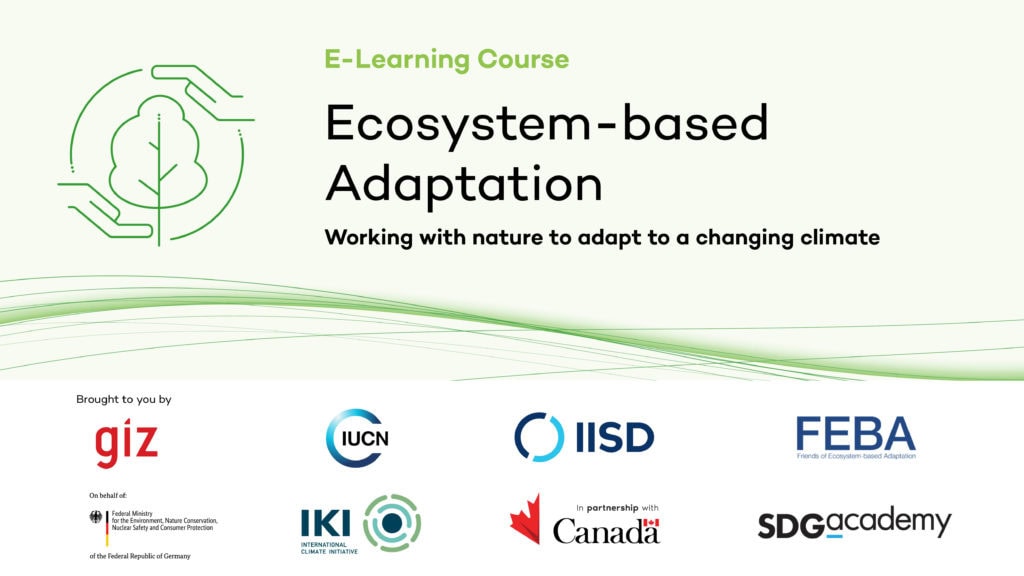
This free, self-paced e-learning course developed by GIZ, IUCN and IISD, was launched on October 4, 2022. It is hosted on the online learning platform edX.org, featuring nine units comprised of video lectures, case studies, quizzes, and handouts. It equips learners with transferable and replicable skills for designing and implementing EbA initiatives by offering targeted training on topics such as key principles, risk assessments, monitoring, and governance. A core focus of the course lies on four cross-cutting topics — gender, governance, local and Indigenous knowledge, and biodiversity — which are addressed both in independent modules and throughout other course units.
By the end of the course, participants will:
- Understand the role of EbA within an overall climate change adaptation strategy.
- Be able to plan EbA activities in a logical order and apply EbA best practices.
- Consider and integrate social aspects, such as gender, livelihoods, and traditional knowledge, into EbA projects.
- Understand how to mainstream EbA across sectors.
The e-learning course targets decision-makers in public and private organizations, professionals who may not be familiar with EbA but who work in a related field, civil society organizations, actors at community, national, and global scales, early-career EbA professionals, current students, university faculty, and EbA practitioners from both the Global North and Global South.
The course was funded by The Federal Ministry for the Environment, Nature Conservation, Nuclear Safety and Consumer Protection (BMUV), and Global Affairs Canada as part of the Nature for Climate Adaptation Initiative funded by the Government of Canada.
“The vital relationship between people and nature is at the heart of nature-based solutions. This new course will help learners advance equitable outcomes that protect biodiversity and people of all genders and social groups from climate change impacts”
– The Honourable Harjit S. Sajjan (Minister of International Development and Minister responsible for the pacific Economic Development Agency of Canada) –
Garnering the interest of over 6,000 learners across the globe, this e-learning course continues to grow with a brand-new Spanish language offering. English, French and Spanish versions of the course can be found here: Ecosystem-based Adaptation: Working with nature to adapt to a changing climate | edX