

What are you looking for?

Climate
Change

is one of the greatest challenges of our time

Climate
Change

is one of the greatest challenges of our time

People and states worldwide are already affected by its destructive impacts. Especially developing countries are vulnerable to global warming and its consequences. With the adoption of the Paris Agreement, its global goal on adaptation has been set as an indispensable component of climate action equal to mitigation.

featured

CRAMSE

The impacts associated with slow onset processes (e.g. sea level rise, desertification) and extreme weather events (e.g. floods, cyclones, heatwaves) are increasasing in frequency and intensity, resulting in growing climate-related risks. This highlights the urgent need for Climate Risk Assessments (CRA) which help to identify solutions for an effective management of risks. The CRA-Method Search Engine “CRAMSE” aims to support practitioners in identifying Climate Risk Assessment methods that fit best for their specific interests.

Wave

latest

Ten years after the adoption of the Paris Agreement, climate adaptation has become a defining element of global climate policy. This shift did not begin...
At COP21 the director, president, president of the COP and the executive secretary of UNFCCC are holding their hands up in celebration on a stage.
Adaptation moved to the forefront at COP30 in Belém, driven by the need to accelerate action and to clarify how progress can be measured. Parties...
People are walking into the COP30 building on a sunny day.
The data labs of three German ministries and GIZ developed an AI prototype to help delegations navigate the vast amount of UNFCCC submissions....
Two men are standing in front of the German Climate Pavilion at COP30, holding an iPad.

Topics

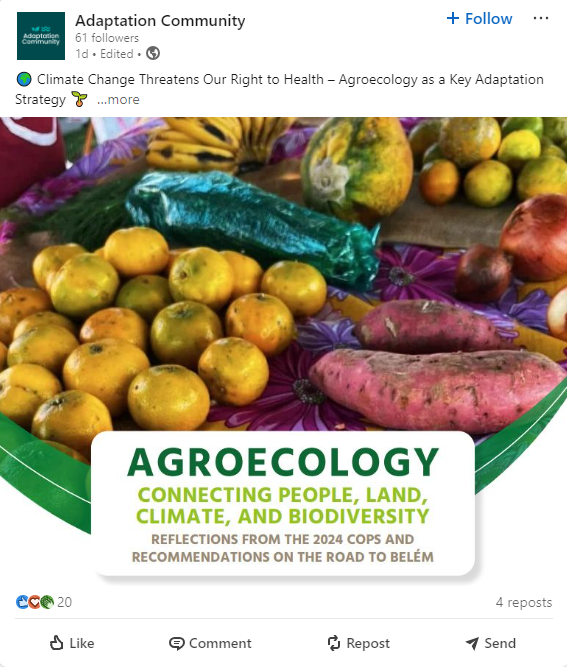
  • Agroecology aims at transforming agricultural and food systems towards climate resilience and adaptiveness in order to achieve food security for all. 
  • Urban Climate Resilience refers to the ability of an urban system – and its components – to absorb, adapt to, and recover from the various shocks and stresses exacerbated by climate change, while ensuring the well-being of its inhabitants. 
 
  • Private Sector & Adaptation responds to climate-related economical risks and seizes business opportunities in order to safeguard operations, to strategically create sustainable growth and to increase societal resilience. 
  • The National Adaptation Plan (NAP) process aims to integrate adaptation into development planning and to reduce vulnerability to climate change. As the primary national planning process for adaptation, it can support the implementation of NDC adaptation goals. 
  • Mainstreaming of Adaptation systemically includes climate risk and adaptation considerations in decision-making and planning processes. 
  • Climate Services (CS) provide decision-makers with customized ready-to-use climate information and products (forecasts or historical trends) to effectively manage climate risk. 

Climate Change and Migration looks at how extreme weather events and gradual changes impact human mobility: migration, (disaster) displacement, as well as planned relocation.  

Monitoring and Evaluation (M&E) helps keeping track of the implementation of adaptation measures and assessing their effectiveness and outcomes. The Paris Agreement encourages “M&E and learning from adaptation plans, policies, programmes and actions” (Article 7.9d). 

Solutions

Studies
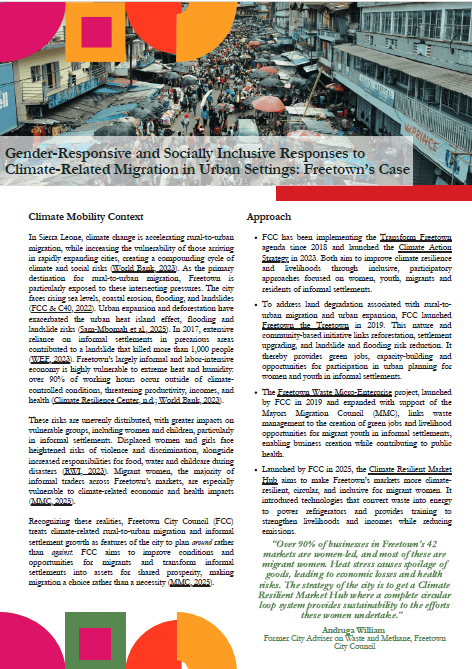
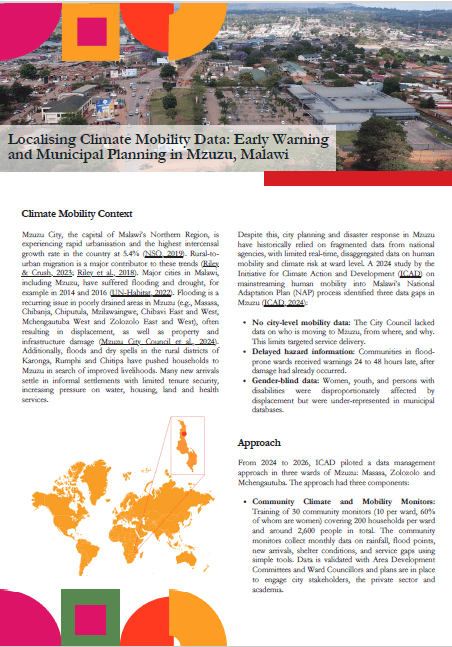
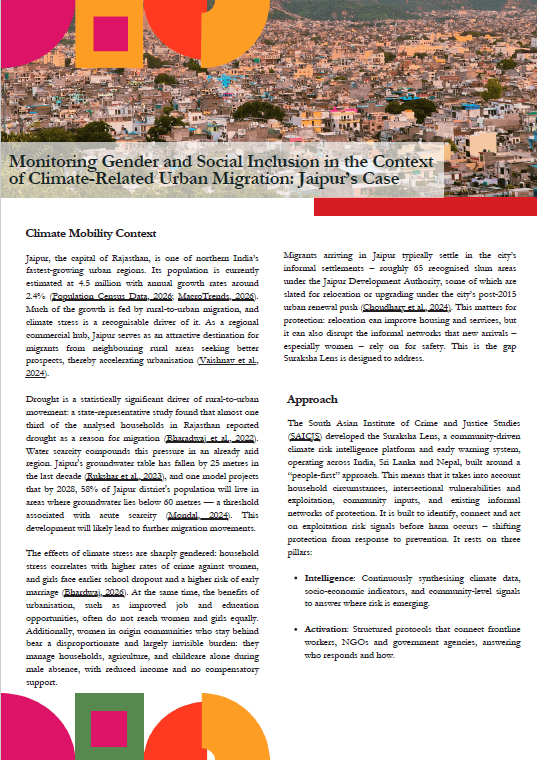
With many cities serving as migration hotspots, local authorities are not only at the frontlines of reducing risk and responding to but also receiving people who have been displaced. This publication highlights three examples of how cities integrated climate and human mobility in their urban planning....
The contribution of agroecological principles and approaches to resilient food systems
Briefs
Numerous overlapping ecological, socio-political, and economic shocks and stresses acting across multiple scales have culminated in a polycrisis that threatens agriculture and food systems worldwide. As primary food producers, smallholder farming communities in the Global South are particularly vulnerable to adverse impacts – such as those caused by climate change,...
Fact sheets
The overall aim of the ERA project was to provide the government partners in Thailand and Egypt with an enhanced risk assessment for the development of their adaptation and risk financing strategies. The project was implemented by GIZ together with the Munich Climate Insurance Initiative (MCII) hosted by the United...

Connect

Follow us on LinkedIn to stay informed on the latest developments in the climate adaption community.