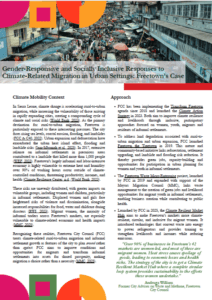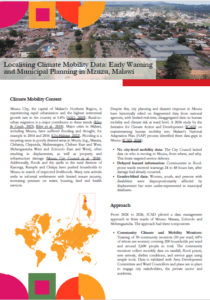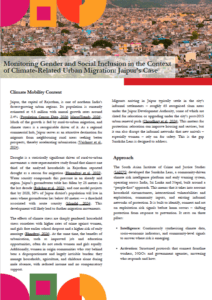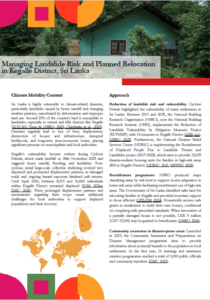
This report outlines key climate and disaster risk finance (CDRF) gaps in Malawi’s financial instruments and mechanisms, national strategies and policies, and its enabling environment. It also highlights development needs in the insurance sector to support Malawi’s resilience against climate-related disaster risks. The report includes suggestions for interventions for overcoming these gaps. Through these, Malawi can build a more resilient system to protect its people, infrastructure and economy from the adverse impacts of climate-related disasters. For the stock take and gap analysis, the Global Shield (GS) Secretariat, together with focal point Deputy Director Charles Chinkhuntha and the Malawi support structure Associate Professor Gowokani Chirwa), conducted interviews with key stakeholders. The gap analysis also builds on discussions from the national Global Shield Workshop, which took place in Lilongwe, Malawi, from 29-30 April 2025.
Malawi is building on a robust disaster risk financing and insurance framework, which enables the development of financial mechanisms. Malawi has also benefited from CDRF solutions since their initial implementation in 2015, when the country purchased its first African Risk Capacity (ARC) drought insurance policy and its first microinsurance solution. The continuity of solutions and disruptions due to funding needs have hindered the country’s ability to respond and recover quickly from disasters. Gaps exist across various financial mechanisms, data and risk modelling systems, project resources, and the capacity to develop the local insurance market.
The gaps are outlined under seven main headings, namely:
1) Risk analysis and modelling
2) Awareness raising and financial literacy
3) Enabling environment
4) Risk transfer
a. Sovereign level
b. Agricultural sector and micro-, small and medium enterprises (MSMEs)
5) Risk retention
6) Enhancing distribution channels – linkages to social protection
7) Resilient infrastructure.