What are you looking for?

Publications

Here you can find publications on the subject of climate change adaptation in different languages. Please use the filter option to select your preferred language.
  • Topics

  • Types

  • Languages

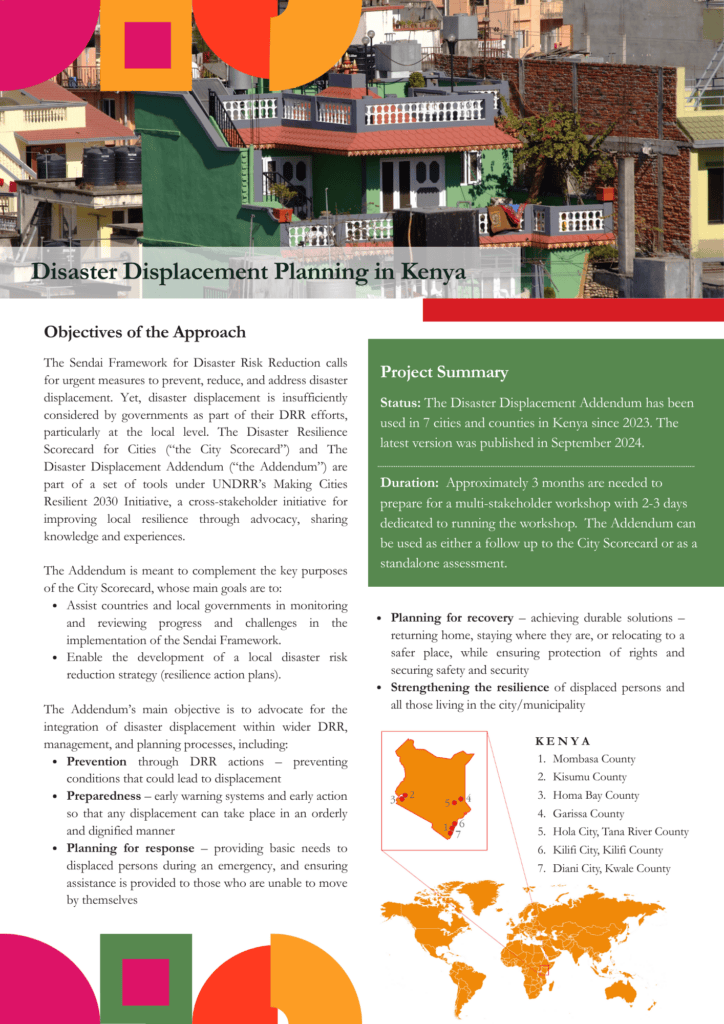
In seven Kenyan cities and counties, the Disaster Displacement Addendum helps local governments assess risks, identify policy gaps, and integrate displacement into disaster risk reduction planning.
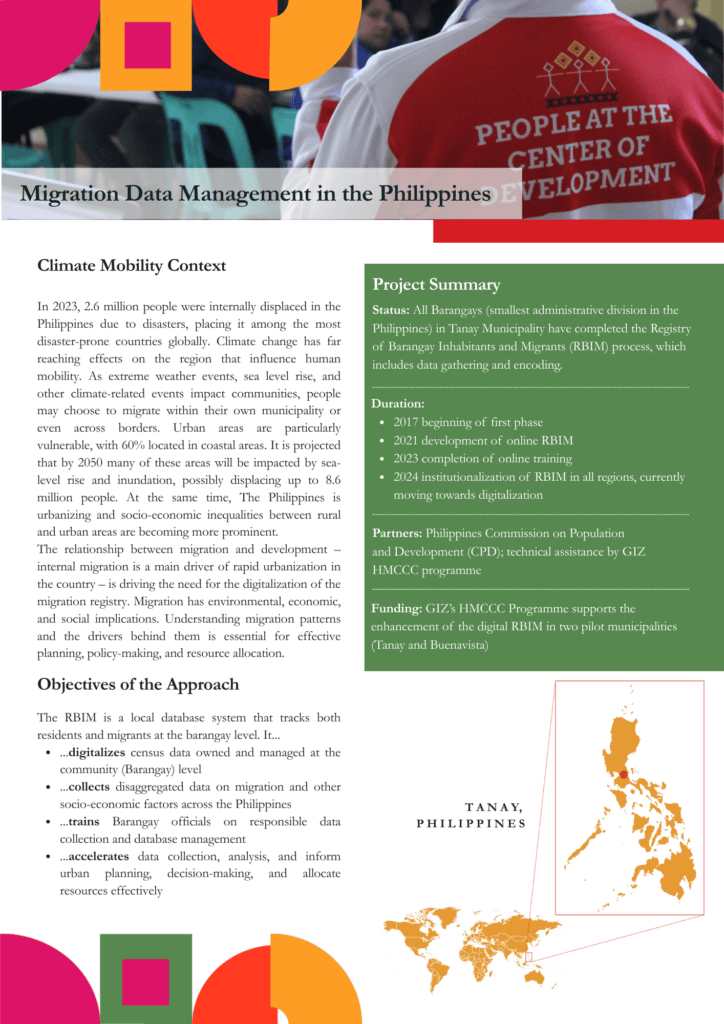
In Tanay Municipality, the digital Registry of Barangay Inhabitants and Migrants (RBIM) strengthens migration data management, enabling local governments to better understand mobility patterns and integrate them into climate adaptation and development planning
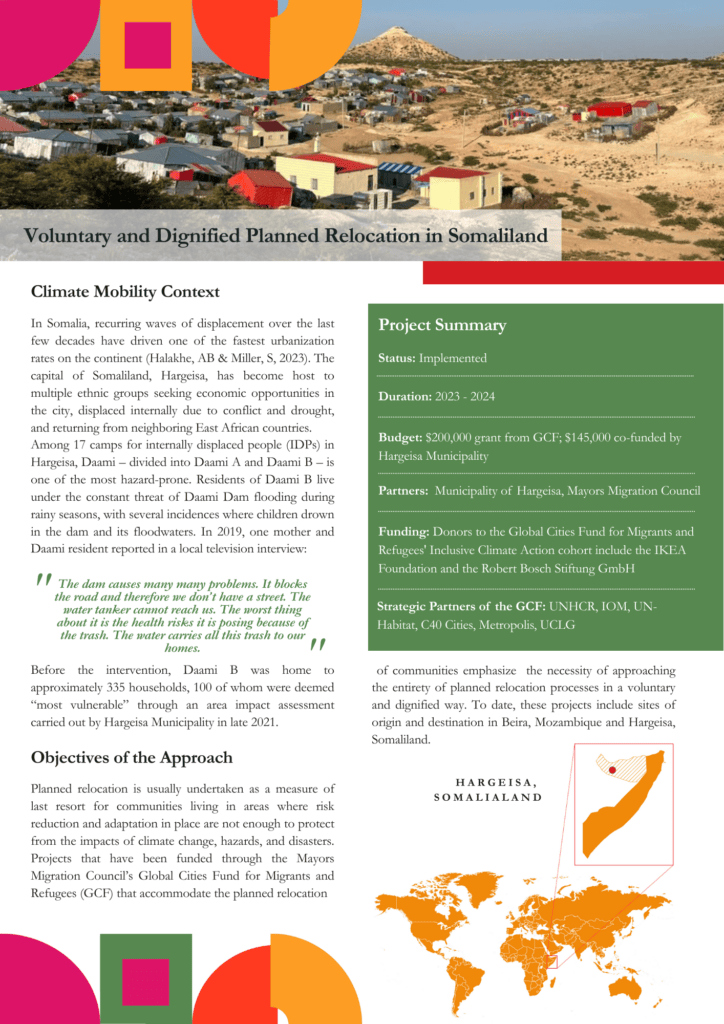
Through a community-led relocation process, Hargeisa Municipality helped highly vulnerable households move from a flood-prone camp near Daami Dam to a safer neighborhood.
The study shows how the concept of biodiversity mainstreaming has become a cornerstone of global biodiversity governance. It offers an overview of various entry points for mainstreaming biodiversity considerations into different thematic areas, such as in finance, policy planning cycles and monitoring frameworks, and discusses mainstreaming approaches in key sectors, i.e. land-use planning, forestry, infrastructure, and tourism. Case studies from Indonesia, Mexico and Thailand illustrate how biodiversity mainstreaming can be put into practice through national policy instruments and planning processes.
Este documento es una guía práctica que tiene como objetivo auxiliar a las personas funcionarias públicas municipales en la aplicación de un enfoque sostenible para generar proyectos de adaptación al cambio climático a nivel barrial. 
This study presents an exploratory, legitimate, and fiscal analysis of potential public financing pathways that can enable Local Government Units (LGUs) to pay premiums for parametric insurance schemes aimed at protecting and restoring mangrove and marine ecosystems.
Climate change presents significant challenges; however, its effects are not gender-neutral and intersect with existing inequalities related to gender, income, location, and social status, often resulting in heightened risks for women in specific contexts. This unequal burden emphasises the importance of inclusive approaches to climate action and targeted strategies that address the underlying vulnerabilities, circumventing unintended negative consequences. This analysis attempts to map the current CDRFI policies and programmes, provide diagnoses of systemic gender gaps, and formulate evidence-informed recommendations to make Bangladesh’s CDRFI landscape more gender-responsive, socially inclusive, and effective.
Rwanda has introduced specific CDRFI programmes to improve financial inclusion and mitigate the economic impact of climate-induced disasters, such as floods and droughts. Nonetheless, the findings of this analysis show that gaps remain in accessibility and uptake of formal insurance by women smallholder farmers and vulnerable groups.
This report provides a comprehensive review of national policies, strategies, and programmes incorporating CDRFI and gender, to identify existing gaps and offer recommendations for improve ment to strengthen the gender responsiveness and social inclusion of CDRFI solutions.
Fiji shows that mobility in the context of climate change is not gender-neutral, and that relocation processes must consider gendered roles, responsibilities, and access to resources.