
What are you looking for?

Publications

Here you can find publications on the subject of climate change adaptation in different languages. Please use the filter option to select your preferred language.
  • Topics

  • Types

  • Languages

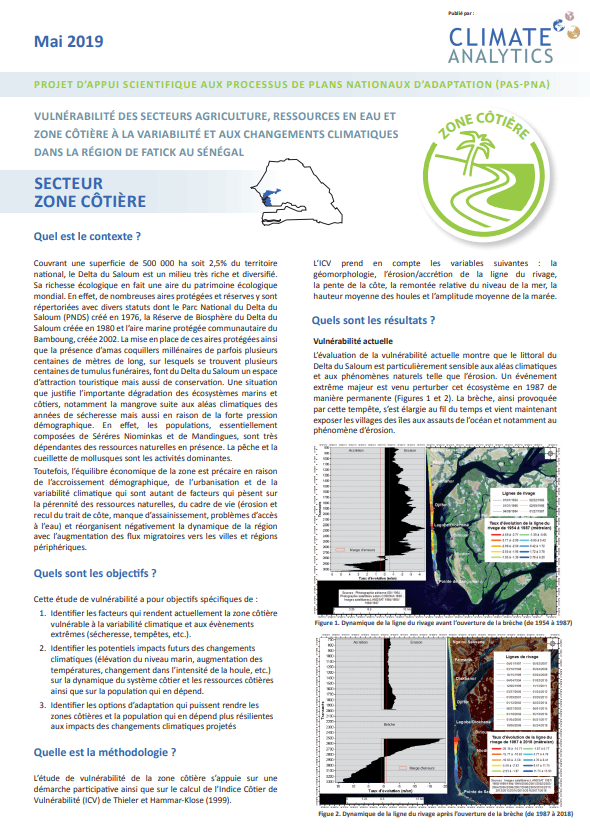
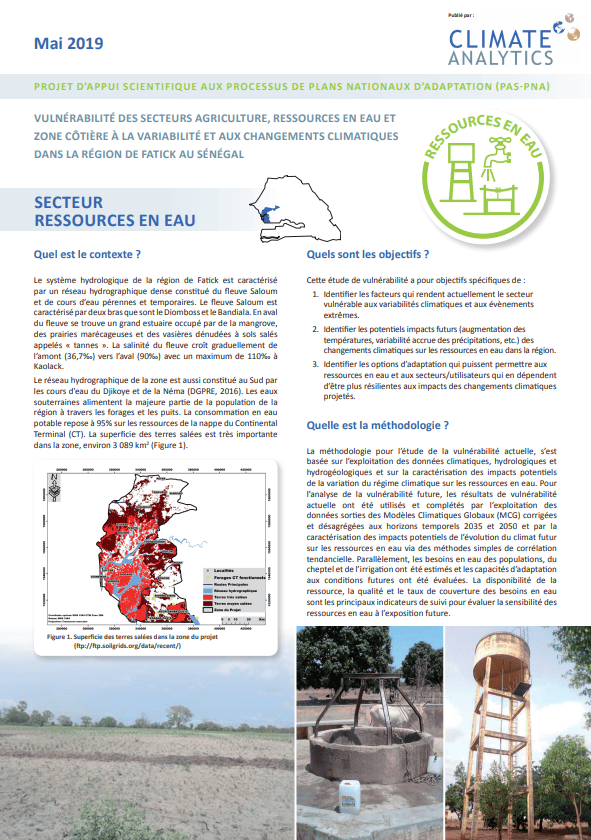
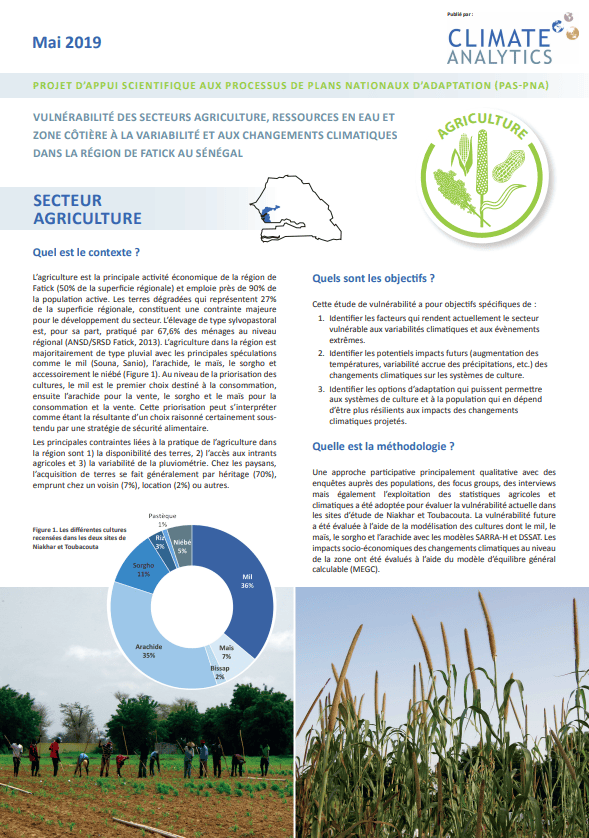
La présente étude, réalisée dans le cadre de la composante 2 du Projet d’Appui Scientifique aux processus de Plans Nationaux d’Adaptation (PAS-PNA), est un état des lieux politique ayant pour objectif de faire une évaluation du processus et du niveau d’intégration des informations scientifiques relatives aux impacts des changements climatiques et à leur intégration dans les politiques nationales d’adaptation et de développement au Burkina Faso.
How can we distinguish an adaptation project from a regular development project and what exactly is the additionality of adaptation? This question is often raised by ministries, funding institutions and development practitioners.
This information brief by GIZ and UNIQUE uses examples from Kenya to illustrate the value of multi-purpose, multi-level M&E systems, and proposes steps towards developing such systems based on existing M&E systems for SLM.
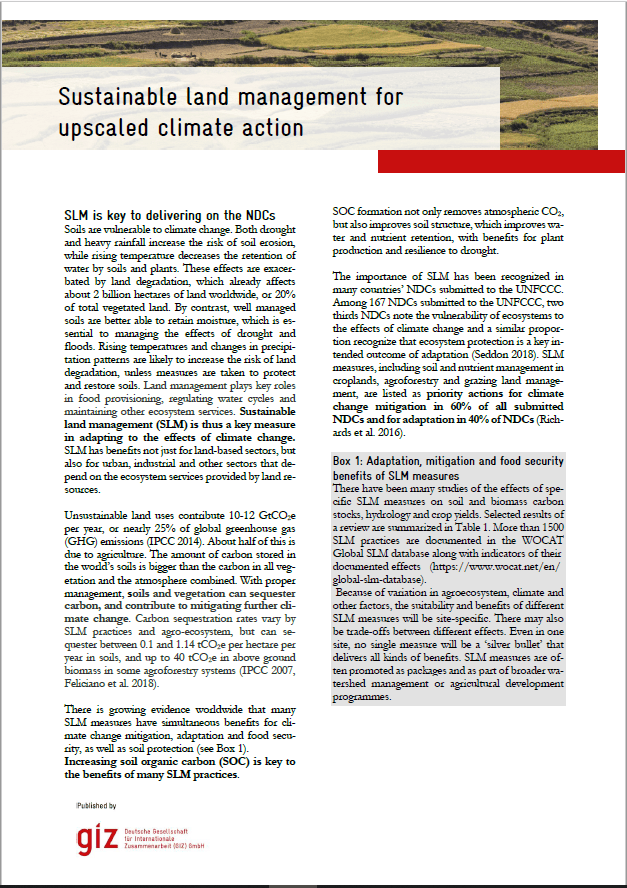
There is growing evidence worldwide that many SLM measures have simultaneous benefits for climate change mitigation, adaptation and food security, as well as soil protection as pointed out in this study by GIZ and UNIQUE.
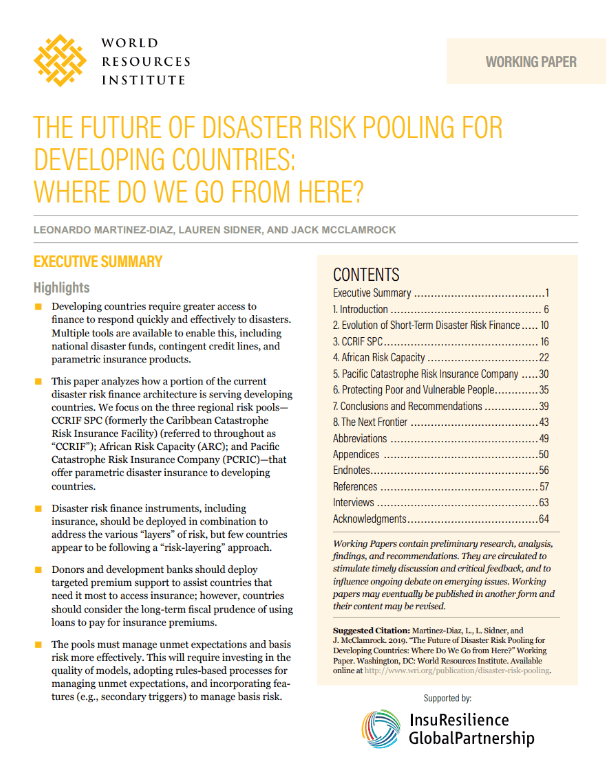
Developing countries require greater access to finance to respond quickly and effectively to disasters. Multiple tools are available to enable this, including national disaster funds, contingent credit lines, and parametric insurance products. This paper analyzes how a portion of the current disaster risk finance architecture is serving developing countries.
Climate change jeopardizes socioeconomic stability, and sets back efforts at development. The increasing frequency and severity of climate-change-driven disasters threaten lives and livelihoods, food security, water supply, property security, and economic prosperity across the globe. Adaptation is vital to make society resilient to the impacts of climate change.
Adapting to the impacts of climate change, whether at the national, sub-national or community level, is not the responsibility of national governments alone. It requires the coordinated input of multiple stakeholders, including local authorities, development partners, communities and civil society. This study aims to offer guidance to governments and their partners on how to engage the private sector in the NAP process.
This study highlights success factors and entry points for mainstreaming EbA based on 16 practical case studies from Mexico, Peru, South Africa, Philippines and Viet Nam.It also summarizes emerging lessons learnt for mainstreaming, including identifying policy entry points, strengthen institutional collaboration, engaging multiple actors and effective communication. This report reflects the knowledge, experience and lessons learned of the many practitioners who have been leaders in the design, implementation and mainstreaming of ecosystem-based adaptation (EbA) measures.
This article summarizes some initial findings of Viet Nam’s efforts and presents an innovative approach with 3 strategic measures: 1) To enhance provision of user-friendly climate services for infrastructure planners; 2) To enhance the use of climate services and consideration of climate risk assessment for infrastructure planning process and 3) To mainstream the approach of climate-proofing for infrastructure into the SEDP, NDC and NAP of Viet Nam.
The study provides an overview of the Climate Service inventory which encompasses currently available Climate Service capacities and specific products. It furthermore reflects the current use and demands of Climate Services from the road infrastructure sector and lays out potential measures for enhancing Climate Services for the road and bridges infrastructure sector as a basis for efficient and effective adaptation planning.