Planned relocation in the context of climate change involves much more than moving people from one location to another. For iTaukei communities in Fiji, the connection between people, land, ancestry, spirituality and traditional governance is deeply rooted in the concept of vanua. Relocation can therefore have profound implications for cultural identity, customary land relationships, traditional knowledge, social cohesion and spiritual wellbeing. Ensuring that cultural values, practices and protocols are respected throughout the relocation process is essential to safeguarding community identity, dignity and long-term resilience
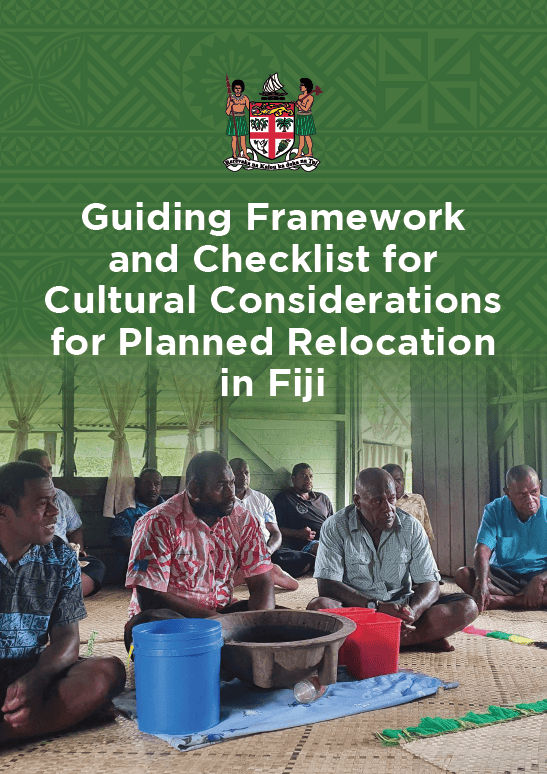
Fiji’s Guiding Framework and Checklist for Cultural Considerations in Planned Relocation provides practical guidance for integrating cultural considerations into the planning, implementation and monitoring of planned relocation. Building on the findings of the Culture–Gender–Relocation Nexus study, the framework outlines key principles and safeguards related to traditional governance, cultural protocols, sacred sites, customary land relationships, community cohesion and the preservation of traditional knowledge and practices. The accompanying checklist supports government agencies and practitioners in identifying cultural risks and priorities, engaging appropriately with communities and ensuring that cultural considerations are reflected in relocation planning and decision-making.
The framework emphasises that cultural considerations must be addressed throughout all stages of planned relocation, from initial consultations and cultural mapping to relocation site design, implementation and post-relocation support. It highlights the importance of inclusive participation, respect for traditional decision-making structures and the continuity of cultural practices and identities in new locations. Together with Fiji’s Standard Operating Procedures (SOP) for Planned Relocation and other supporting frameworks, it contributes to a culturally appropriate, community-centred approach that protects cultural heritage, strengthens social cohesion and supports the long-term wellbeing of relocated communities.