What are you looking for?

Publications

Here you can find publications on the subject of climate change adaptation in different languages. Please use the filter option to select your preferred language.
  • Topics

  • Types

  • Languages

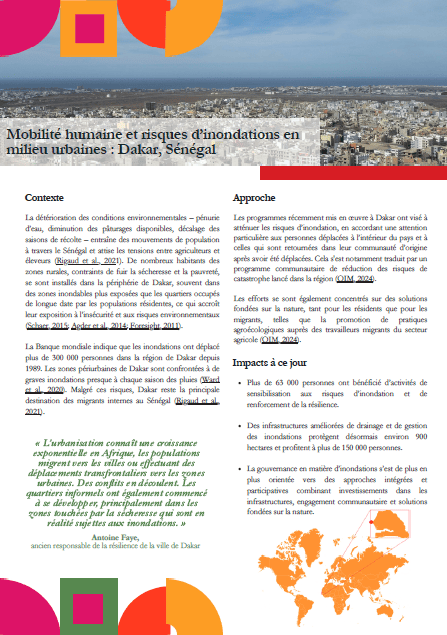
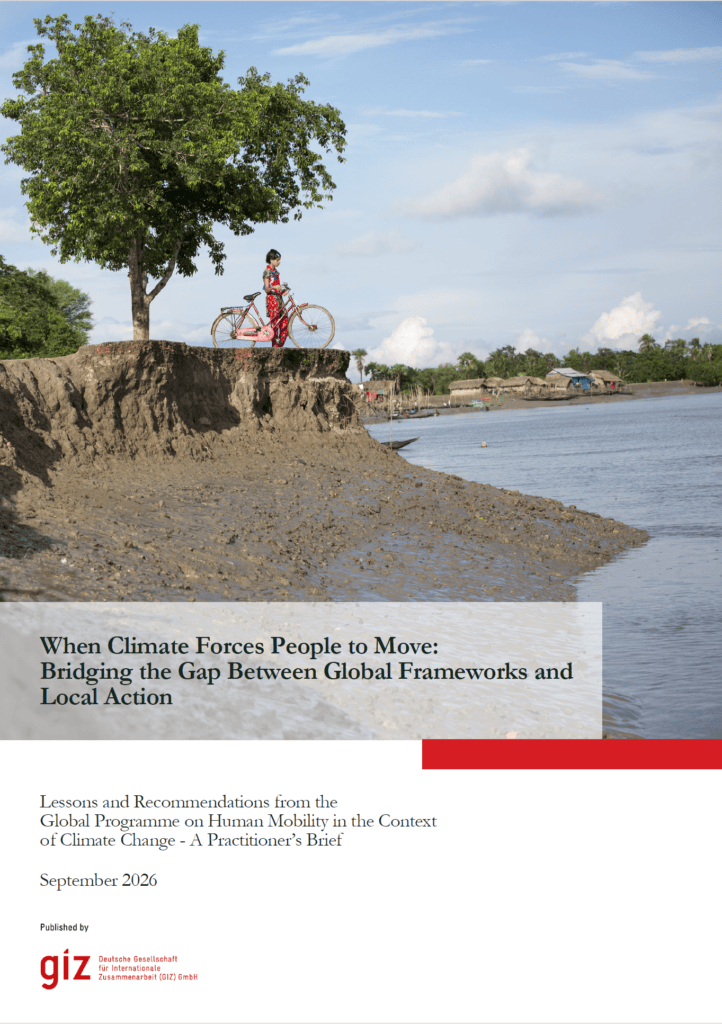
Human mobility in the context of climate change is not gender-neutral. Existing gender inequalities shape who can move safely, who remains exposed to climate risks, and who benefits from adaptation and recovery efforts. This policy brief summarises findings from the study "Advancing Gender-Transformative Action in Human Mobility in the Context of Climate Change: Lessons from Policy and Practice" (2026)
Human mobility in the context of climate change is not gender-neutral. Existing gender inequalities shape who can move safely, who remains exposed to climate risks, and who benefits from adaptation and recovery efforts. This publication draws on experiences from Fiji, the Philippines, ECOWAS, and the African Union to explore how climate-related mobility programmes can move beyond gender-responsive approaches toward gender-transformative change.
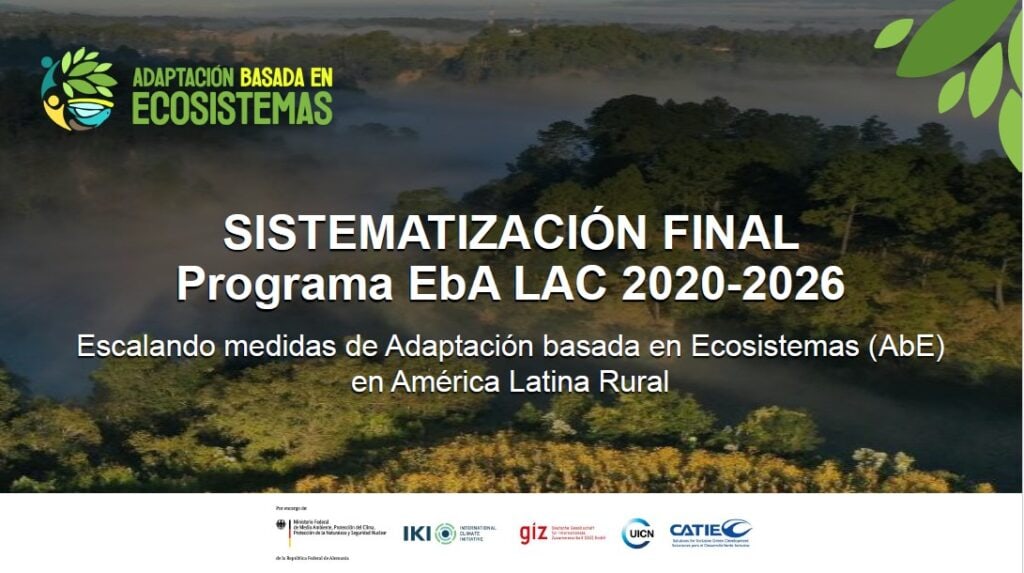
El programa Escalando Medidas de Adaptación basada en Ecosistemas en América Latina rural (EbA LAC), implementado en Costa Rica, Ecuador y Guatemala, generó un conjunto valioso de experiencias, esta publicación comparte lecciones aprendidas sobre los factores de éxito que permitieron el escalamiento de la AbE en los tres países.
Despite growing scientific evidence that climate change and biodiversity loss are deeply interconnected, governance efforts often remain fragmented. Thematic Paper 1 explores how climate and biodiversity policies can work better together.
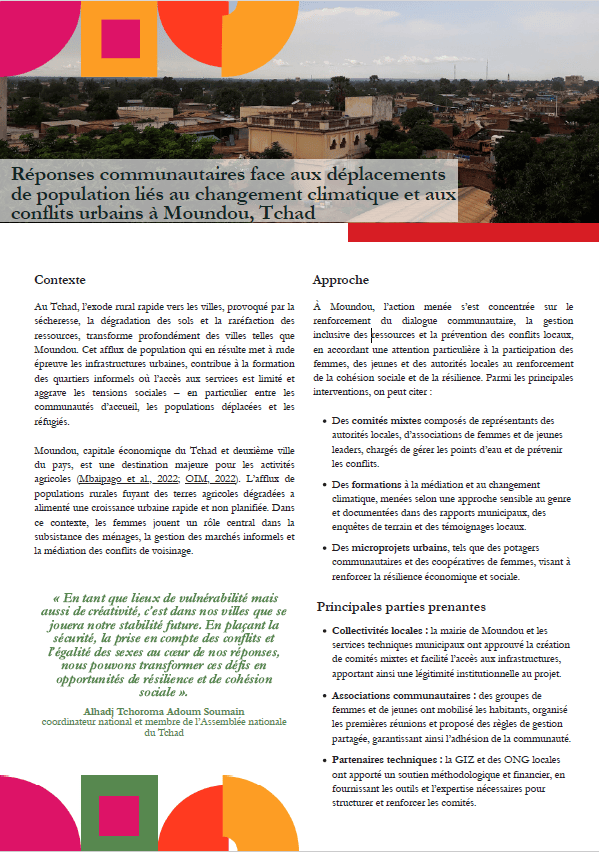
Kampala is responding to rising climate‑related migration with a four‑pillar city plan linking livelihoods, services, planning, and policy.
This paper highlights the role of pastoralism in the context of climate resilience, food systems sustainability and the synergistic implementation of the three Rio Conventions, synthesising recommendations for increased political integration.
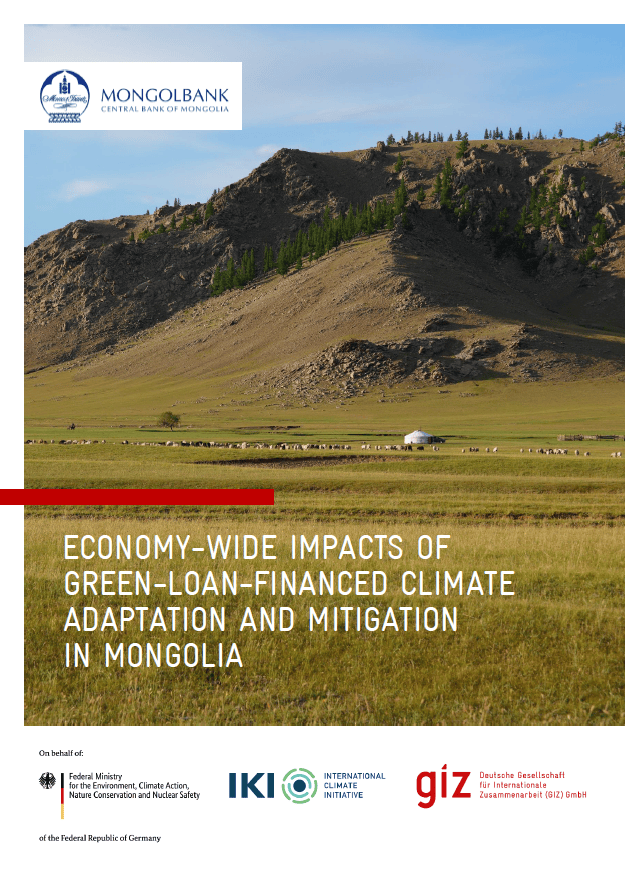
This analysis explores how Mongolia can better align its climate and biodiversity strategies (NDCs, NAPs, NBSAPs) to reduce fragmentation and unlock synergies. It identifies key challenges, overlaps, and opportunities for coordinated action to strengthen policy coherence and deliver more effective, integrated outcomes across both domains.
To reverse the trend of declining biodiversity, locally adapted biodiversity-enhancing practices are needed. This is a guide for practitioners in agricultural and rural development to identify, adapt, and promote such practices.
The Loss and Damage governance framework consists of three main bodies: The Warsaw International Mechanism (WIM), which functions as the ‘policy arm’; the Santiago Network under the WIM, which functions as the ‘technical arm’; and the Funding Arrangements including a Fund for responding to Loss and Damage (FRLD), which forms the ‘financial arm’. This factsheet will give an overview of the background of the WIM, explain its modalities as well as its relevance for international cooperation in the context of climate negotiations.
This report presents insights how sea-level rise may affect land availability across economic sectors in Vietnam. It illustrates how potential land loss across regions and economic sectors can be projected by using spatial analysis combining sea-level rise projections, elevation data and land-use information.