What are you looking for?

Blue Training Courses

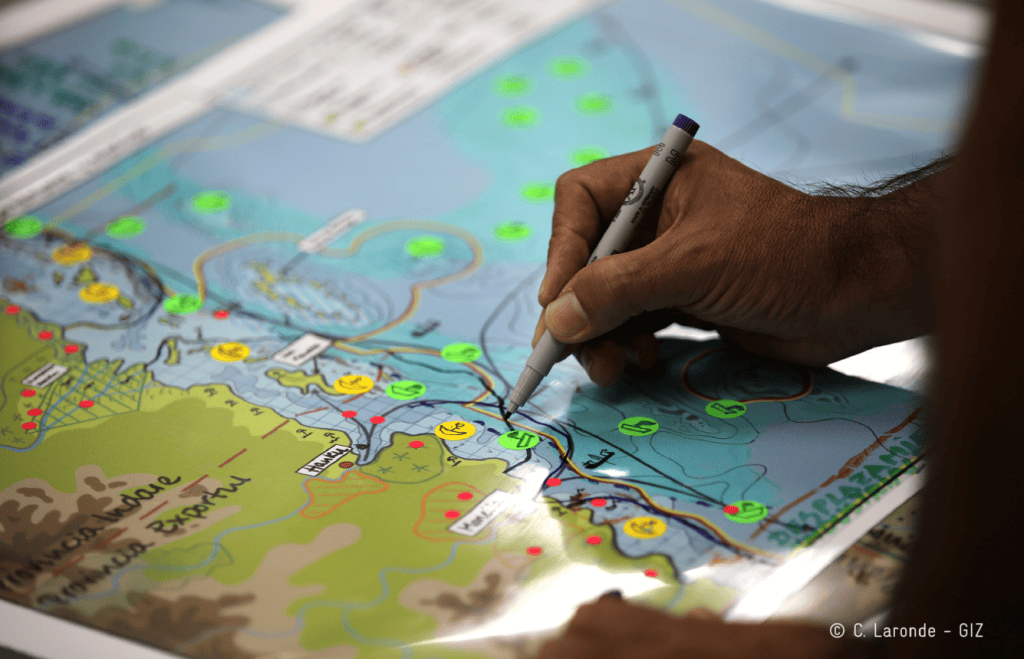
Someone draws lines on a map.
© GIZ / C.Lardone

Capacity development is a key factor for supporting ownership and action towards resilient coastal and marine ecosystems. The Blue Solutions Initiative developed modular marine training courses – the Blue Training Courses – focusing on marine spatial planning, sustainable ocean-based economies and blue leadership.

  • The Blue Planning in Practice training course (BPiP, 5 training days) introduces the theory and practical starting points of coastal and marine spatial planning and aims to strengthen planning, implementation, and management at sea. The training course builds upon a range of existing planning frameworks and practical experiences and the guidance of more than­ 30 experts in the field from around the world.
  • The Sustainable Blue Economy training provides tools and guidance to support pathways towards sustainable ocean-based economies, which enhances wellbeing, prosperity and social equity, while protecting, regenerating and maintaining the integrity of the environment.
  • The Blue Leadership Journey strengthens individual and collective leadership skills to enable meaningful change in systems. With this training, ocean leaders learn to better deal with challenges, act in complex situations, and become change agents.


The training courses aim to strengthen the capacities of decision makers, practitioners, and stakeholders to overcome competing interests and uncoordinated approaches at sea. They provide participants with tools to find their own solutions to respond to the challenges facing the marine environment.

All training materials are open source and available online. If you are interested in convening one of the Blue Training Courses, feel free to adapt it to your context and needs. The Blue “Cookbook for Conveners” will help guide you on the journey of developing a training. The document is intended to support training conveners with the planning and implementation of training courses. It does so by providing an overview of the offered trainings, the various materials, and current trainers.
Recent Trainings

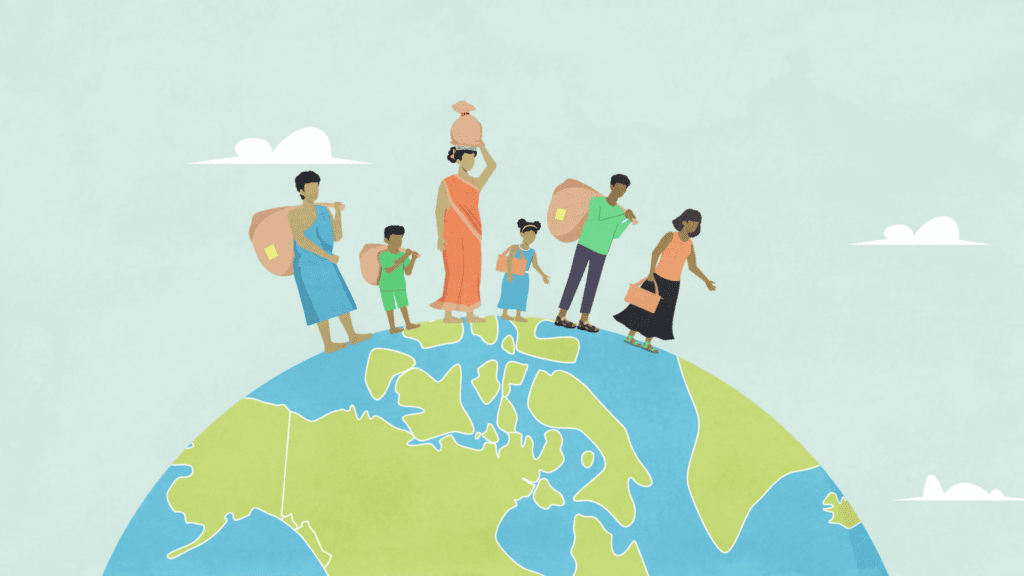
E-Learning sur la mobilité humaine dans le contexte des changements climatiques

Dans ce cours interactif à l’auto-rythme, qui a été développé en coopération entre le Programme mondial « Mobilité humaine dans le contexte des changements climatiques » de la GIZ et l’Université des Nations Unies – Institut pour l’Environnement et la Sécurité Humaine (UNU-EHS), les décideurs politiques, les professionnels du développement, les chercheurs et les étudiants apprendront comment les changements climatiques influencent la mobilité humaine. En introduisant des concepts clés tels que la migration liée au climat, le déplacement en cas de catastrophe, la relocalisation planifiée et les populations piégées, cette formation développera les capacités nécessaires pour envisager la mobilité humaine liée aux changements climatiques (MHCCC) dans votre domaine de travail respectif. La formation présente des exemples variés de différents pays sur le phénomène du MHCCC ainsi que des options pour les gérer.

Read More »

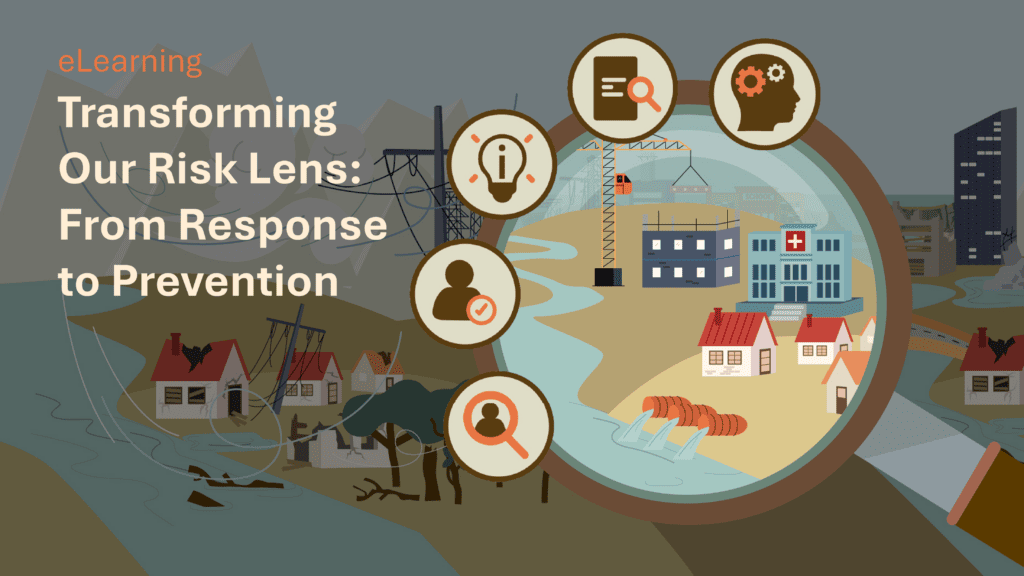
Transforming our Disaster Risk Lens: From response to prevention

Disasters are becoming more frequent, more intense, and increasingly interconnected. Building resilience requires collaboration across governments, communities, civil society, and the private sector. This course introduces the foundations of disaster risk management (DRM) and explores how risk considerations can be systematically integrated into development planning and decision-making.

Read More »
A comic-style illustration featuring the words ‘Knowledge for all’, showing an African woman called Amina holding a tablet.

Building Resilient African Cities: Join Amina’s Journey Through Risk-Informed Urban Development (RIUD)

In this interactive, story-driven course, learners accompany Amina, an urban development specialist, on a mission across Africa. She explores how communities, local governments, and practitioners are addressing urban risks and building resilience in diverse contexts. The course provides practical knowledge and tools to help urban planners, policymakers, and development practitioners integrate climate risk considerations into urban development processes, contributing to safer, more resilient, and sustainable cities across Africa.

Read More »