What are you looking for?

Water-centred climate adaptation

Using water-focused climate adaptation to strengthen the resilience of water resources and water services in response to the increasing effects of climate change

Water-centred climate adaptation

Using water focused climate adaptation to strengthen the resilience of water resources and water services in response to the increasing effects of climate change.  

Project 1 - Climate-sensitive Water Resources Management in Central Asia

Project Background: Water and Climate Adaptation Context

Central Asia is among the regions most vulnerable to the impacts of climate change. Rising temperatures, accelerating glacier retreat in the Tien Shan and Pamir mountain ranges, increasing climate variability, and more frequent extreme weather events are significantly affecting water availability and quality. While glacier melt may temporarily increase river flows, long-term projections indicate a substantial decline in water resources, with far-reaching implications for ecosystems, livelihoods, and economic development.
The region depends heavily on the transboundary Amu Darya and Syr Darya river basins, which provide water for agriculture, energy production, industry, and domestic use across Kazakhstan, the Kyrgyz Republic, Tajikistan, Turkmenistan, and Uzbekistan. Agriculture accounts for the largest share of water consumption and is particularly vulnerable to increasing water scarcity and changing precipitation patterns. Declining water availability threatens food security, rural livelihoods, and regional stability.
As water resources become more variable and scarcer, climate adaptation requires coordinated action beyond national borders. Strengthening transboundary cooperation, improving data exchange, harmonising monitoring systems, and building institutional capacities are essential for effective adaptation. Climate-sensitive Integrated Water Resources Management (IWRM) offers a framework for balancing environmental, social, and economic needs while increasing resilience to climate change.
Against this backdrop, the regional project “Climate-sensitive Water Resources Management in Central Asia” supports the five Central Asian countries in strengthening cooperation on shared water resources and advancing climate-resilient water governance. Commissioned by the German Federal Ministry for Economic Cooperation and Development (BMZ), co-financed by the Swiss Agency for Development and Cooperation (SDC) and European Union, and implemented by GIZ, the project works with national and regional institutions to improve water monitoring, strengthen capacities, foster knowledge exchange, and promote practical adaptation measures.

Project Implementation

The project applies a climate-sensitive and integrated approach to water resources management to strengthen resilience to climate change across Central Asia. Building on the results of the Berlin Process and previous regional cooperation initiatives, the project combines policy dialogue, digital innovation, institutional capacity development, and practical adaptation measures at regional, national, and basin levels.

Approaches and Tools Applied

The project applies a climate-sensitive Integrated Water Resources Management (IWRM) approach to strengthen water security and climate resilience across Central Asia. It combines transboundary cooperation, digital innovation, institutional capacity development, and evidence-based planning to address the increasing impacts of climate change on shared water resources.

A central component of the project is the establishment of Basin Dialogues for the Amu Darya and Syr Darya river basins. These platforms bring together national water authorities, river basin organizations, regional institutions, and technical experts to facilitate information exchange, joint planning, and trust-building among riparian countries.

The project supports the integration of climate considerations into water governance and planning processes by promoting climate-sensitive IWRM principles, strengthening (transboundary) river basin organizations such as the Chu-Talas Water Commission, the Kyrgyz-Uzbek Water Commission and the Kyrgyz-Tajik Water Commission, supporting transboundary dialogues, and enhancing cooperation among the International Fund for Saving the Aral Sea (IFAS), national ministries, hydrometeorological services, and academic institutions. 

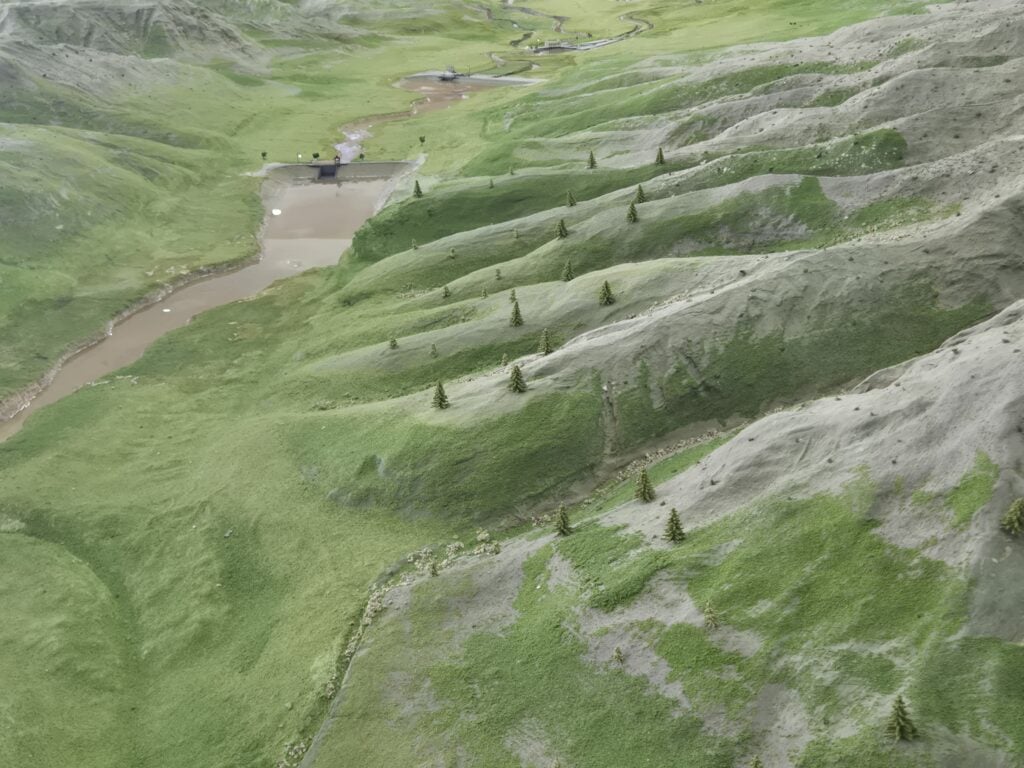
To improve evidence-based decision-making, the project develops and applies digital monitoring and planning tools that support drought preparedness, water allocation, and climate risk assessment. These include regional platforms for drought monitoring, snow and water availability forecasting, climate impact visualization, and environmental data management. The project also supports the digitalization of groundwater monitoring systems and transboundary water infrastructure to improve transparency and water accounting. Pilot measures on climate-sensitive IWRM in the areas of water quality monitoring, groundwater monitoring, and automation of transboundary irrigation canals across the five Central Asian countries in line with identified priorities were implemented. 

Photo Credits: GIZ Central Asia

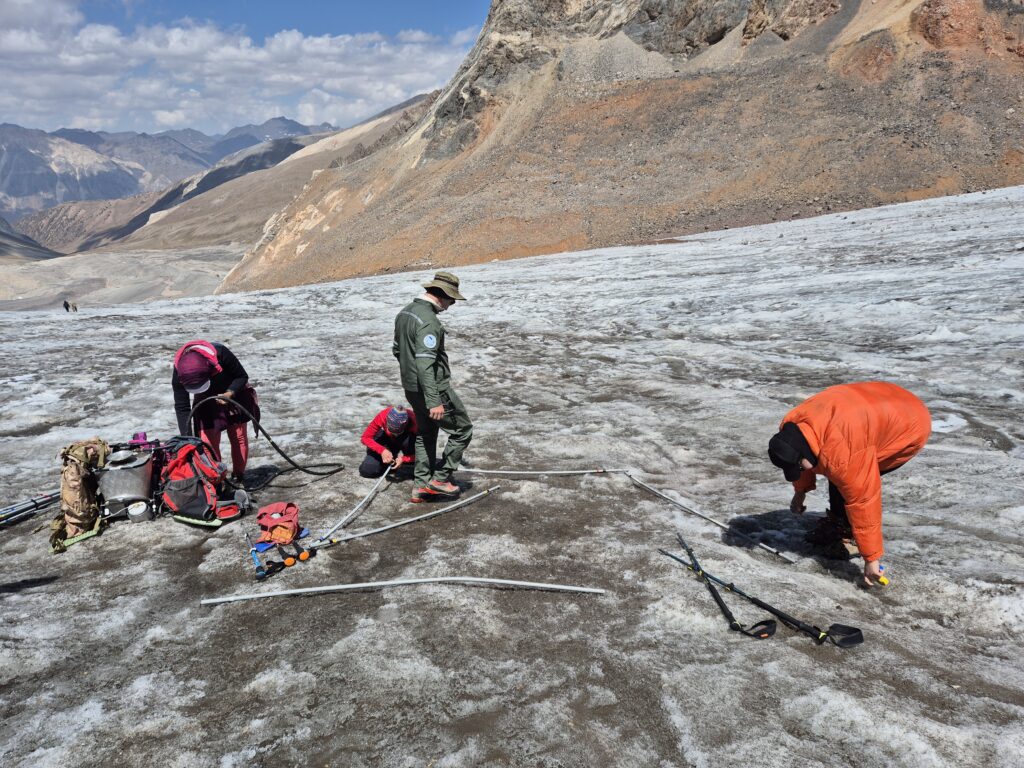
In parallel, the project promotes harmonised approaches to water quality and groundwater monitoring, drawing on international standards and facilitating regional coordination on methodologies and data exchange including through the establishment of an intergovernmental working group on water quality in the Amu Darya basin.

Photo Credits: GIZ Central Asia

Capacity development is another key pillar of the project. Practice-oriented training programmes, tailored curricula on IWRM, and peer-to-peer learning formats strengthen the technical and institutional capacities of water professionals at regional, national, and basin levels. This includes also exchange of best practices through study visits, partner workshops, and trainings across Central Asia and with international partners, including Finland and Germany

The project further fosters academic and scientific cooperation. A Network of Academic Societies and strengthened peer-to-peer cooperation between Central Asian and European universities, including Martin Luther University Halle-Wittenberg and the Swiss ETH Zurich University, supporting the development of online courses and training programmes on Integrated Water Resources Management (IWRM) was established. By linking science, policy, and practice, these activities strengthen regional knowledge generation and contribute to water diplomacy and climate adaptation.

Success Factors and Challenges

A key success factor of the project is its strong regional ownership. The project works closely with national ministries responsible for water management, IFAS and its subsidiary bodies, river basin organisations, hydrometeorological services, and academic institutions across all five Central Asian countries.

Building on existing regional cooperation frameworks and long-standing partnerships has enabled the project to move beyond dialogue towards practical implementation. Basin Dialogues, joint monitoring activities, and scientific cooperation have strengthened trust among stakeholders and created platforms for sustained exchange and collective action.

Another success factor is the project’s focus on evidence-based decision-making. Harmonised monitoring methodologies, shared digital platforms, and improved access to climate and hydrological data support more transparent and informed water management. Combining technical innovation with institutional capacity development has increased the sustainability and uptake of project results.

At the same time, implementation faces several challenges. The countries differ in institutional capacities, regulatory frameworks, and technical infrastructure, political priorities which can complicate regional coordination and the harmonization of approaches.

Data availability and interoperability remain significant constraints. Differences in monitoring systems, data standards, and data-sharing practices continue to limit the integration of information across borders.

In addition, increasing climate variability, accelerating glacier retreat, and growing competition for water resources create uncertainties that require adaptive and flexible management approaches. Ensuring the long-term operation and financing of monitoring systems and digital tools beyond the project period remains essential for sustaining impact.

The project demonstrates that climate adaptation in Central Asia is most effective when supported by regional cooperation, shared data systems, scientific collaboration, and strong institutional capacities. By establishing permanent mechanisms for dialogue, harmonising monitoring approaches, and improving transparency in water management, the project strengthens trust among riparian countries, reduces the risk of water-related tensions, and supports cooperative management of shared water resources. In doing so, the project contributes not only to climate resilience and water security, but also to long-term peace, stability, and sustainable development across Central Asia.

References and Additional Materials

Contact Person

Dr. Caroline Milow
Regional Project “Climate-sensitive Water Resources Management in Central Asia”
Deutsche Gesellschaft für Internationale Zusammenarbeit (GIZ) GmbH
Email: caroline.milow@giz.de
Phone: +998 71 241 40 48

CHAPTERS