Gender matters because it shapes everyday responsibilities, access to resources and influence over water institutions. In many countries and cultures, at household and community level, women and girls are often responsible for collecting water, managing hygiene, preparing food and providing unpaid care. A. Recent assessments show that in more than 80% of rural households without water on the premises, women and girls are responsible for collecting water, amounting to around 250 million hours every day globally (UNESCO, 2026). If a drought makes sources less reliable or more distant, the additional time and physical effort are therefore not distributed equally.
The implications extend beyond household water. Access to land, irrigation, credit, technology, extension services and climate information can determine whether farmers and small businesses are able to respond to drought, flooding or declining water quality. At institutional level, women remain underrepresented in many technical and leadership roles in utilities and other water organizations with women accounting for fewer than 20% of formal employees in water utilities worldwide (UNESCO, 2026).. This limits equal access to quality employment and narrows the range of experiences represented in sector decisions.
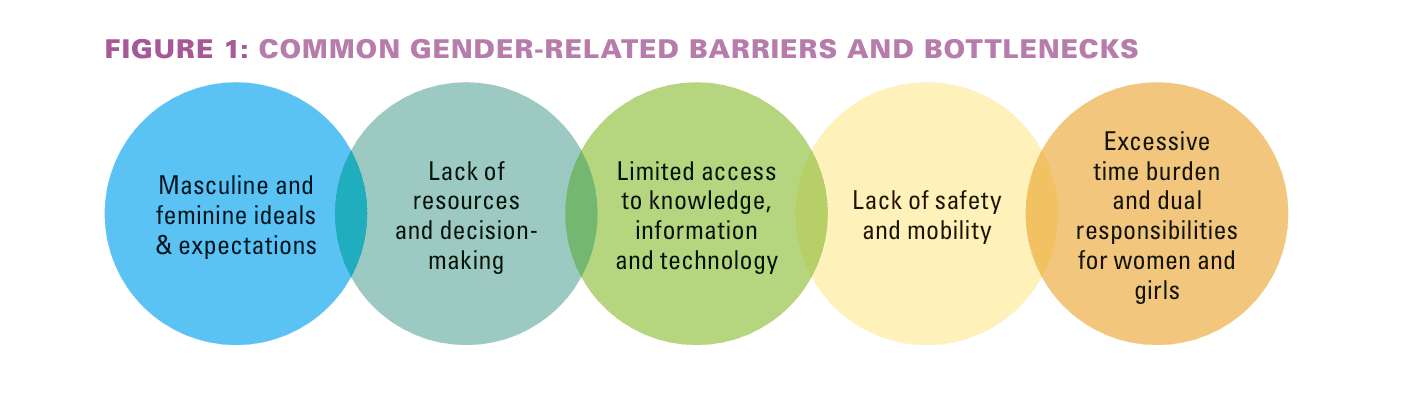
UNICEF (2017). Gender-Responsive Water, Sanitation and Hygiene: Key elements for effective WASH programming.
Climate hazards do not automatically produce gender inequalities. They affect water resources, infrastructure and services, while existing social and institutional conditions determine how these impacts are distributed.
During droughts and heatwaves, reduced water availability may lead to longer collection times, higher prices, restrictions on irrigation and growing competition between different water uses. The consequences depend on who is responsible for obtaining water, who controls household income, who holds formal water or land rights and who can afford alternative supplies or technologies.
Floods and storms can contaminate drinking-water sources, damage toilets and wastewater systems, block access routes and interrupt services in schools and health facilities. Poorly located or damaged sanitation facilities can create additional challenges for people with disabilities, children, older people and people exposed to harassment or discrimination. Climate change does not itself cause gender-based violence, but unsafe facilities, displacement, loss of livelihoods and existing unequal power relations can increase exposure to violence, exploitation and abuse.
Sea-level rise and saltwater intrusion can affect drinking-water sources, agricultural land and local livelihoods. Whether households can invest in water treatment, storage, new crops or relocation depends partly on their financial resources, property rights and decision-making power. Similarly, digital warning systems or climate services may exclude people who do not have access to a mobile phone, electricity, literacy or information in an accessible language.
Adaptation measures are therefore not socially neutral. The location of infrastructure, the design of tariffs, the choice of technology, eligibility requirements for funding and the organisation of maintenance all influence who benefits, who pays and who carries new responsibilities.
Do-no-harm
Unsafe sanitation facilities, disrupted services, displacement, livelihood losses and existing unequal power relations can increase exposure to violence, exploitation and harassment. Water and WASH programmes should therefore assess protection risks and provide safe, confidential and accessible feedback mechanisms.
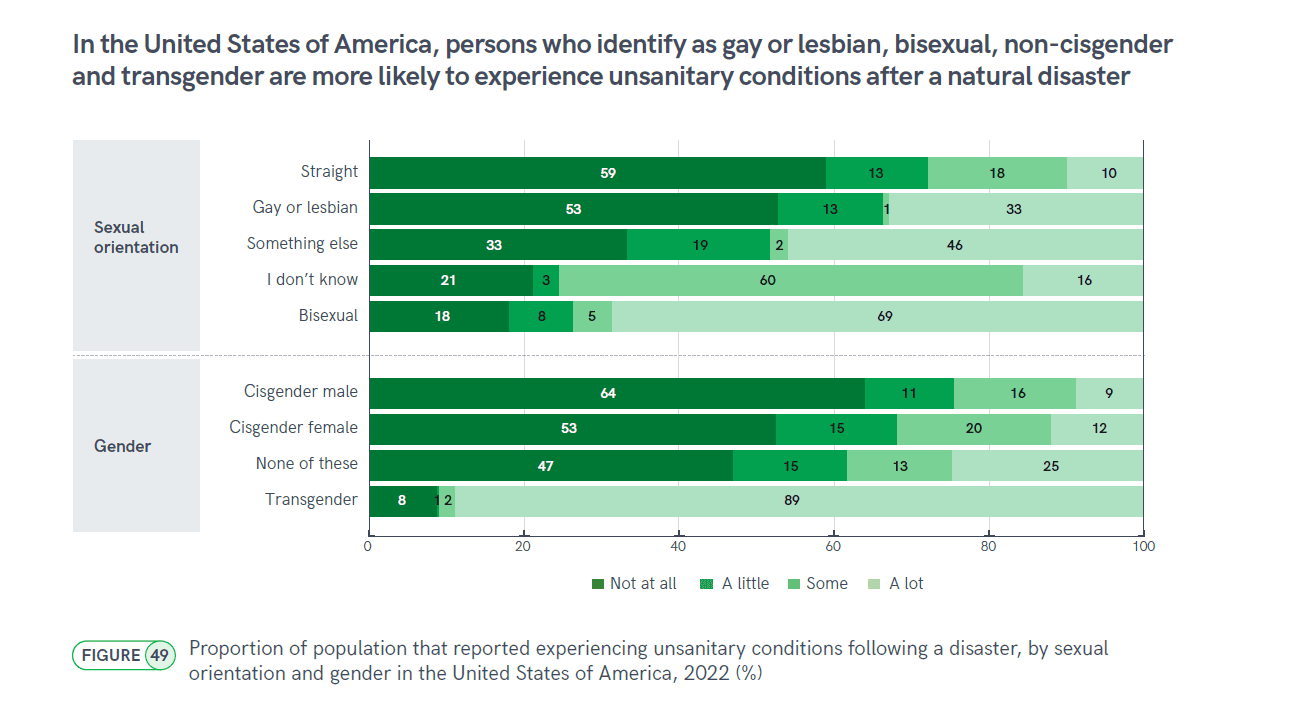
Progress on household drinking water, sanitation and hygiene 2000–2022: special focus on gender. New York: United Nations Children’s Fund (UNICEF) and World Health Organization (WHO), 2023.
Gender-responsive adaptation starts by understanding how risks, responsibilities and decision-making are distributed. Assessments should combine gender-, age- and disability-disaggregated data with qualitative information about unpaid work, safety, affordability, access to land and water rights, employment and influence over decisions. They should not rely only on formal household heads, registered water users or representatives of established organisations, because these categories may conceal important differences within households and communities.
The G-CREWS Gender Monitoring Plan provides a concrete example from Grenada: it advises survey teams not to rely only on “heads of household” and recommends consulting women and men separately where necessary.
The findings of an assessment must then influence actual planning and budget decisions. Meaningful participation may require working with women’s rights organisations, organisations of persons with disabilities, Indigenous Peoples and local communities, professional women’s networks or groups representing informal settlements. Meeting times, locations, language, transport, childcare and compensation for participants’ time can all affect who is able to contribute. Participation is meaningful only where institutions explain how these contributions changed a plan, budget or design.
In infrastructure and service delivery, gender responsiveness means considering climate reliability alongside affordability, physical accessibility, privacy, dignity and safe access. Sanitation measures must address the entire service chain – from the toilet and containment system to emptying, transport, treatment and safe disposal or reuse. A flood-resistant toilet is not resilient if untreated waste is subsequently released into the environment. The same distributional questions apply to catchment restoration and nature-based solutions: whose land and labour are used, whose knowledge informs the measure and who receives the benefits?
Further guidance is available here:
Economic instruments and finance also require scrutiny. Land-title requirements, collateral, advance financing, complex applications or reimbursement-based grants may unintentionally exclude small enterprises, informal workers and people without secure property rights. Gender-responsive finance examines who can access funding and contracts, who carries financial risk and whether participation, accessibility and safeguarding are budgeted from the outset.
More recommendations:
Monitoring should measure more than the number of women attending meetings or completing training. Relevant results may include reduced time spent collecting water, improved affordability and safety, reliable services during extreme events, access to paid technical employment and demonstrable influence over tariffs, budgets or allocation decisions.
From participation to transformation
A gender-sensitive approach identifies differences in needs, roles and risks. A gender-responsive approach changes the intervention in response to these differences. A gender-transformative approach goes further by addressing the institutional rules, social norms and power relations that produce unequal outcomes.
For example, collecting disaggregated information about water access is gender-sensitive. Changing the location, tariff, accessibility or safety features of a service on the basis of that information is gender-responsive. Giving women and marginalised groups effective authority over budgets and water-allocation decisions, while reforming discriminatory employment, land or water-rights rules, moves towards transformation.
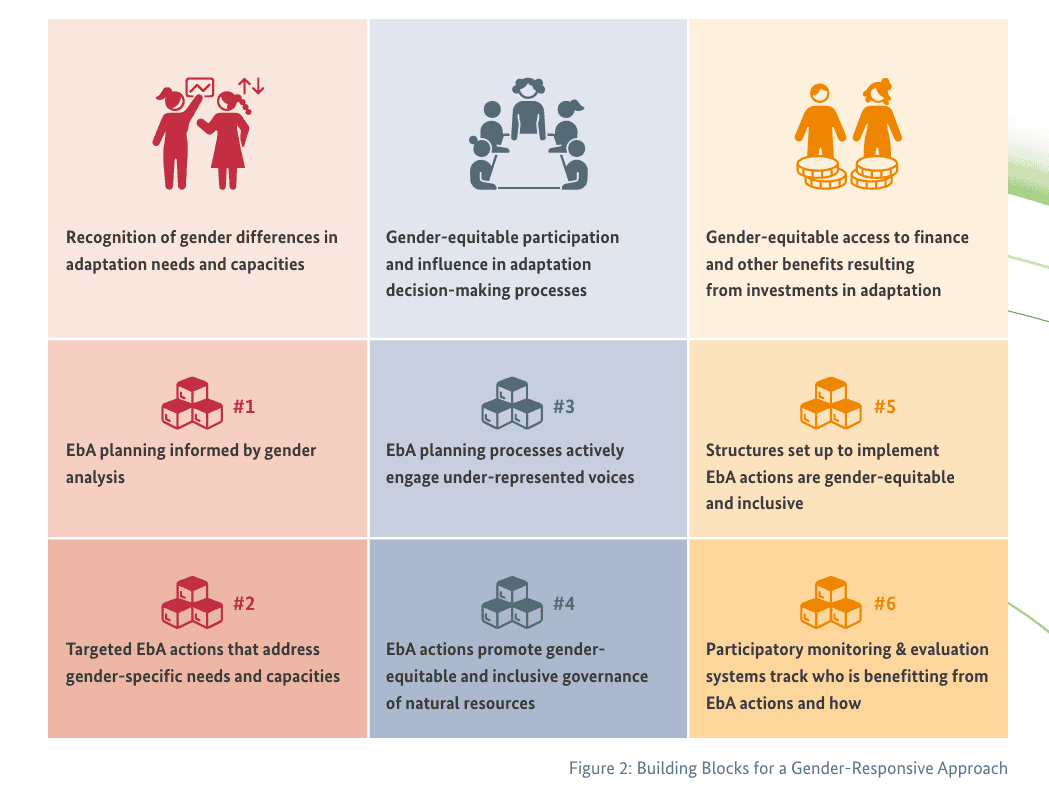
GIZ (2021). Toward gender-responsive Ecosystem-based Adaptation: Why it’s needed and how to get there.
Project Example 1 – Benin: Empowering women in water management
In Benin the project AGIR-Eau II, commissioned by BMZ, strengthens women’s leadership in partner organizations and places them at the heart of mediating water-use conflicts. From farm–pasture tensions to local allocation disputes, trained female leaders help broker fair, practical solutions.
The approach fosters social cohesion, reduces poverty and inequalities, and promotes fairer distribution of resources – delivering resilient water governance that benefits everyone.
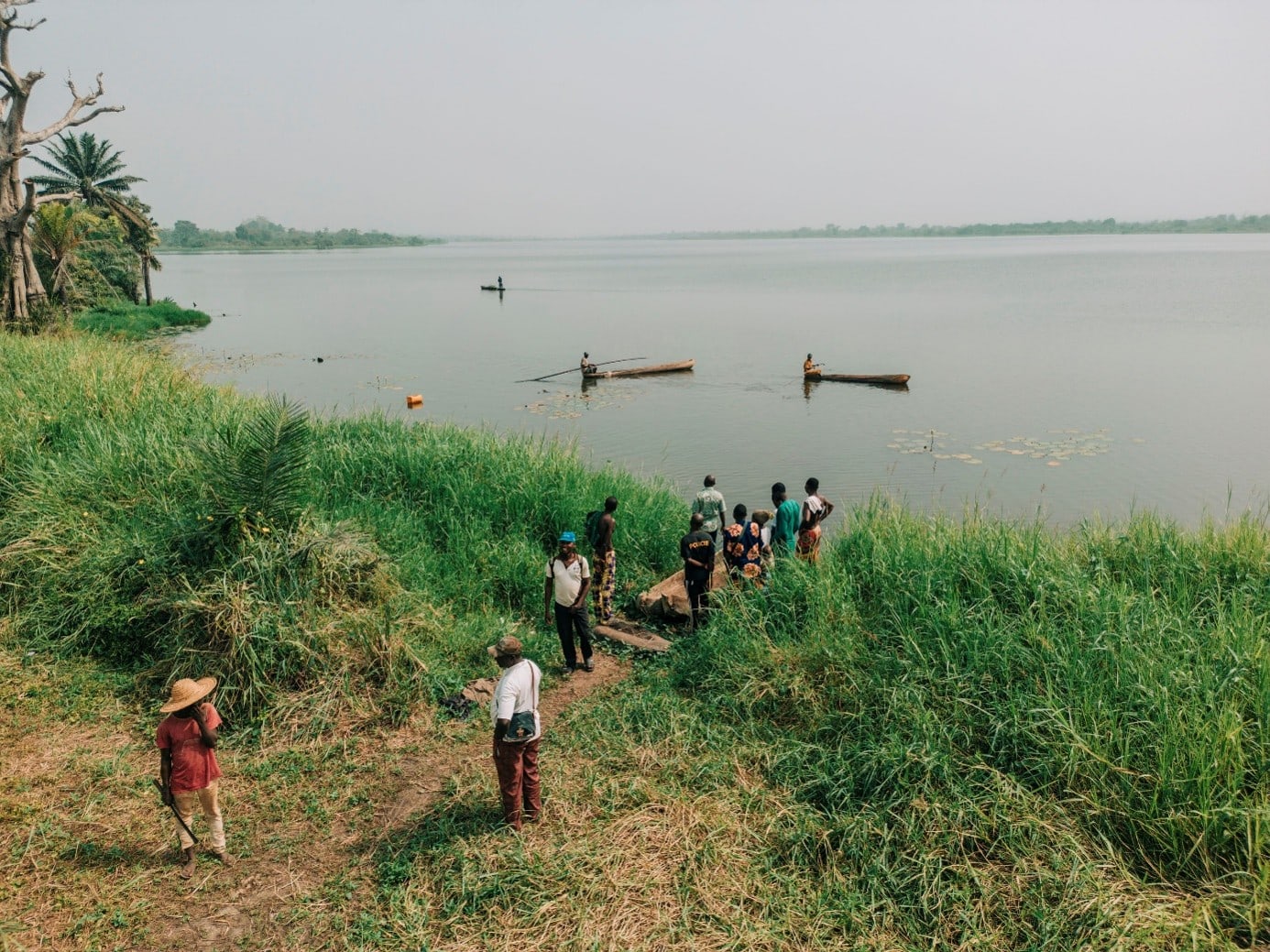
Local Water Committee at Lake Togbadji in southern Benin (IWRM measures) @ GIZ / Ollivier Girard
Project Example 2 – Grenada: Linking gender analysis, monitoring and technical skills
The Climate-Resilient Water Sector in Grenada project, G-CREWS, translated a gender analysis into a Gender Action Plan and a Gender Monitoring Plan covering water governance, tariffs, finance, communication, employment and monitoring. It also updated national plumbing curricula to include rainwater harvesting and water-loss assessment. A ten-week programme trained 24 plumbers, including 13 women.
GIZ Project page: Climate Resilience of the Water Sector in Grenada (G-CREWS) | GIZ
Gender Action Plan: Climate Resilient Water Sector in Grenada (G-CREWS) GENDER ACTION PLAN
Women Breaking Barriers – Driving Grenada’s Water Future:
You are currently viewing a placeholder content from YouTube. To access the actual content, click the button below. Please note that doing so will share data with third-party providers.
More InformationProject Example 3 – Central Asia: Strengthening women’s technical participation
The regional Climate-sensitive Water Resources Management in Central Asia project combines transboundary dialogue, monitoring, scientific cooperation and capacity development. Its climate-sensitive Integrated Water Resources Management training reached 382 specialists, including 144 women, and included a seminar for female water managers. Trained women have subsequently contributed to research on women’s participation in the water sector and on glaciers and the cryosphere.
GIZ Project page: climate-sensitive water resource management in Central Asia | GIZ
You are currently viewing a placeholder content from Vimeo. To access the actual content, click the button below. Please note that doing so will share data with third-party providers.
More InformationYou are currently viewing a placeholder content from YouTube. To access the actual content, click the button below. Please note that doing so will share data with third-party providers.
More InformationYou need to load content from reCAPTCHA to submit the form. Please note that doing so will share data with third-party providers.
More InformationYou need to load content from reCAPTCHA to submit the form. Please note that doing so will share data with third-party providers.
More InformationYou are currently viewing a placeholder content from Google Maps. To access the actual content, click the button below. Please note that doing so will share data with third-party providers.
More InformationYou are currently viewing a placeholder content from Google Maps. To access the actual content, click the button below. Please note that doing so will share data with third-party providers.
More InformationYou are currently viewing a placeholder content from Mapbox. To access the actual content, click the button below. Please note that doing so will share data with third-party providers.
More InformationYou are currently viewing a placeholder content from OpenStreetMap. To access the actual content, click the button below. Please note that doing so will share data with third-party providers.
More InformationYou are currently viewing a placeholder content from reCAPTCHA. To access the actual content, click the button below. Please note that doing so will share data with third-party providers.
More Information