What are you looking for?

Water-centred climate adaptation

Using water-focused climate adaptation to strengthen the resilience of water resources and water services in response to the increasing effects of climate change

Water-centred climate adaptation

Using water focused climate adaptation to strengthen the resilience of water resources and water services in response to the increasing effects of climate change.  

Project 3 - Water security for climate resilient cities in Peru – PROAGUA

Project Background

PROAGUA is implemented on behalf of Germany’s Federal Ministry for Economic Cooperation and Development (BMZ) and co-financed by the Swiss State Secretariat for Economic Affairs (SECO). It is aligned with the BMZ 2030 Reform’s core topic Climate and energy, just transition and the action field Sustainable urban development. It contributes to Germany’s climate partnership with Peru, focusing on adaptation. PROAGUA also contributes to six adaptation NDC targets in Peru’s water sector and to SDGs 6, 11, and 13 of the 2030 Agenda.

In the current phase, PROAGUA builds on results from the previous project (2019–2023) and focuses on long-term resilience and security of water supply amid steady urban growth and increasingly challenging climatic conditions. It advances sector management and planning instruments that incorporate water security and long-term scenario analysis of climate change impacts on the balance of water supply and demand for domestic use. It facilitates alignment of Peru’s planned water-sector investments with the needs to improve service quality while strengthening water security and resilience. The integrated water security approach also incorporates circular economy principles.

The project components strengthen the effectiveness of cooperation in the urban water sector. Advisory support to water utilities (micro level), capacity development for national technical advisory, regulatory and training institutions (meso level), and advice to the lead ministry for urban water management (macro level) form a single unit. The central focus is the interaction between: 

  1. improving institutional governance oriented toward climate-resilient urban water supply; 
  2. promoting dissemination and replication of water security best practices; 
  3. developing business models with the private sector and
  4. developing the necessary competencies of utilities’ technical and operational staff. 

The interaction of these four closely linked components provides a strong impetus for developing climate-resilient urban water management.

Project Implementation

Approaches and Tools Applied

PROAGUA steers urban water management in Peruvian cities toward water security, factoring in climate resilience, beyond merely closing gaps in access to and quality of drinking water and sanitation services. The water security approach incorporates the circular economy with an emphasis on the reuse of treated wastewater.

Within this framework, business models are promoted, especially those linked to the reuse of treated wastewater. These models reduce pressure on conventional water sources, generate economic and environmental value, and foster more sustainable water resource management.

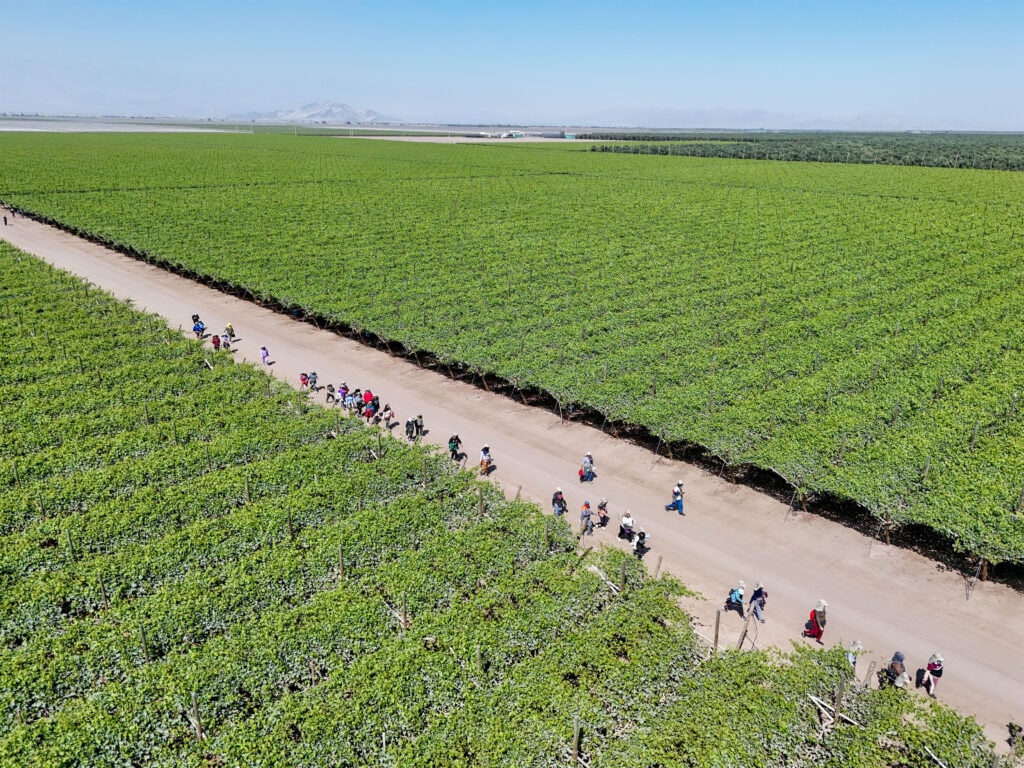
A grape field irrigated with wastewater treated by the agricultural export company Agrokasa, in Ica.
Photo Credits: GIZ / Carlos Carrera

Building on these approaches, a series of instruments and tools have been developed.

  • The project has introduced water security and climate resilience approaches into key instruments for strategic guidance and planning in the water sector: the Multisectoral National Policy on Drinking Water and Sanitation to 2050, and the National Drinking Water and Sanitation Plan 2026–2030, still under development, which is essential for implementing the Policy by structuring investments and strategies to close access and quality gaps and ensure the security of drinking water supply.
  • In line with climate resilience guidance, guidelines have been promoted to guide water utilities in planning climate change mitigation and adaptation measures. Based on these guidelines, utilities prepare Climate Change Mitigation and Adaptation Plans (PMACC) that include a vulnerability analysis to identify risks (e.g., droughts, heavy rainfall) and, on that basis, define measures to address climate change and water security challenges, aligning with the targets of the National Plan and the objectives of the Policy. Ten water utilities have developed a Climate Change Mitigation and Adaptation Plan; 65% of their measures have financing commitments of approximately 975 million euros, and 17% of those measures contribute to biodiversity protection. Furthermore, twenty-five replications of urban water security good practices have been implemented by eight water utilities. Examples include early warning systems, well monitoring, and lagoon cleaning, among others.
  • To facilitate the preparation of the PMACCs, the monitoring of their implementation, and the tracking of progress toward the Nationally Determined Contributions (NDCs), the digital tool “Environmental Management System for Sanitation Services” (SIGASS) has been developed.
  • Another key instrument has been the introduction of the Water Supply Security Index (ISAA) into service regulation, aimed at estimating water utilities’ capacity to meet the population’s drinking water demand in the face of extreme natural events and potential prolonged disruptions.
  • A digital tool was developed to calculate the ISAA with two main uses: automating and optimizing regulatory benchmarking of water utilities and enabling each utility to calculate the impact that the measures included in their plans will have on supply security.
  • To assess and ensure operational excellence in Wastewater Treatment Plants (WWTPs), TSM (Technical Sustainable Management) certification is promoted as a tool that ensures compliance with standards of the German Association for Water, Wastewater and Waste (DWA). This model has been adapted by the National Agrarian University La Molina.
  • To stimulate the reuse of treated wastewater and involve the private sector through business models with water utilities, a commercialization toolbox was developed. It includes directives, auction terms, contract templates, pricing methodologies, bid evaluation, and demand analysis.
  • PROAGUA facilitates the transfer, adaptation, and implementation of good practices from leading water utilities to others facing similar challenges. Through horizontal learning via internships, it accelerates the adoption of proven solutions and enables the scaling of water security measures across different regions of the country. In addition, PROAGUA acts as a facilitator to identify technological solutions offered by the private sector, especially European suppliers based on the needs of water utilities implementing good practices.
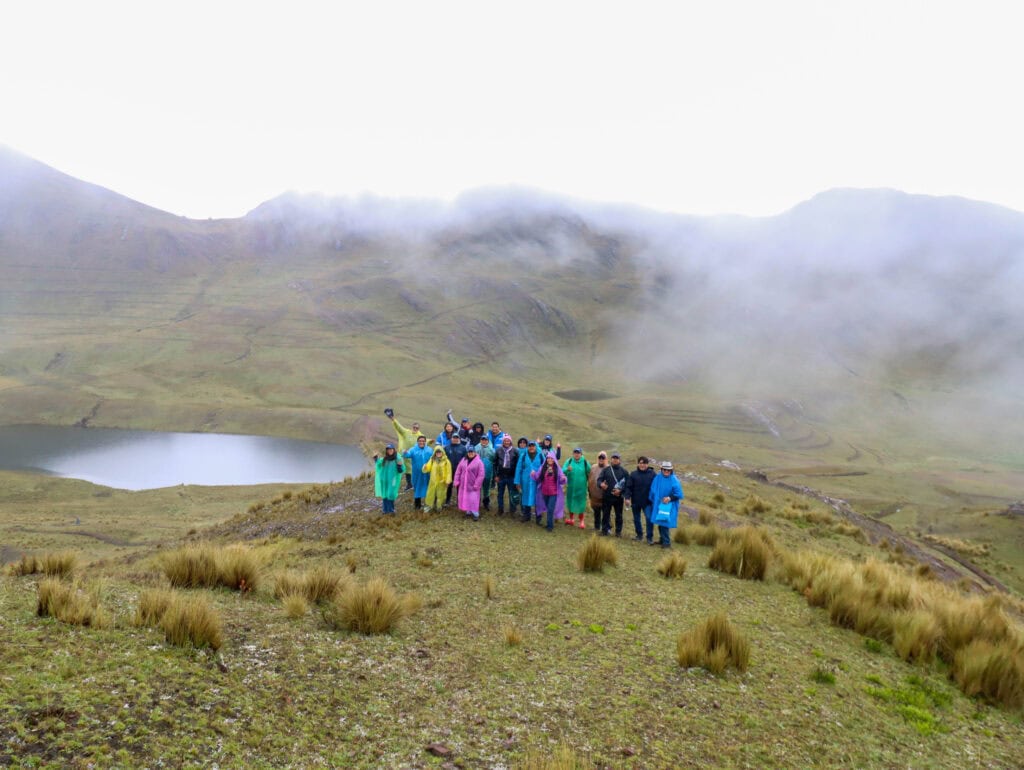
Workshop on best practices for the EPS SEDACUSCO’s
Photo Credits: EPS SEDACUSCO

To develop the competencies of technical and operational staff in water utilities, two dual vocational technical training programs “Drinking and Wastewater Networks” and “Drinking Water Production and Wastewater Treatment”, reaching 160 apprentices, have been created to strengthen the operation of drinking water and sanitation systems, ensure the sustainability of implemented good practices, and thus contribute to climate resilience

Success Factors

  • A decisive success factor was the high degree of project alignment with partners’ policies, strategies, and priorities, including concrete contributions to specific institutional and sectoral targets.
  • To sustain relevance and implementation in a rapidly changing context, a key factor is partner empowerment and ownership from project design, and adaptation to their institutional dynamics and decision-making processes. Clear governance, monitoring, and iterative adjustment mechanisms ensure successful joint work despite shifting circumstances.
  • Link climate adaptation to the immediate needs of water utilities. Resilience is addressed as part of day-to-day operations through actions that ensure supply continuity under normal conditions or extreme events, source protection, operational improvements, and diversification of sources.
  • Peer-to-peer learning approach: Replicating good practices enables one water utility to learn directly from another that has already implemented the solution, building trust, reducing technical uncertainty, and accelerating solution adaptation.
  • The strategy of scaling validated good practices from the previous project phase accelerated implementation in water utilities, shortened the learning curve, and reduced execution risks.
  • Working in parallel at the macro, meso, and micro levels enhances project effectiveness. At the macro and meso levels, instruments, policies, and guidelines that guide the water sector are developed; at the micro level, these orientations are applied in local contexts. This two-way feedback—top-down and bottom-up—accelerates the adoption of new approaches, corrects policy assumptions in time, generates evidence for regulatory adjustments, and ensures solutions are relevant and operable. The result is a more successful project: it introduces innovations with institutional backing while testing and optimizing them on the ground, strengthening sustainability and scalability.

Challenges

  • In a country as diverse as Peru, replicating water security best practices entails the challenge of effectively adapting them to the local context. Automatic copy-and-paste is not viable: each water utility operates under different conditions of water availability, infrastructure, climate risks, institutional capacity, and service demand; therefore, solutions must be ad hoc to the context. 
  • Fostering collaboration between public water utilities and the private sector is key to accelerating improvements in efficiency, service quality, and financial sustainability. The challenge is twofold: on one hand, utilities must open more space for the private sector in critical and innovative operational activities (maintenance, non-revenue water reduction, energy efficiency, wastewater and sludge management, among others); on the other, the private sector must have greater confidence in these schemes and participate in innovative business models. 
  • Securing resources and executive commitment within utilities to implement and scale the replication of best practices is a constant challenge, especially given the highly dynamic political context that affects priority-setting. 
  • Advancing the reuse of treated wastewater requires effective coordination among multiple actors. The core challenge is to align responsibilities and apply homogeneous criteria by the Water Administrative Authorities consistent with circular economy goals.

References and Additional Materials

Contact Person

Dra. Ana Moreno, 

Project Director

Deutsche Gesellschaft für internationale Zusammenarbeit (GIZ) GmbH

Email: ana.moreno@giz.de

Mobile : +51997523439

CHAPTERS