Peer Learning for Climate Action – Why it works and how funders can support it
This brief showcases peer learning as an effective approach to developing capacity for responding to the challenges of climate change. It is aimed at practitioners in funding and implementing agencies, particularly those working in policy processes at national levels, but it is relevant for all those interested in strengthening capacity for climate action.
Leaving Place, Restoring Home – Enhancing the Evidence Base on Planned Relocation Cases in the Context of Hazards, Disasters, and Climate Change
The Leaving Place, Restoring Home studies have identified over 400 cases of planned relocation across the globe. What are the characteristics of planned relocation, and the opportunities and challenges associated with it? In what ways can it support durable solutions for people vulnerable to disasters and climate change? What can the Leaving Place, Restoring Home studies add to our understanding of planned relocation?
Gender and Climate Change Adaptation in the NDCs – Policy Paper
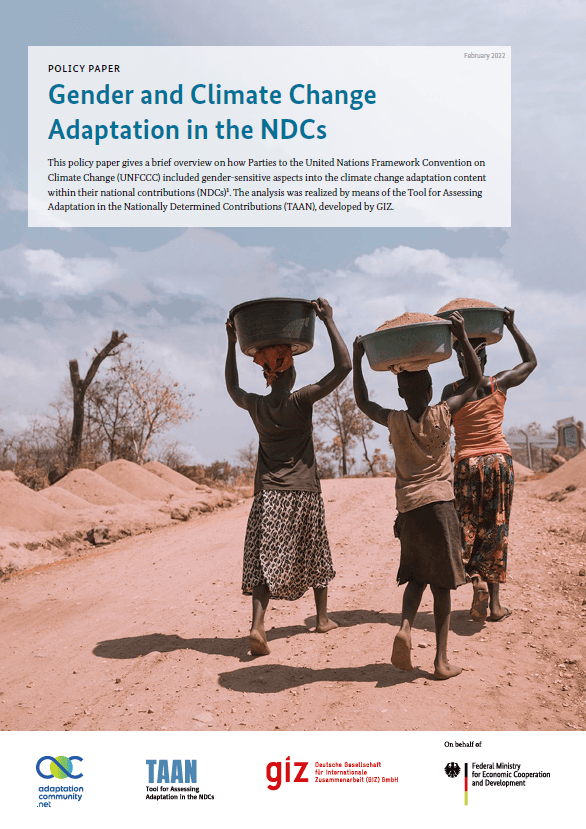
The policy paper offers an analysis of the gender data held in the Tool for Assessing Adaptation in the Nationally Determined Contributions (TAAN), calling attention to gender-sensitive planning processes, gender-disaggregated impacts as well as gender-responsive budgeting approaches.
Policy Advice for Climate-Resilient Economic Development (CRED) – Methods of assessing and planning climate-resilient economic development
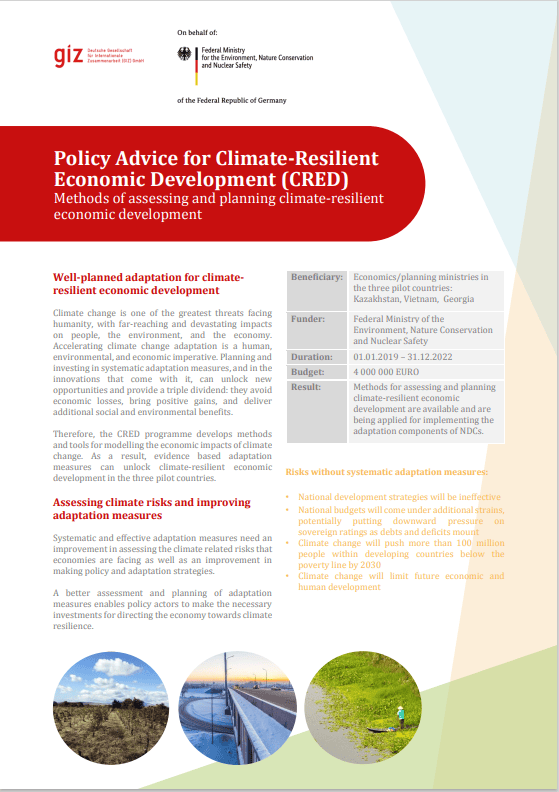
The CRED Factsheet introduces in the IKI program Policy Advice for Climate-Resilient Economic Development. The factsheet explains the need to assess climate risks and improve adaptation measures. It illustrates the CRED approach in developing human and technical capacities in macro-economic modelling of climate risks in the economic and planning ministries in Kazakhstan, Vietnam and Georgia. This aims at central macro-economic strategies and policies, supporting the implementation of NDC goals and national adaptation plans (NAP).
Project Brief: Climate Resilient Economic Development (CRED) – Managing Economic Risks of Climate Change
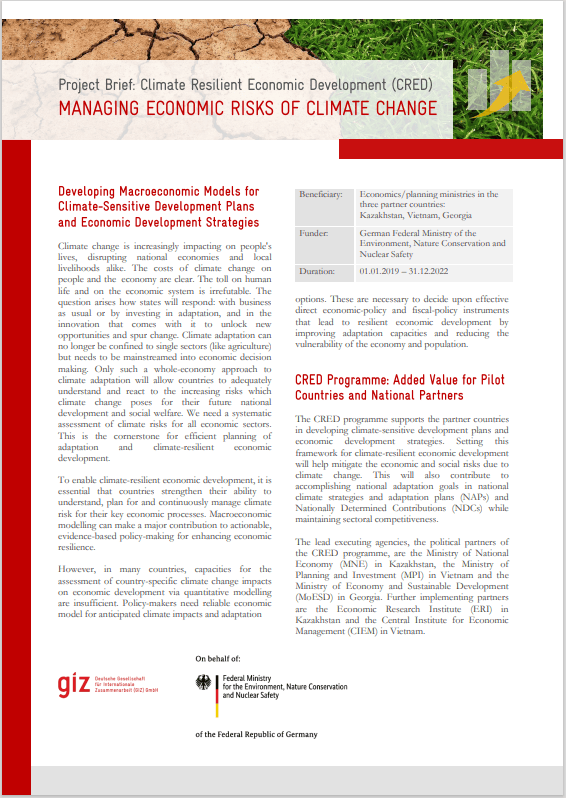
The CRED Project Brief gives an overview in how to manage economic risks of climate change by macro-economic modelling. The Project Brief introduces the three macro-economic models applied in the three partner countries Kazakhstan, Vietnam and Georgia. It explains how these models support the countries and its political institutions in developing climate-sensitive development plans and economic development strategies by translating the modelling results in evidence-based country specific policies.
Coherence as the process of joint and integrated policy making. Lessons learned from a cross-project collaboration to analyze the implementation of global agendas in Germany.
Publication of a case study at the interface of Sustainable Development, Adaptation to Climate Change and Disaster Risk Management
Integrating Risk Finance into National Resilience and Adaptation Efforts
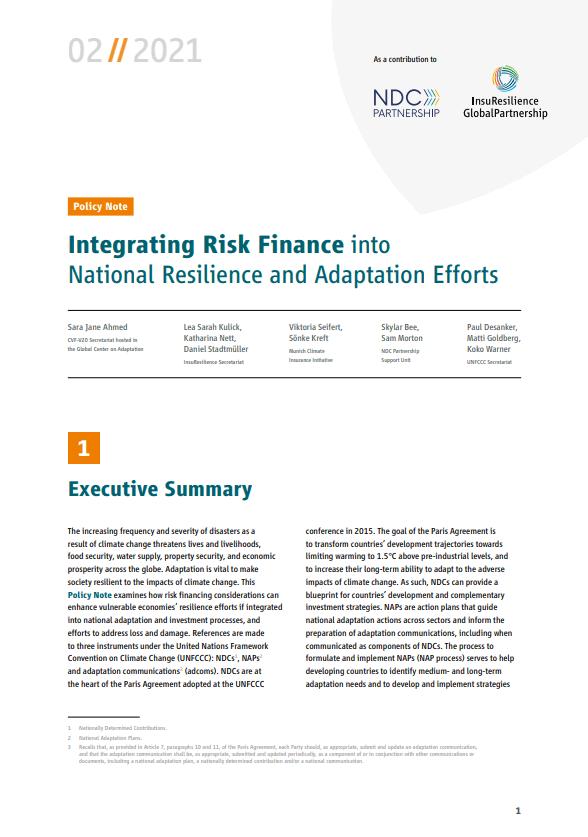
Adaptation is vital to make society resilient to the impacts of climate change. This Policy Note examines how risk financing considerations can enhance vulnerable economies’ resilience efforts if integrated into national adaptation and investment processes, and efforts to address loss and damage.
Green Recovery for Practitioners: Setting the Course Towards a Sustainable, Inclusive and Resilient Transformation
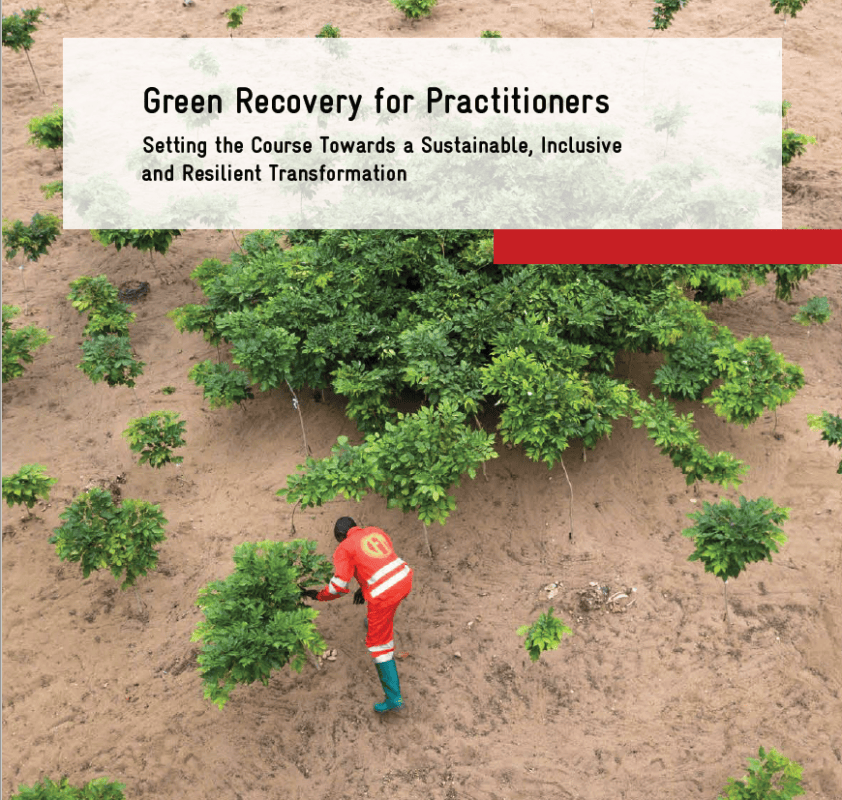
Green recovery is a widely used term for packages of measures addressing the social, economic and political consequences of the Covid-19 crisis in a way that sets the course for a shift towards sustainable and inclusive development, biodiversity protection, resilience and climate neutrality. This paper provides a practical framework that captures the key elements of a green recovery to inform the work of practitioners who seek to support sustainable, inclusive, and resilient recoveries.
Analyse des capacités nationales de planification de l’adaptation au Burkina Faso
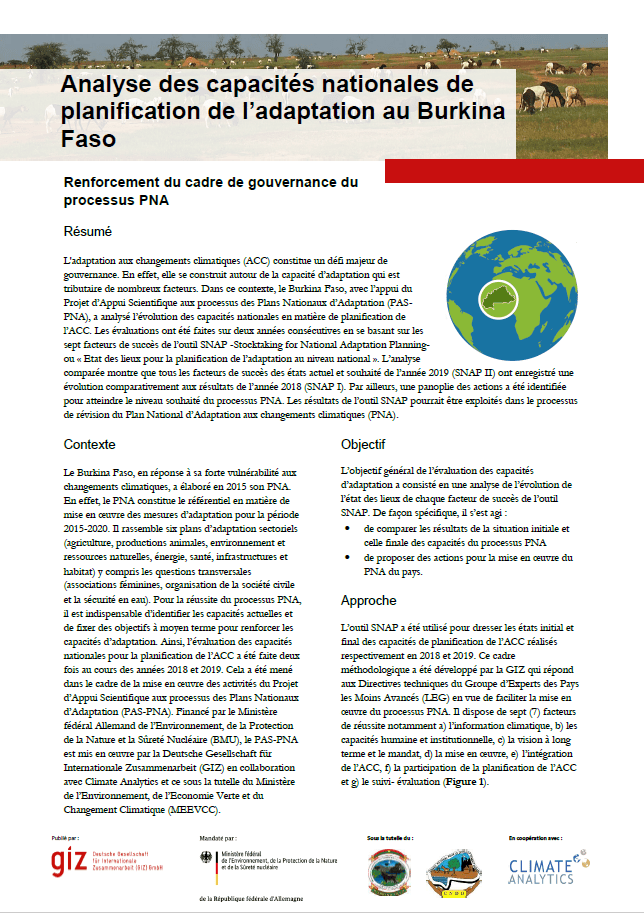
Le Burkina Faso a analysé l’évolution des capacités nationales en matière de planification de l’ACC. Les évaluations ont été faites sur deux années consécutives en se basant sur les sept facteurs de succès de l’outil SNAP -Stocktaking for National Adaptation Planning- ou « Etat des lieux pour la planification de l’adaptation au niveau national ».
Framing and Tracking 21st Century Climate Adaptation: Monitoring, Evaluation and Learning for Paris, the SDGs and Beyond
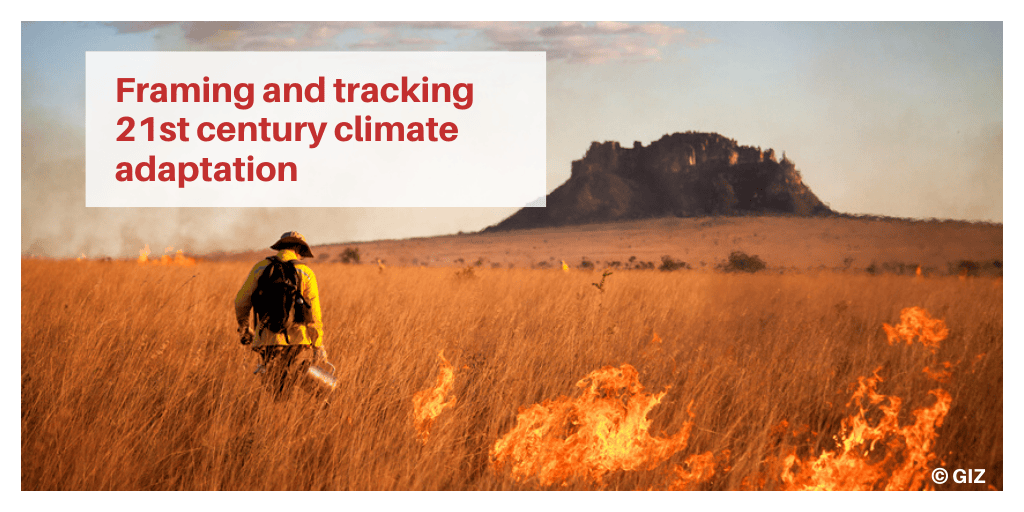
The Paris Agreement frames adaptation in terms of the actions needed to address the impacts of a global warming of 1.5–2°C. However, current trends suggest that warming is likely to exceed 2° degrees by the middle of the 21st century, which makes incremental approaches beyond 2030 necessary.