Guidance for Applying the Conservation Standards to Ecosystem-based Adaptation
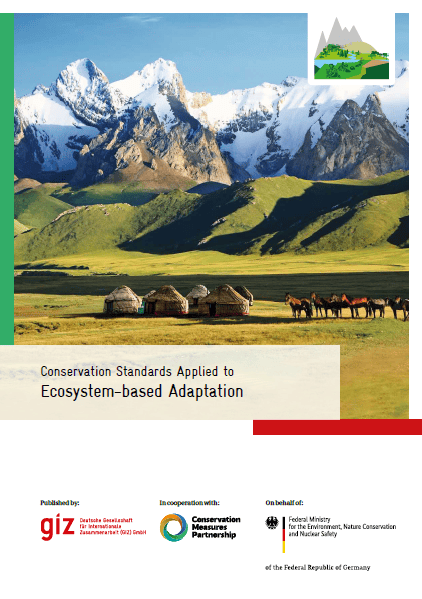
This guidance builds on the already widely used Conservation Measures Partnership’s Open Standards for the Practice of Conservation (Conservation Standards). The Conservation Standards, first developed in 2004, represent the leading adaptive management framework in the field of biodiversity conservation and ecosystem management. Thousands of conservation practitioners around the globe have used them to plan, manage, monitor, adapt and learn from their projects and programs.
Guidebook for Monitoring and Evaluating EbA
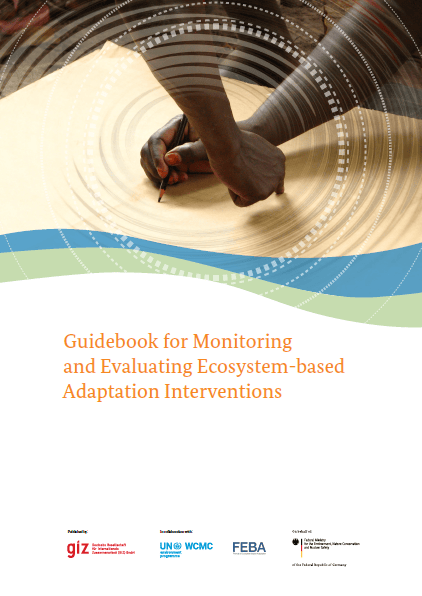
This is a practical guide for planners and practitioners to better understand the outcomes and impacts of on-the-ground Ecosystem-based Adaptation (EbA) projects, working with and enhancing nature to reduce the negative impacts of climate change on people.
Planned Relocation Guidelines – A Framework to Undertake Climate Change Related Relocation
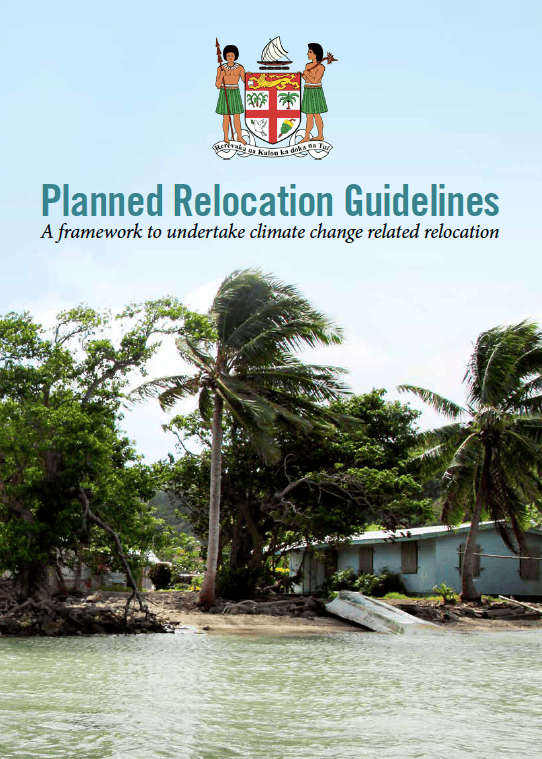
With the support of Deutsche Gesellschaft für Internationale Zusammenarbeit (GIZ), Fiji has developed the Planned Relocation Guidelines to assist and guide relocation efforts at the local level.
Displacement Guidelines – In the Context of Climate Change and Disasters
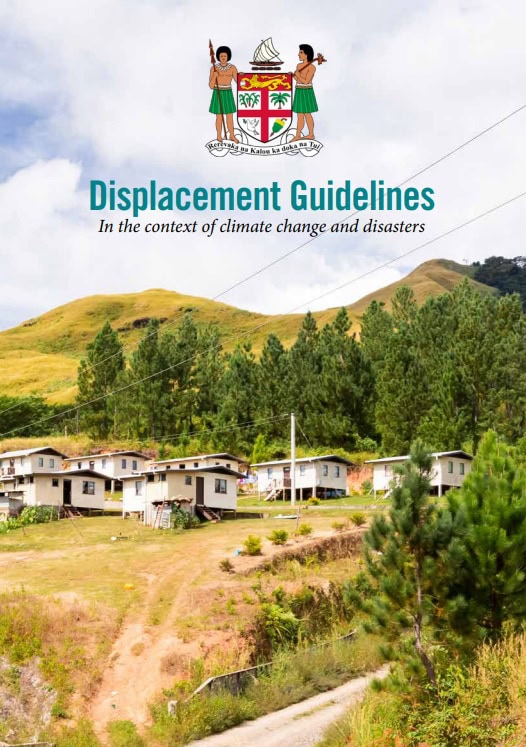
The Fijian Government, with support from the Deutsche Gesellschaft für Internationale Zusammenarbeit (GIZ), has developed Fiji’s Displacement Guidelines.
Human Mobility, Climate Change and Gender: Compendium of Best Practices, Lessons Learnt and Tools for Pacific Practitioners
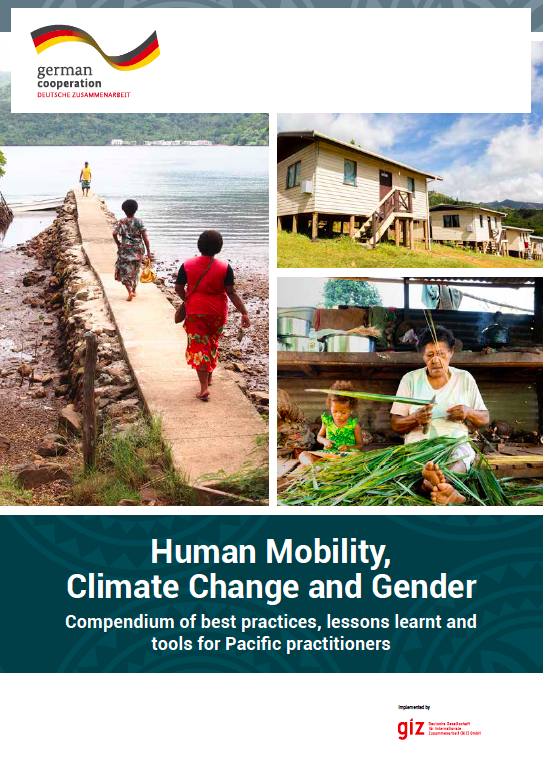
This compendium on Human Mobility, Climate Change and Gender provides best practices, lessons learned and tools for Pacific practitioners and was developed as an additional module of the Pacific Gender & Climate Change Toolkit for Practitioners.
Framing and Tracking 21st Century Climate Adaptation: Monitoring, Evaluation and Learning for Paris, the SDGs and Beyond
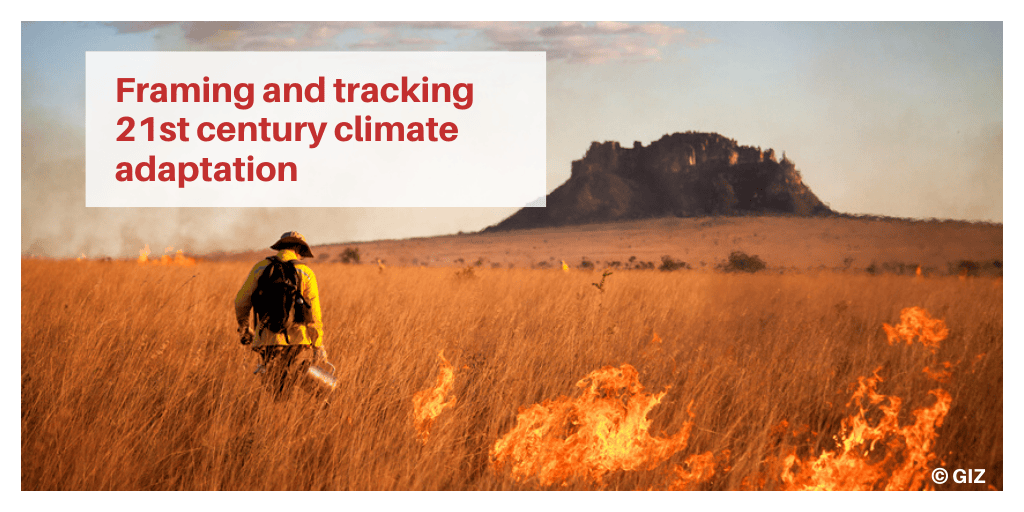
The Paris Agreement frames adaptation in terms of the actions needed to address the impacts of a global warming of 1.5–2°C. However, current trends suggest that warming is likely to exceed 2° degrees by the middle of the 21st century, which makes incremental approaches beyond 2030 necessary.
‘Climate Risk Assessment for Ecosystem-based Adaptation – a guidebook for planners and practitioners’ in Russian
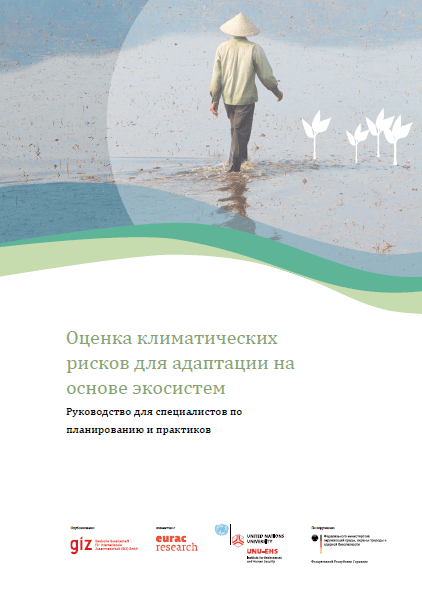
The EbA Climate Risk Assessment Guidebook is now also available in Russian! The guidebook, developed by GIZ in collaboration with Eurac Research and United Nations University – Institute for Environment and Human Security (UNU-EHS), helps planners and practitioners in designing and implementing climate risk assessments in the context of Ecosystem-based Adaptation projects.
Guide de bonnes pratiques pour la conduite d’études de vulnérabilité aux changements climatiques en Afrique de l’Ouest
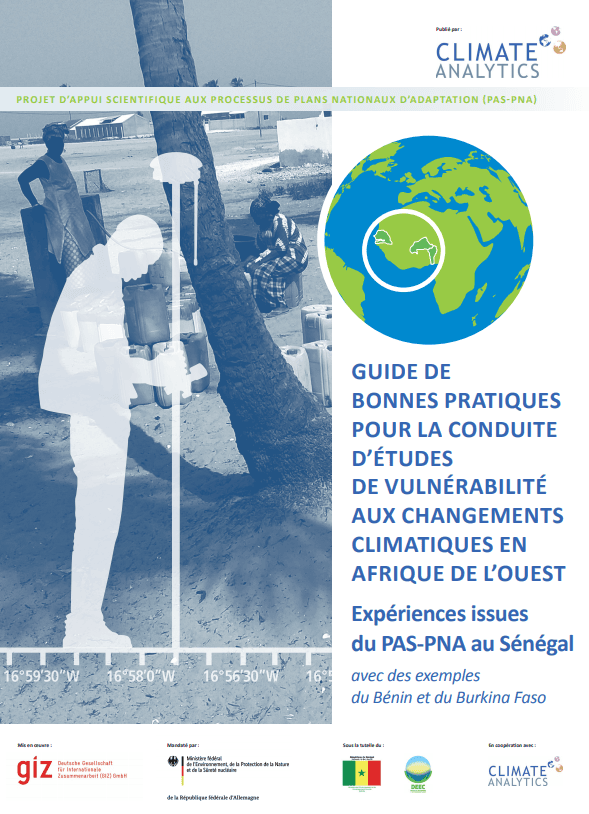
Ce guide pratique vise à présenter les approches utilisées par Climate Analytics dans le cadre du PAS-PNA (co-développement des méthodes et renforcement des capacités) ; à partager les leçons apprises et identifier les pratiques qui fonctionnent bien ; et à fournir un cadre de référence qui puisse permettre aux acteurs/parties-prenantes de reproduire les études de vulnérabilité à travers une approche de renforcement de capacité et en utilisant une méthodologie robuste.
Comprendre et interpréter les sorties de modèles climatiques pour la conduite des études de vulnérabilité
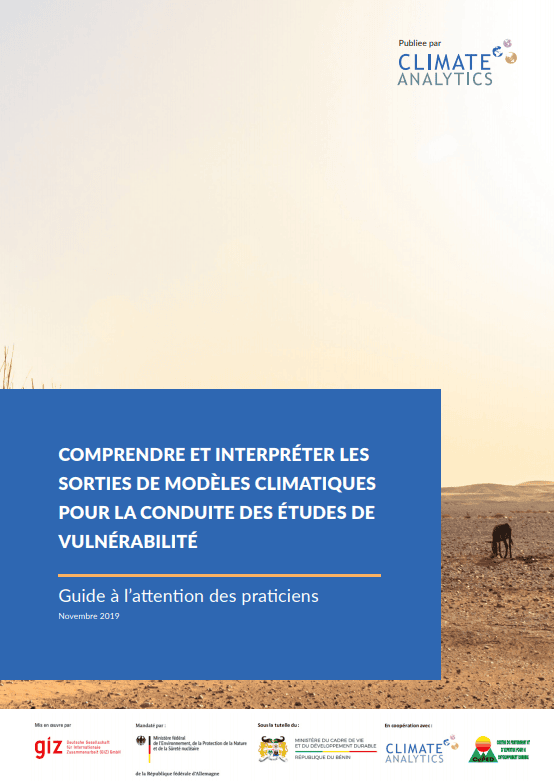
Guide à l’attention des praticiens et des chercheurs pour se familiariser avec une gamme variée de sorties de modèles climatiques et pour analyser les résultats des modèles suivant leur contexte.
Voluntary guidelines for the design and effective implementation of ecosystem-based approaches to climate change adaptation and disaster risk reduction and supplementary information
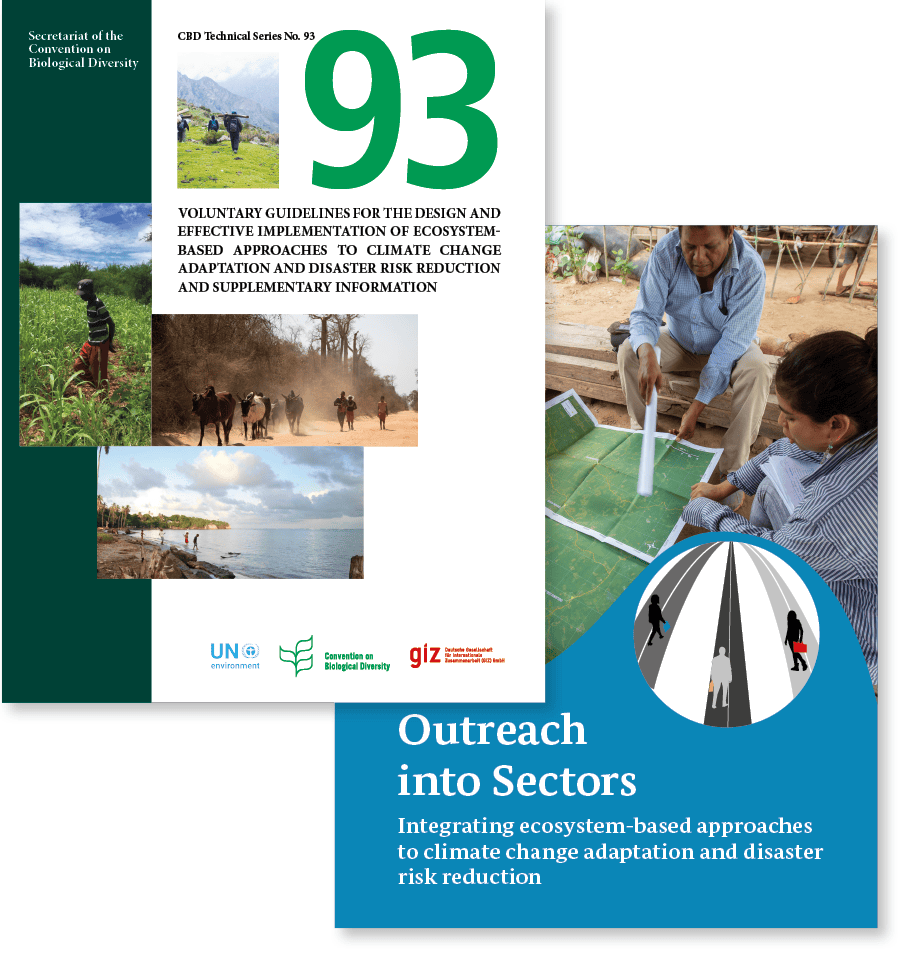
The present report, set up by SCBD, UN-Environment and GIZ, contains the version of the guidelines as adopted by the 14th CBD Conference of the Parties as well as updated supplementary information.